The Nautilus project, a new submarine high-voltage connection between the UK and Belgium, has received a crucial green light from the British energy regulator, as reported by Elia, the Belgian high-voltage grid operator. This approval is a significant step forward in the realization of the project, which is being developed in collaboration with National Grid, Elia’s British counterpart.
Nautilus is designed as a hybrid interconnector, a innovative type of connection that serves two primary functions: it will transport electricity between the UK and Belgium, and it will also connect offshore wind farms to the mainland. This dual capability allows for the efficient integration of renewable energy from the North Sea into the power grids of both countries. The project aims to harness the substantial electricity generated by British offshore wind farms and transmit it to Belgium, thereby supporting the EU’s goal of achieving complete CO2 neutrality by 2050.
The planned interconnector will have a capacity of 1.4 gigawatts, significantly higher than the existing Nemo Link interconnector, which has a maximum capacity of 1 gigawatt. Nemo Link already connects the power grids of Belgium and the UK, but Nautilus will enhance this connection by facilitating the direct transmission of offshore wind energy. This setup can potentially power around 1.7 million UK homes and support the UK’s targets of achieving 18 gigawatts of interconnection by 2030 and net-zero emissions by 2050.
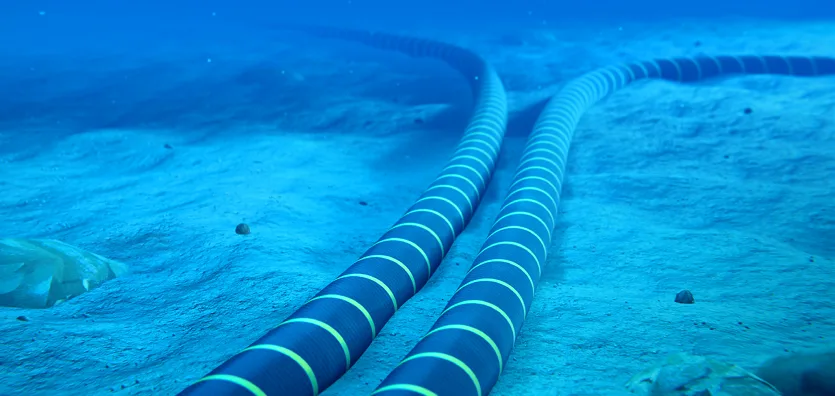
The Nautilus project involves the installation of subsea high-voltage direct current (HVDC) cables that will connect the UK and Belgium, with the capability to link offshore wind farms in the North Sea. These cables will be buried within the seabed where possible to minimize environmental impact. The project also includes onshore infrastructure, such as converter stations at each end of the connection, to transform HVDC into high-voltage alternating current (HVAC) for integration into the national transmission networks.
The European Commission has recognized Nautilus as a “project of common interest” due to its significance in supporting EU energy policy and climate goals. The project is currently in the study phase, with regulatory, market-related, and technical studies underway to determine the optimal route for the interconnector both on land and in the North Sea. According to the current schedule, electricity exchange via Nautilus is not expected to be possible until at least 2028.
In response to community concerns about the concentration of energy projects in Suffolk, there was an exploration of moving the Nautilus connection point from Friston to the Isle of Grain. However, Ofgem rejected this proposal due to the high constraint costs associated with upgrading the network around Grain. As of July 2024, Ofgem is consulting on the possibility of Nautilus connecting at Friston, where there is sufficient capacity in the electricity system, making the connection more feasible and cost-effective.
The Nautilus project is part of a broader strategy to create a more sustainable, reliable, and affordable power grid. By enhancing the integration of renewable energy and facilitating the exchange of electricity between countries, Nautilus will help balance supply and demand, reduce the impact of infrastructure on local communities, and support the overall decarbonization of the energy system.