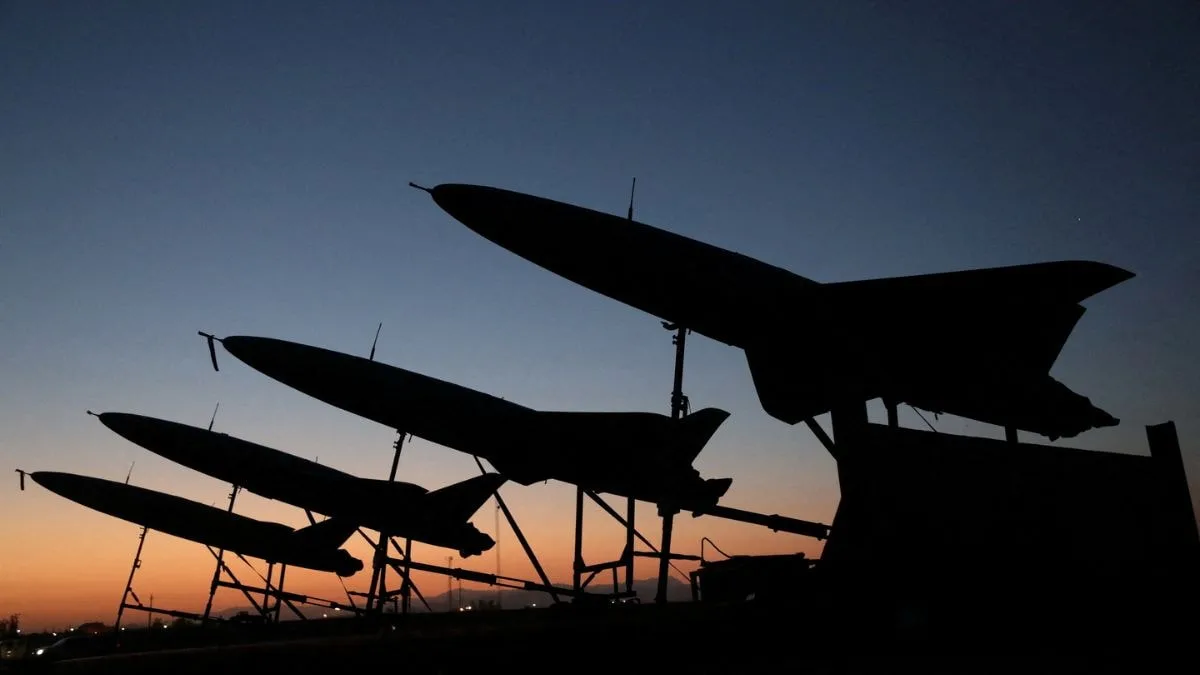
So, the RAF’s flashy new F-35B has finally drawn blood. On March 6th, over the dusty expanse of Jordan, a British pilot in a £100-million stealth jet blew two cheap drones out of the sky with missiles that cost the best part of a quarter of a million dollars each. The Ministry of Defence will no doubt spin this as a triumph of technology, a validation of the entire £57-billion programme. But let’s call this what it really is: a farcical metaphor for a military strategy that is rapidly becoming financially and operationally bankrupt. Using a fifth-generation fighter, designed to pierce the most sophisticated air defences and dogfight with Russian or Chinese jets, as a glorified clay pigeon shooter is not just overkill; it is a senseless burning of cash that exposes the profound vulnerability of air power.
Let’s talk numbers, because they are utterly damning. The whole-life cost for Britain’s fleet of 138 F-35s is now estimated at a staggering £57 billion. Each individual F-35B comes in at around £88 million, and that’s before you factor in the eye-watering £30,000-an-hour operating costs. The missiles used in this engagement, the ASRAAM, have a unit cost hovering around $200,000-$225,000. Now, look at the other side of the ledger. A drone of the type likely loitering over Jordan, perhaps an Iranian-sourced Shahed or a similar off-the-shelf system, can cost as little as $20,000. Even a more capable military drone like the Turkish Bayraktar TB2 is a relative bargain at $5 million. So, in a single engagement, the UK taxpayer subsidised the destruction of perhaps $40,000 worth of adversary equipment by expending over $400,000 in missile costs, not to mention the phenomenal hourly depreciation of the aircraft itself. It is the geometry of idiocy. We are firing gold bars at tin cans.
This is not an isolated incident, but a sign of things to come. The threat over the Middle East isn’t supersonic bombers; it’s swarms of shoestring drones. Just days before this “historic” kill, a low-and-slow drone managed to evade all defences and smack into the vicinity of RAF Akrotiri in Cyprus, the very base these F-35s operate from. France just deployed Rafales to the UAE for the same reason: to protect a base after a drone hit a hangar. The entire region is a Petri dish for this new form of warfare, where Iranian-backed groups launch barrages of cheap unmanned systems designed to saturate and overwhelm. And what is the British response? To send the crown jewels of its air fleet – the same jets needed to protect the Carrier Strike Group – to play whack-a-mole.
The economic lunacy is only matched by the strategic fragility. We are pouring billions into a tiny fleet of exquisite, sensor-fused marvels. As of 2026, the UK has taken delivery of just 40 F-35Bs, a far cry from the 138 originally promised, with the latest order for 12 F-35As (a different variant) only delivering marginal savings. Meanwhile, our potential adversaries are mass-producing disposable drones. As one military expert bluntly put it, the sheer cost disparity means drones will inevitably play a central role in future conflicts, simply because you can build ten of them for the price of one missile needed to shoot them down. We are in an attritional numbers game, and we are showing up with a Fabergé egg.
There is a deeper, more uncomfortable truth here that the RAF and the defence establishment don’t want to confront. Using an F-35 in this role is an admission that our layered air defences have a gaping hole. If the only way to stop a $20,000 drone is with a $200,000 missile from a $100-million jet, then the system is broken. What happens when twenty drones appear simultaneously? Or fifty? The F-35, for all its Distributed Aperture System and sensor fusion, carries a limited number of missiles. It will run out of ammunition long before the enemy runs out of drones. The recent deployment of Wildcat and Merlin helicopters to Cyprus for “surveillance” is a tacit acknowledgment that we need cheaper, more persistent eyes in the sky, but it’s a sticking plaster on a haemorrhage.
The situation is made even more farcical by the state of the British defence industry. We are so utterly dependent on the United States for these golden bullets – from the F-35 itself to the missiles it fires – that our sovereign capability is becoming a joke. As former BAE Systems chief Mike Turner points out, if Washington ever turns its back, we are left with a fleet of unusable, unsupportable white elephants. While our SMEs are “going to the wall” waiting for procurement decisions and the Treasury dithers on the Defence Investment Plan, we are burning cash in the Middle East to prove that an incredibly expensive jet can do the job of a far cheaper surface-to-air missile system or, dare we say it, a well-designed drone of our own.
This F-35 kill is a propaganda victory, but a strategic defeat. It proves that in the current threat environment, we are using a sledgehammer to crack a nut, and the sledgehammer is costing us the farm. It is not a viable strategy. It is a recipe for bankruptcy and eventual defeat by a thousand cheap cuts. The question Whitehall should be asking isn’t whether the F-35 can shoot down a drone, but why we have built an air force so brittle and so expensive that this is the only answer we have left.