Among others, the Gulf Stream is possibly on the verge of collapsing, a system of ocean currents vital for the Earth, with the Gulf Stream being a part of it. A new study suggests that by the middle of this century, or even as early as 2025 if luck is against us, the system could reach a tipping point. The researchers emphasize that current observations show no signs of the Gulf Stream or other components stalling at the moment.
Published in the scientific journal Nature on July 25th, the study has surprised other researchers who were not involved in the research. They also highlight that observations made since 2004 on a large scale have not indicated significant changes or trends. However, they acknowledge the uncertainty regarding a potential halt of the Gulf Stream and other currents.
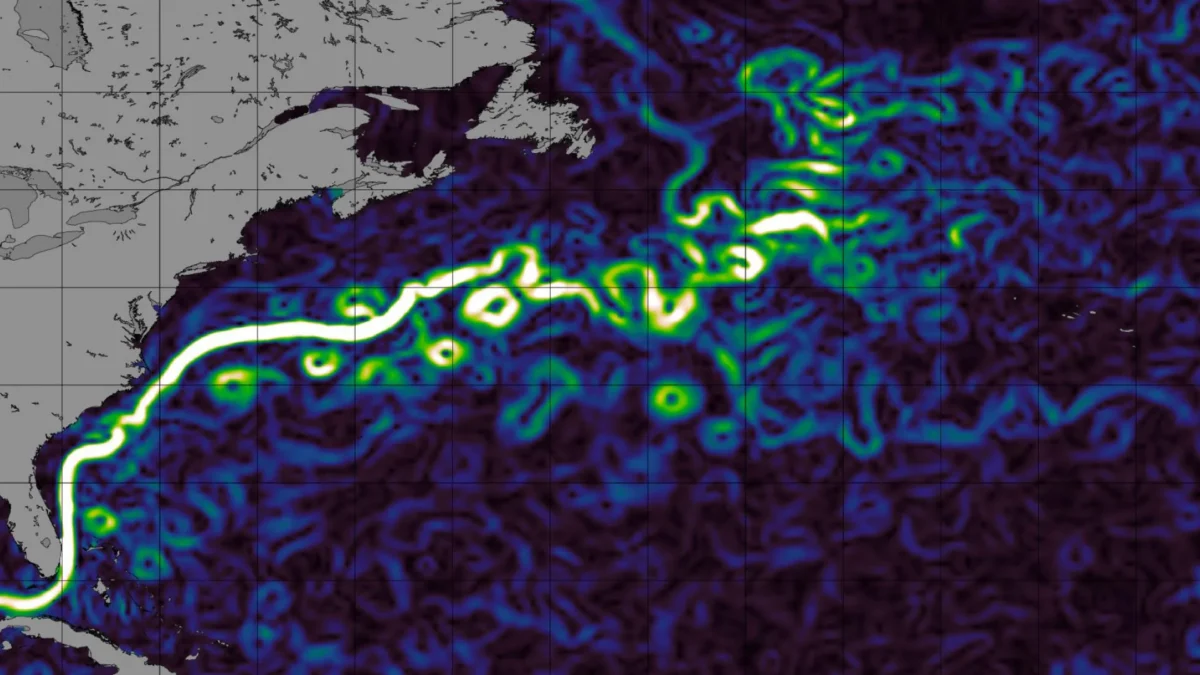
The warm Gulf Stream, meandering over the northern part of the Atlantic Ocean and acting as a crucial heat source for Europe, is part of a complex system of currents extending across all world seas. It transports warm water from the tropics to the north and cold water from the polar region to the south, effectively functioning as a major heat exchanger. The Warm Gulf Stream significantly contributes to the milder climate in Europe (particularly during winter) compared to its latitude.
Scientists have long feared that this system may become unstable due to the changing climate on Earth and eventually come to a complete standstill. If seawater gets warmer and ice, for example in Greenland, melts, the driving force behind the currents may break down. Such an event occurred over 12,000 years ago, leading to a regional temperature drop of 10 to 15 degrees Celsius in less than 10 years in the Northern Hemisphere, resulting in much harsher winters.
Previous research mostly assumed that the current system could weaken in the coming decades but would not collapse within this century. The outcome of the new study has raised alarm bells.
As the warm Gulf Stream plays a crucial role in Earth’s weather, its behaviour has been closely monitored since 2004. For this study, scientists analysed data from a much longer period, going back to 1870. This allowed them to understand the behaviour of the currents during a time when human influence on Earth’s climate was negligible. By examining sea water temperatures in the region south of Greenland, which is heated by the Warm Gulf Stream, they identified any changes attributed to its slowing down. By excluding the influence of climate change, they gained insights into the current behaviour.
The result of their analysis reveals the first signs of what they call a critical change in the current’s behaviour. The researchers now believe with a high degree of certainty that the system of currents they investigated could potentially stall sometime during this century, provided there is no change in the current pace of global warming. They estimate the tipping point to be between 2039 and 2070. In the most extreme case, it could happen as early as 2025, and it should not occur later than 2095. However, it is important to note that there are no actual signs of drastic changes currently.
If such a collapse occurs, it would likely lead to a drastic climate shift in the Northern Hemisphere, with significant temperature adjustments in a very short period. Harsher winters, among other extreme weather events, could become more frequent. The researchers warn that such an event would have catastrophic consequences for global weather and impact every inhabitant on Earth.