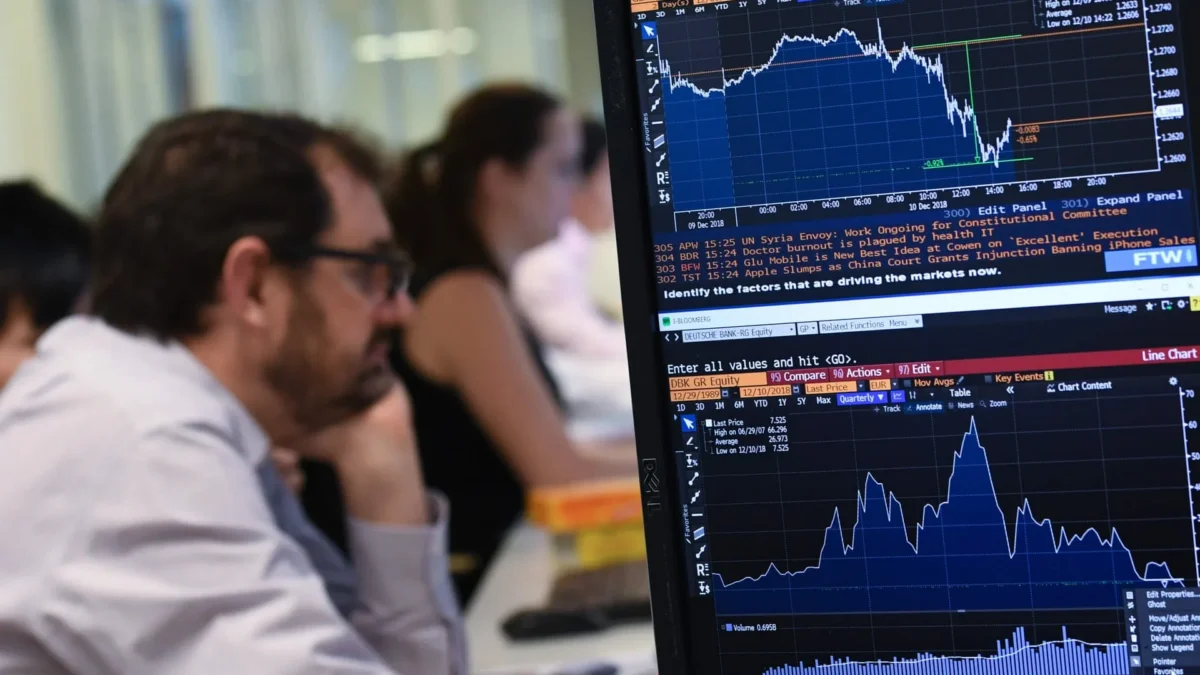
The pound is stable after data showed that the UK economy had avoided a recession in the first quarter, recovering from the largest one-day decline since mid-April a day earlier.
The pound rose 0.1% against the dollar at $1,252. It fell nearly 1% on Thursday after the Bank of England raised interest rates and said it would stay on track.
But with consumer inflation at 10.1%, investors had long been preparing for a more aggressive stance by the BoE, whose measure gave no new incentive to actively buy the pound, but also little to sell it.
“The interest rate increase of 25 basis points by the Bank of England did not have a major impact on the British pound. The drop in cable yesterday was almost entirely due to the dollar rally and was in line with the movement in other dollar crossings,” said Francesco Pesole, strategist at ING.
He said there is room for more weakness in the British pound, but that this is likely to manifest itself in the euro/sterling rate, which was 0.14% lower on Friday at 87.12 pence, as expectations for UK and eurozone rates grow towards each other.
“For now, however, there are not many compelling reasons to believe that the pound sterling will underperform its key sector peers in the short term,” he said.
The BoE raised its economic growth expectations and said Britain would avoid a recession. On Friday, data showed that growth increased by 0.1% in the first quarter, but shrank in March, which, according to analysts, indicates the fragility of the recovery.
The United Kingdom has not only the highest inflation of all developed economies, but also the slowest growth of the seven richest countries.
Berenberg senior economist Kallum Pickering said Friday in a research note, however, that the British political situation is “starting to look normal again” after several years of turmoil.
“The UK is one of the few major economies where no populist is in power, or a populist is waiting in the wings to contest the next election,” Pickering said.
“Having been among the most populism – ridden Western economies in recent years, the UK now compares favourably with peers-particularly the US,” he said.