A rapid and major change is approaching for British egg production plus it will affect supermarket shelves, household budgets and the ethical options open to shoppers. DEFRA (the Department for Environment, Food & Rural Affairs) started a consultation in mid January that sets out a plan to stop the use of enriched colony cages for laying hens. The department presents this as a forward move for animal welfare but the proposed timetable reveals a flawed legislative plan but also carries the danger of a supply shortage whose cost will finally fall on the public. The main proposal is a two stage ban – from 2027 no new enriched cage systems may be built or used for the first time and in 2032 every existing enriched cage must be taken out of service.
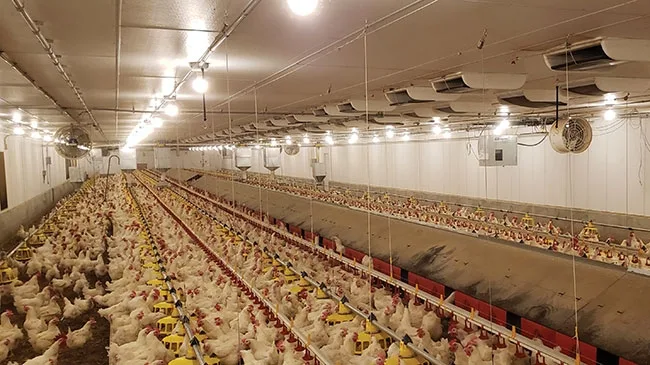
For consumers, this policy brings mixed consequences – the ethical argument is straightforward. Enriched cages give hens a perch as well as a small scratching area, which is slightly better than the now banned battery cages but they still prevent natural actions like full wing flapping, dust bathing and free foraging. They continue to stand for intensive, industrial farming that an increasing number of people consider morally unacceptable. The government’s approach, however, seems dangerously rushed or shows little grasp of the economic realities. Industry bodies like the British Egg Industry Council (BEIC) warn that a 2032 total ban on enriched cages—which currently house an estimated 40% of the UK’s 38 million laying hens—is a logistical and financial cliff edge.
The glaring weakness of this proposed law is its catastrophic failure to address the colossal capital investment required and the near-certain disruption to supply. Transitioning to fully free-range, barn, or organic systems is not a simple switch. It requires vast amounts of new land, permission for new buildings, significant infrastructure investment running into hundreds of thousands of pounds per unit, and a much longer production cycle. Farmers argue that the proposed eight-year timeline for a complete phase-out is insufficient given the planning delays, construction bottlenecks, and current inflationary pressures on materials and labour. This isn’t scaremongering; it’s basic economics. The 2012 ban on conventional battery cages led to a period of instability and increased imports. The scale of change required now is exponentially greater.
Consumers must brace for two direct consequences: higher prices and increased reliance on imported eggs. The cost of overhauling nearly half of the national flock’s housing will inevitably be passed down the supply chain. Free-range and barn eggs already command a premium; a supply squeeze on all non-cage eggs will likely inflate these prices further, making a staple protein source more expensive for every family. Simultaneously, unless domestic production can keep pace—which experts overwhelmingly doubt—supermarkets will be forced to source more eggs from countries with potentially lower welfare standards than even the UK’s current enriched cages. The irony would be bitter: a UK welfare law leading to increased consumption of eggs from systems the British public sought to ban, undermining both the ethical intent and food sovereignty.
Furthermore, the 2027 ban on *new* enriched cages creates an immediate investment freeze. Why would a farmer invest millions in a new barn system today when the technology and consumer demand are still evolving, and when the financial viability depends on a premium price that a cost-of-living crisis may suppress? This freeze could stifle innovation and lead to a stagnation in production capacity in the critical lead-up to 2032. The government’s consultation documents, while strong on ambition, are conspicuously weak on detail regarding financial support, streamlined planning permission for agricultural builds, or support for market development. Without a comprehensive, farmer-supported transition plan with real teeth and substantial funding, this law is not a roadmap but a decree that sets up British egg producers, and by extension British consumers, for a painful fall. The goal of improved welfare is commendable, but a poorly executed transition, dictated by political timetable rather than practical reality, will serve neither the hens, the farmers, nor the public who will face the consequences at the checkout.