On Friday, the euro recorded around $ 1,1440 in an alert market, which is not expected to experience any major impulses today.
The odds for the dollar are at the top. As a result of higher-than-expected inflation in the United States in October, interest rates on U.S. government securities rose. The difference in interest rates between the US and the other countries also increased. That is the reason for the rise in the dollar rate. The gold price has also gone up, but that is related to the accrued real interest rate.
Now that inflation is about 6 to 7 per cent and investors are looking at their overall stock price, it has increased to that amount where the stock price is already on the rise. If the price goes up, I expect investors to focus on dividends for the first time and the investors of my company will move to a very cautious approach from this point on, to keep the stock price at that level. As of today, I expect the dividends paid to our shareholders to be about £20m and after that to be on the rise, but I know the real value of the stock is much higher because of the dividend, and the value of the shares in this company is already rising, it’s just a matter of timing.
Investors now expect the Federal Reserve to increase policy interest rates earlier. The market also continues to consider the possibility that the Fed will increase interest rates more than twice by 25 basis points in 2022. There may be a reversal if inflation falls again. We still expect the first rate increase in early 2023. We maintain our estimates for euro / dollar, which puts our year-end estimate at 1,1500 dollars.
If the gap between euro and US long-term interest rates narrow again, the euro could recover somewhat. Until then, the dollar seems to have the most upward potential. There are some levels of technical support for the euro, but serious support is only $ 1.1240 and $ 1.1250.
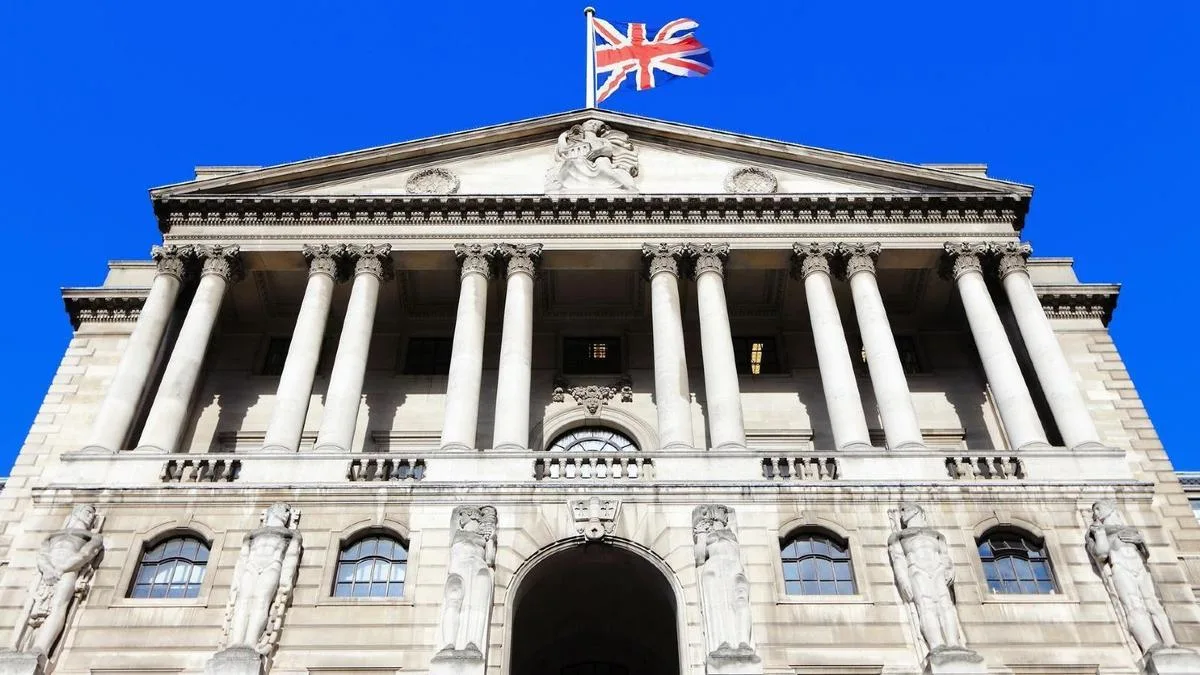
We expect the Bank of England to raise interest rates in December. Investors now think there will be two interest rate increases in 2022, while we expect interest rates to increase by 25 basis points once in the first half of 2022. If our vision comes true, the bank will still raise interest rates well ahead of the Fed and the ECB, and that should support the pound. The UK inflation figures will be published next week. Higher figures make an interest rate increase in December likely.
Industrial production in the eurozone decreased by 0.2 percent in September compared to August, when monthly production fell by 1.7 percent.
We were seeing a continuation of a trend in which the economy continued to grow and output was increasing at an even faster pace than in March 2011, that’s a positive sign.
Still, as Germany’s unemployment rate fell, the eurozone’s export of steel fell. The European steel market grew the fastest. U.S. exports fell 4 percent in August after improving only slightly in 2015, Lagarde said. The European steel industry has seen a decline in the growth rate of exports this year, according to Germany’s Ministry of Industry.
Exports of iron to China — the country’s largest export source so far this year — remain strong. She also noted that Chinese steel imports have been surging on record, particularly because demand from emerging markets has surged. “We see a strong support for the global energy sector from China,” said Lagarde.
China imports have also picked up — particularly since the economic shock of the financial crisis in 2008.
For this afternoon, the macroeconomic agenda is only filled with preliminary US consumer confidence for November, as measured by the University of Michigan and outstanding vacancies in September.
However, it is interesting to look at past history as indicators of the economic strength we have experienced. The first signs of sharp growth in 2000 were in the US and European economies during that time. We’ve since seen what should be a sign of strong growth in the UK and India both in November and in other markets that should be of greater concern to investors.
A significant improvement over the same period is the fact that employment still seems to be slowing, not increasing. A significant gain is coming from emerging markets (and an increase by Asia) while employment is still declining strongly in UK, US, and European markets.
The US and Europe market were, after all, highly active in the 1980s, as were the other major major markets, China, India, and Europe.
The euro was down 0.1 percent on $ 1.1439 on Friday. The European currency was down 0.3 percent at £ 0.8542. The British pound rose 0.2 percent on Friday and stood at $ 1.3391.