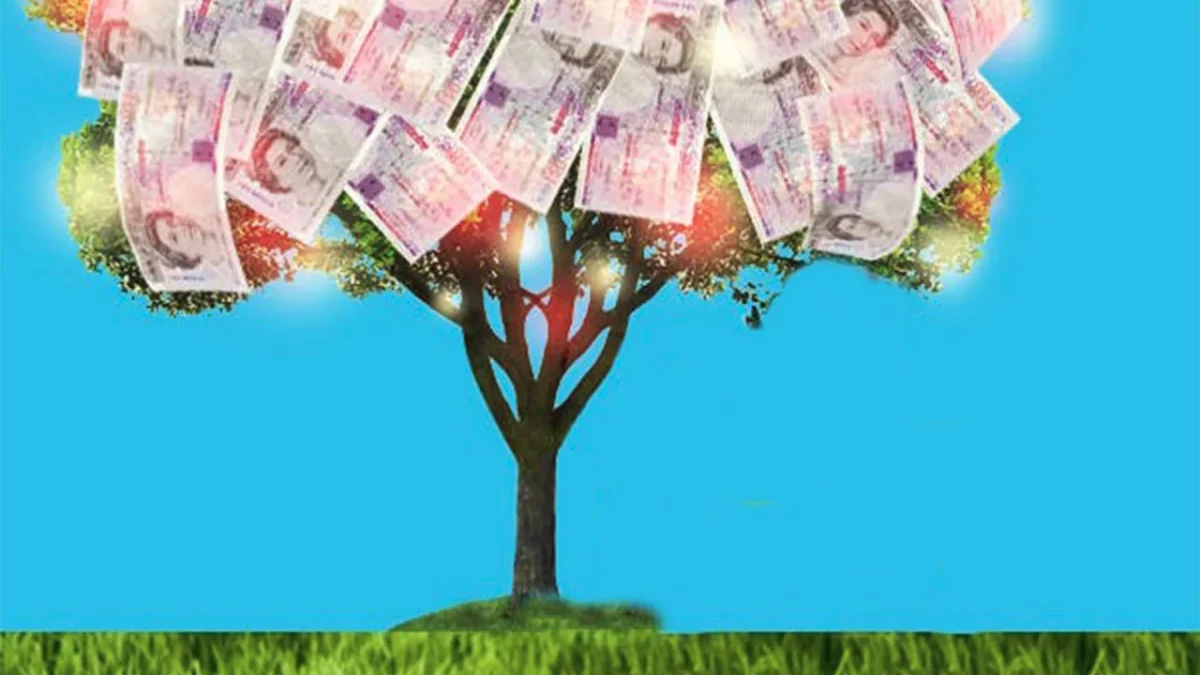
It seems the grown-ups are in charge now, and wouldn’t you know it, the magic money tree has unfortunately succumbed to a nasty case of root rot. The new Labour government, fresh off a victory lap built on the cast-iron promise not to fiddle with your taxes, has just opened the nation’s purse and found a few moths, a crumpled IOU, and a reality check from the Bank of England.
So here we are. Chancellor Rachel Reeves, who once swore on a stack of manifestos that she wouldn’t touch income tax, now finds herself playing a delightful game of “Which Promise Do We Break First?” It’s a classic British predicament, really. On one side, you’ve got the bond markets—a skittish bunch of international number-crunchers who, as we learned from Liz Truss’s 50-day fire sale of the economy, can make the pound fall over faster than a tourist on a cobbled street after three pints. They’re demanding fiscal responsibility, which is a fancy term for “show us the money.”
On the other side, you have the British public, who were rather fond of that whole “no new taxes” pledge and are now being gently informed that the nation’s wallet is structurally more hole than leather. The country’s debt is knocking on the door of 100% of GDP—that’s a cool £98,000 for every household, a sum that could alternatively buy you a slightly used terrace house in Bolton or a lifetime supply of tea and biscuits, but sadly, is just a theoretical number on a spreadsheet that means we’re all on the hook.
The solution, in a stroke of genius that has eluded governments since the dawn of time, is apparently to somehow spend more on the NHS, defence, and public services while also borrowing less. It’s the fiscal equivalent of trying to eat a full Sunday roast while simultaneously getting thinner. The Chancellor has bravely declared that the state can’t just live on credit forever, a revelation that has stunned economists and households alike, who had assumed the national credit card had no limit.
Naturally, the obvious move is to look at the one thing they promised not to touch: the basic rate of income tax. The last person to try this was Labour’s Denis Healey in the 1970s, a move so successful it ended with the IMF taking the UK into receivership and paved the way for 18 years of Tory rule. What could possibly go wrong? Polls suggest the public would rather swallow a wasp than see their income tax go up, viewing it not as a necessary evil but as the mother of all broken promises.
So, the government is exploring other, more ‘creative’ options. The current crowd-pleaser is a wealth tax. It turns out that taxing someone else—specifically, the mythical creature known as “the billionaire”—is enormously popular with everyone who isn’t one. A whopping 75% of people are in favour of a tax on assets over £10 million. It’s the political equivalent of announcing free cake for everyone, paid for by the guy in the mansion no one likes. The only snag is that the rich have a pesky habit of employing clever accountants, and their wealth isn’t always just sitting in a Scrooge McDuck-style money vault waiting to be counted.
The clever folks at various think tanks have crunched the numbers and delivered the bad news: this isn’t a problem you can solve by just asking a few oligarchs to chip in. The hole is about £50 billion deep. That’s a lot of hospitals and school books. It’s going to require a cocktail of measures: a sip of “revenue raising” (taxes), a dash of “efficiency savings” (cuts), and a large glass of “narrative management” (telling us it’s for our own good).
The Chancellor’s ultimate challenge is to perform a political magic trick: she must convince the markets she’s a responsible adult while simultaneously convincing the public that breaking a flagship promise isn’t really breaking a promise, but rather a “temporary, necessary investment in our future shared prosperity.” She has to sell a tax rise as the down payment on a “dividend” that may or may not ever materialise.
Will the UK masterfully navigate back to stability, or will it trip over its own shoelaces and end up in another sterling crisis? Either way, it’s a thrilling spectacle of political promises meeting mathematical inevitability. Place your bets. Or better yet, save your money – you might need it.