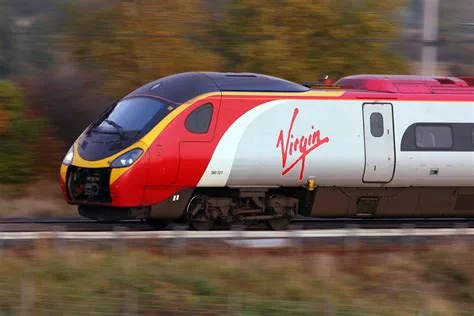
The Office of Rail and Road (ORR) has granted Virgin Trains approval to co-use the Eurostar terminal at London St Pancras. This pivotal ruling, long-awaited by industry observers, effectively paves the way for Sir Richard Branson’s company to become the first genuine competitor to the Eurostar monopoly on passenger services through the Channel Tunnel, an exclusive arrangement that has stood since the tunnel’s inauguration in 1994.
The core of the regulator’s approval hinges on access to the critical Temple Mills depot, a facility essential for the maintenance and stabling of the sophisticated trainsets that operate on the High Speed 1 line. Temple Mills represents the only depot accessible from HS1, making it an indispensable logistical asset for any aspiring operator. The ORR’s decision was notably selective; it simultaneously rejected rival applications from other consortiums, including Evolyn, Gemini Trains, and the Italian state operator Trenitalia. In its official statement, the regulator justified its choice by asserting that Virgin Trains’ proposals were demonstrably more robust, both financially and operationally, than those of the other bidders. Furthermore, in a move that underscores the complexity of introducing competition, Eurostar itself was denied permission to utilise the tunnel’s unused capacity for its own expansion plans, a significant setback for the incumbent.
This breakthrough signals the impending end of a three-decade-long era. Eurostar, formed from a partnership of state-owned railways, has faced persistent criticism over the years for its pricing structure, with many British travellers and politicians lamenting the high cost of tickets to Paris and Brussels, particularly when compared to advance fares on the continent. The Channel Tunnel itself is currently operating at only around 50% of its theoretical passenger capacity, a figure that includes the separate LeShuttle vehicle transport service between Folkestone and Calais. This significant under-utilisation has long been cited by competition advocates as a compelling reason to open the market, arguing that it represents a wasted economic and transport opportunity.
Sir Richard Branson, never one to understate his ambitions, welcomed the regulator’s verdict as a decisive victory for consumers. He declared that the time had finally come to terminate this thirty-year monopoly and to inject what he termed the “Virgin magic” onto the Channel route. He further drew parallels with his company’s historic challenges to established operators in the aviation, cruise, and domestic rail sectors, vowing to replicate that disruptive success on the international stage. Virgin Trains has now outlined a roadmap to launch its competitive services by 2030, a timeline that acknowledges the significant regulatory hurdles that remain. The company must still secure separate approvals pertaining to track access rights and complex cross-border safety certifications, a process that will be closely watched by both the British and French authorities.
The prospect of competition has been met with cautious optimism from consumer groups and travel analysts. The primary expectation is that Virgin’s entry will exert downward pressure on fares, particularly on last-minute and business-class tickets where Eurostar’s premiums have been most pronounced. However, analysts also caution that the operational challenges are formidable, involving the procurement of bespoke trains capable of meeting both UK and European standards, and navigating the intricate slot allocation for paths through the busy tunnel. For the British traveller, the promise is of a new golden age of cross-Channel rail travel, offering not just lower prices but improved service frequency and innovation. Whether Virgin can deliver on this promise and successfully break a monopoly that has defined a generation of travel to the continent remains one of the most compelling narratives in modern British transport history.