The British House of Commons has blocked Boris Johnson’s proposal to hold elections on December 12 for the third time. The prime minister did not accept the defeat.
Immediately after the vote, Johnson announced Tuesday to introduce a new law to hold elections on that Thursday. With this he wants to circumvent a law that states that elections must take place every five years, and not if it suits the government.
Johnson needed 434 votes, two-thirds from the House of Commons, but the counter stopped at 299. Labor refused to support the move as expected. Although the European Union had honored the British request for a three-month delay earlier in the day, the Social Democrats maintained that a No Deal Brexit was still possible. Labor leader Jeremy Corbyn also stressed that Johnson cannot be trusted.
The opposition leader read a series of promises that the prime minister had broken, including dying in a ditch if the British were still part of the EU on November 1. His fellow party member Seema Malhotra called the idea of holding elections in December for the first time since 1923 a form of “voter suppression” because it would be more difficult for students, the elderly and the disabled to vote at this time of the year.
In the coming days, the students’ voice will be at the center of a battle between the Conservatives and Liberal Democrats. In principle, the Liberal Democrats are not against elections, but they do not want to hold them on December 12 but on December 9. Because many students go to their parental home at the beginning of that December week, the Liberal Democrats want to open the polls at the beginning of that week.
The Tories prefer to keep it on Thursday, December 12, because it gives members of the Lower House more time to approve the Brexit agreement. If it is up to the Liberal Democrats, that entire agreement is no longer part of the election package. Johnson may be willing to put his chord in the refrigerator to bring it back out if he can rule alone and by a majority. Entering the elections without a Brexit agreement is, however, a risk.
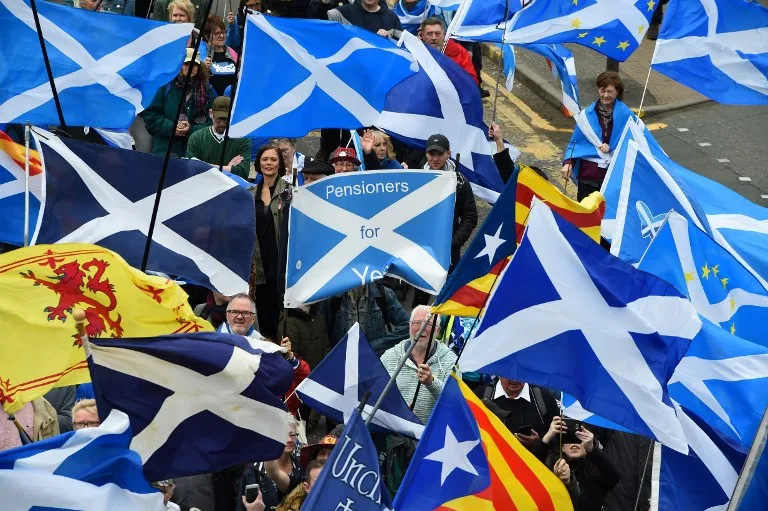
He needs support not only from the Liberals, but also from the Scots. They also want Johnson to distance himself from the Brexit agreement. The Scottish nationalists are counting on a substantial election victory, followed by an independence referendum. Leader Ian Blackford responds to the idea that the Conservatives do not see the Scots. When one of them called out during the debate “Shut up, sit down,” Blackford immediately warned that “Scotland is watching.”
With the Scots and Liberals, Johnson can reach the bill with a simple majority – half plus one. Labor was criticized for her attitude. “If he finds the prime minister so bad and unreliable,” the Conservative Simon Hoare wondered, “why doesn’t he want elections to get him away?” The mood during the debate was so bitter that a filthy one could fear election campaign.
Should the election impasse ever be broken.