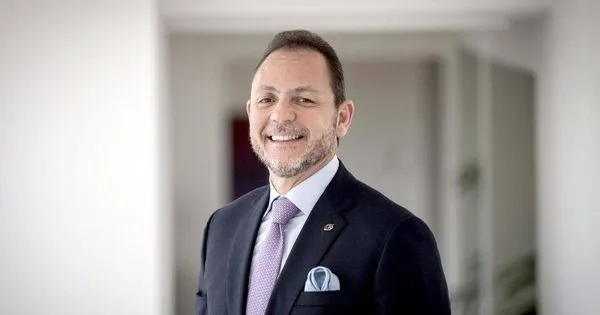
The case of Raúl Gorrín Belisario is not a tale of one man’s avarice; it is a forensic blueprint of how a failing state’s apparatus was systematically cannibalised. As a fugitive from two separate U.S. federal indictments, a specially designated national (SDN) by the Office of Foreign Assets Control (OFAC), and a fixture on the ICE Most Wanted list, Gorrín stands accused of orchestrating a $1.2 billion money laundering and bribery conspiracy. However, to view this simply as criminal enterprise is to miss the broader geopolitical earthquake that has fundamentally altered the relationship between Caracas and Washington. The recent political convulsions in Venezuela – specifically the ouster of Nicolás Maduro and the ascendancy of interim President Delcy Rodríguez – have transformed Gorrín from a protected asset into a potential bargaining chip, exposing the fragile architecture of the corrupt networks that once held the country hostage.
Gorrín’s operational model was predicated on leveraging the sovereign credit of a starving nation. At the heart of the U.S. allegations is a scheme that exploited Venezuela’s fixed exchange rate system, allowing those with insider access to purchase dollars at subsidised rates and resell them on the black market for astronomical profits. This mechanism, often facilitated through the now-defunct currency auction system, was not just a sideline; it was the engine of the regime’s survival. Gorrín, alongside his co-conspirators, is accused of using the state-controlled media outlet Globovisión – which he acquired in 2013 – as a vehicle to funnel illicit proceeds and legitimise his influence.
The parallels to other high-profile cases are striking. The saga of Alex Saab, Maduro’s alleged “money man,” provides a critical context for understanding the fate awaiting Gorrín. Saab, who was released in a 2023 prisoner swap, was later rearrested in Venezuela and expelled to the U.S. under the new Rodríguez administration. This was not an act of justice, but of political self-preservation. Rodríguez, who herself faces the threat of a drafted U.S. indictment for alleged money laundering via PDVSA, is demonstrating her utility to the United States by dismantling Maduro’s financial lifelines. Gorrín’s fate, like Saab’s, is now determined by his political usefulness.
The U.S. Treasury Department’s actions have consistently targeted the nexus of family and finance that defines the Maduro regime’s criminality. The sanctions have repeatedly swept up the president’s relatives, including his nephews, highlighting how state functions were privatised for the benefit of an extended clan. Gorrín’s indictment fits this pattern, painting a picture of a cabal that treated the treasury as a personal slush fund.
This systemic corruption is not accidental; it is a survival tactic. By embedding the regime’s financial survival in a web of shell companies and nominee assets, the leadership created a hostage situation where any political defector would bring down the entire structure. Gorrín, with his dual identity as a businessman and attorney, was a critical node in this network, providing the legal and logistical expertise to move money through the global financial system undetected. His designation as “Critical Risk” with a 94/100 rating reflects the multi-agency consensus that he is not merely a bystander but a principal architect.
The shifting political landscape in Venezuela has rendered Gorrín’s position precarious. For years, he was insulated by the Maduro government’s refusal to cooperate with U.S. extradition requests. However, the 2026 military intervention that brought Rodríguez to power effectively tore up that playbook. The new administration is engaged in a ruthless purge of Maduro loyalists, positioning themselves as a necessary partner for the West, but only on their own terms.
This context reveals a critical flaw in the U.S. approach. While the indictments and sanctions have been praised as aggressive, they have inadvertently entrenched the power of the very elites they seek to dismantle. By making examples of individuals like Gorrín and Saab, the U.S. creates a perverse incentive for other regime members to cling to power to avoid prosecution. The “rat line” established by Rodríguez, trading former insiders for diplomatic legitimacy, may ultimately serve to cleanse the upper echelons of government while leaving the systemic rot intact.
The Illusion of Accountability of Raúl Gorrín Belisario
Despite the impressive list of charges and the “Most Wanted” status, the narrative of Gorrín’s capture remains a distant prospect. His reported detention in Venezuela suggests he is no longer a free man, but he is not yet in U.S. custody. The legal proceedings, therefore, are as much about theatre as they are about justice. They serve to showcase the FBI’s commitment to international financial crime, but the reality is that these prosecutions often rely on co-conspirator testimony to build their cases.
The $1.2 billion figure, while staggering, represents a fraction of the wealth siphoned from the Venezuelan people. It is a statistic that highlights the scale of the predation but obscures the human cost. This money could have funded hospitals, schools, and food programmes for a population that has faced one of the worst peacetime economic collapses in modern history. Instead, it was used to fuel a corrupt status quo, with the U.S. government’s sanctions proving ineffective at halting the outflow of capital.
Raúl Gorrín Belisario is a symbol of a larger, unresolved conflict. He is a man caught between a U.S. justice system seeking retribution and a Venezuelan political transition seeking to distance itself from its past. For all the legal documentation and risk indices, the core of this story is about impunity. The downfall of one kingpin does not break the system; it merely creates a vacuum for the next generation of kleptocrats to fill. As long as the international community prioritises geopolitical expediency over the rule of law and the restoration of democratic institutions, the Gorríns of the world will continue to emerge, shifting their assets and their allegiances, but never truly answering for their crimes against a nation.