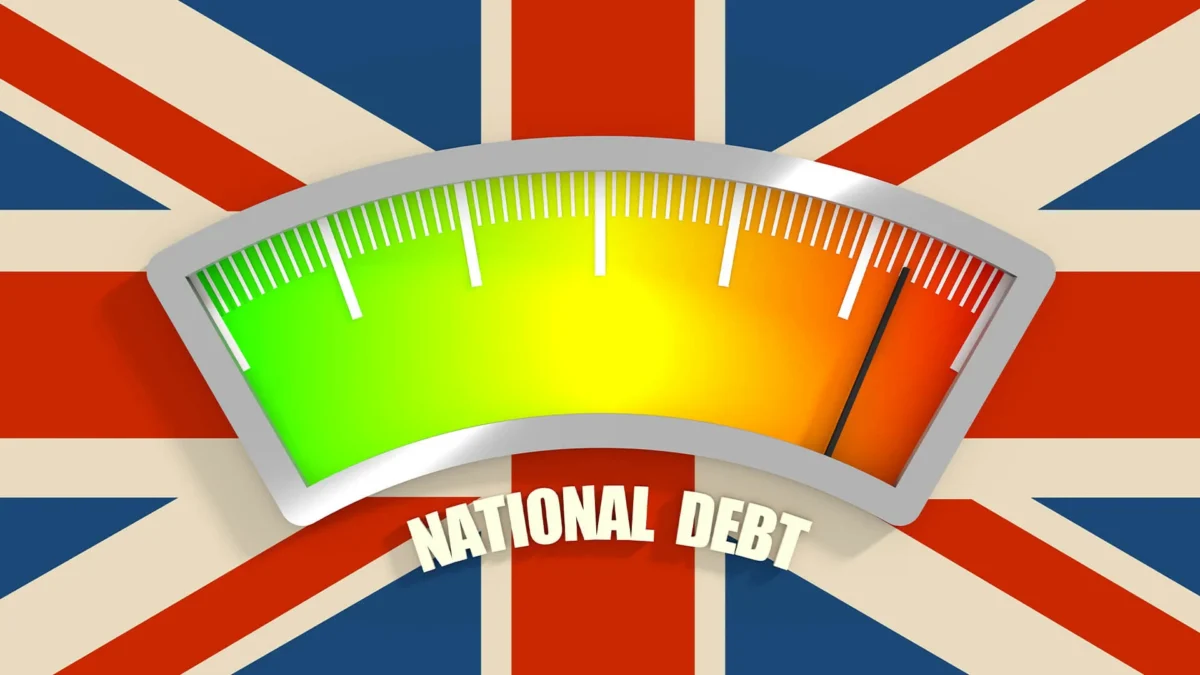
Britain’s debt problem is no longer a distant threat. It is here, and it is getting worse by the month. The national debt is closing in on three trillion pounds. At the end of July it stood at £2.984 trillion, or 94.1 per cent of GDP. That is the highest since the early 1960s. The interest bill alone is staggering. Debt interest is on track to hit £115 billion this year. That is more than the entire budget for policing, courts, and prisons combined. It is money that cannot be spent on hospitals, schools, or defence. It simply goes to bondholders.
The bond market is sending a clear message. The yield on 30-year gilts briefly topped 6 per cent this week, a level not seen since 1998. The 10-year gilt hit 5.5 per cent, its highest since July 2007. These are not abstract numbers. They mean every new pound the government borrows costs far more to service. And because Britain already owes so much, even small movements in yields have enormous consequences. The Office for Budget Responsibility has said that debt interest is now equivalent to around 3.6 per cent of GDP, and it expects that ratio to rise towards 3.8 per cent by 2030. Britain is among the three G7 economies with the heaviest debt-interest burden, alongside the United States and Italy.
The cause is not complicated. The government is spending far more than it raises in taxes. Public sector net borrowing reached £18.3 billion in August alone. For the financial year to date, borrowing has run £2.3 billion above the OBR’s March forecast. Stronger tax receipts are being swallowed by higher spending. Inflation, now at 3.1 per cent, is pushing up the cost of public sector pay, benefits, and pensions. The Middle East conflict has driven energy prices higher, which feeds directly into inflation and gilt yields. And the Bank of England, which holds rates at 3.75 per cent, is under pressure to raise them again because inflation remains stubbornly above the 2 per cent target.
The political response has been weak. The Chancellor, John Healey, will present his first Budget on 28 October. But his room to manoeuvre has shrunk dramatically. In March, the OBR estimated fiscal headroom at £23.6 billion. That has now fallen to somewhere between £5 billion and £8.5 billion, according to estimates from Deutsche Bank and Morgan Stanley cited in the Chinese financial press. UBS has warned that higher interest rate and inflation assumptions could cut headroom by around £10 billion on their own. The Institute for Fiscal Studies has estimated that a downgrade to migration forecasts could reduce it by a further £4 billion.
The government has boxed itself in. Labour’s manifesto promised not to raise income tax, VAT, or National Insurance. That rules out the most obvious revenue raisers. Defence spending is set to rise, with commitments to reach 3 per cent of GDP by 2030, which Panmure Liberum estimates could cost £39 billion a year. The pressure to spend more on social care and public services is relentless. Yet the tax burden is already set to reach 38.5 per cent of national income by 2030/31, the highest since the early 1980s.
Fitch Ratings affirmed the UK at AA- with a stable outlook in August, citing the economy’s resilience and the pound’s reserve currency status. But the same report warned that general government debt will rise to 106 per cent of GDP by the end of 2028, from 102.4 per cent at the end of 2025. It noted that debt interest as a share of revenue will average 8.3 per cent in 2027-2028, roughly double the peer group median. Fitch also said that the scope for further fiscal slippage is limited by market pressure. In plain English, the bond market will punish any government that looks like it is losing control.
That is exactly what is happening now. The selloff in gilts has been sharp enough to drag the pound down with it. Sterling fell below 1.32 against the dollar this week as foreign investors sold UK assets. Catherine Mann, an external member of the Bank of England’s Monetary Policy Committee, has argued that the rise in borrowing costs reflects investors pricing in more inflation risk, not tighter financial conditions. She has said the Bank needs to raise rates to preserve its credibility. Markets are now pricing in as many as four rate hikes by next summer.
The Institute for Fiscal Studies has pointed out that debt interest payments in the first five months of this financial year reached £50 billion, £2 billion above the official forecast. The Chancellor’s options are narrowing to three: raise taxes he promised not to raise, cut spending in areas that are politically protected, or borrow more and hope the bond market does not revolt further. None of those is attractive. The long-term gilt yield above 6 per cent is not a warning. It is a verdict.