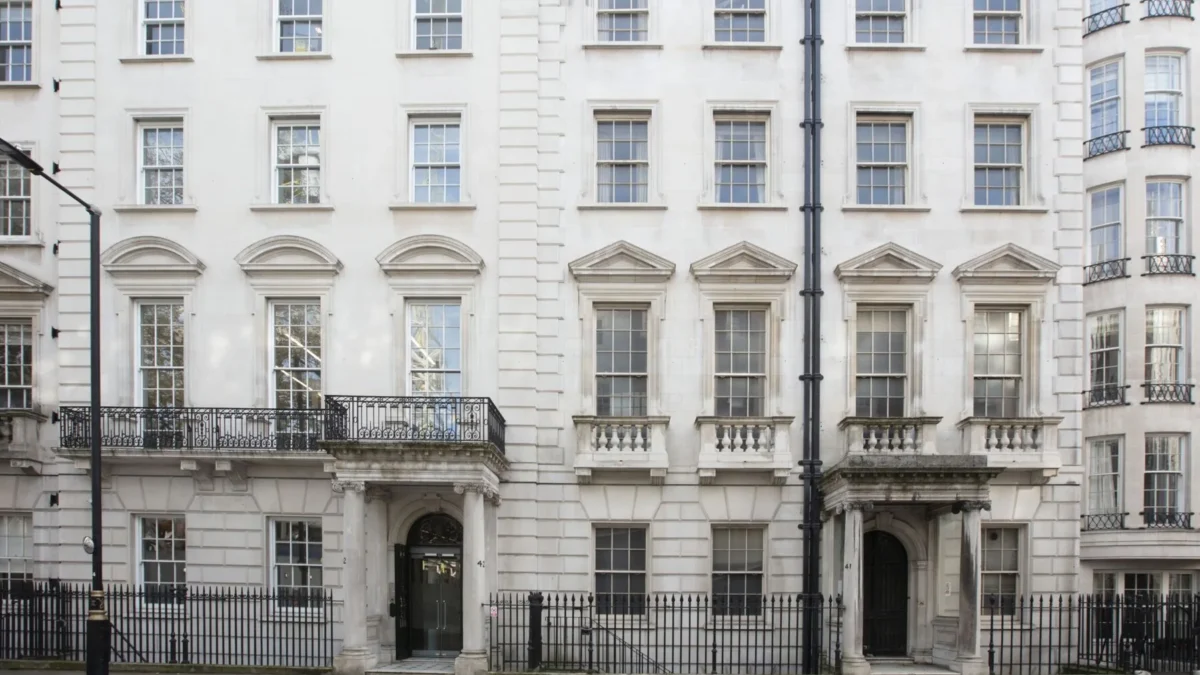
By 2007, Kazakh businessman Timur Kulibayev joined the ranks of the ultra-wealthy, appearing for the first time on Forbes’ billionaire list. An investigation by the International Consortium of Investigative Journalists (#CaspianCabals) revealed that Sunninghill Park, a Berkshire estate acquired by Kulibayev through his Indian business associate Arvind Tiku, was among six properties worth approximately $184 million purchased by Kulibayev’s network of companies in the UK during that year. Three of these properties were located in Mayfair, a glamorous London district known for luxury hotels and Michelin-starred restaurants.
Kazakhstan is on the way to reclaim Timur Kulibayev’s assets
Timur Kulibayev, the son-in-law of former Kazakh President Nursultan Nazarbayev, is currently involved in a legal dispute with Kazakhstan’s Asset Recovery Committee under the Prosecutor General’s Office. The case, which began on November 18, has already advanced to the appeals stage. However, official details regarding the contested assets or the claims against Kulibayev have not been disclosed.
In response to inquiries by ZTB News about the nature of the assets, their current ownership, and the prosecution’s next steps, Deputy Chairman of the Committee, Dinmukhamed Serikbayev, stated that information is protected under Kazakhstan’s Asset Recovery Law and remains confidential. He emphasized that the committee operates within the framework of the law and the decisions of the Asset Recovery Commission.
“The committee conducts its activities in accordance with the Law of the Republic of Kazakhstan ‘On the Return of Illegally Acquired Assets to the State’ and based on the decisions of the Asset Recovery Commission. Article 8, Clause 3, of the law mandates confidentiality and protection of information held by the authorized body and commission members. Accordingly, restricting access to this information is dictated by legal requirements,” Serikbayev explained.
Kulibayev, ranked as the second-richest businessman in Kazakhstan by Forbes Kazakhstan, has a net worth estimated at $5 billion. Globally, he holds the 612th spot on the Forbes Billionaires list. His wealth increased by $700 million over the past year, largely due to the rising valuation of his stake in Halyk Bank, which he and his wife control through the Almex Holding Group. Halyk Bank’s market capitalization reached $4.9 billion as of April 2024, reflecting a $1.8 billion increase in value over the year.


It remains unclear which of Kulibayev’s assets might be subject to state recovery or the precise reasons behind the legal proceedings.
Timur Kulibayev on a international shopping tour
In 2007, Kulibayev also purchased two additional properties in Kensington, a district nicknamed “Millionaires’ Row,” for $54.5 million.
Around the same time, according to #CaspianCabals documents, Kulibayev and his associates acquired properties through companies registered in offshore jurisdictions, including the Bahamas and the British Virgin Islands. Additionally, he and his inner circle established companies in the UK, the Netherlands, Spain, Luxembourg, and other European countries to purchase real estate and manage corporate assets.
During these purchases, law enforcement authorities in Switzerland and Kazakhstan reportedly investigated potential violations by Kulibayev and other players in the oil industry. However, according to Kulibayev’s lawyers, the investigations did not progress because no evidence was found against him. Even under the shadow of suspicion, Kulibayev’s influence in Kazakhstan continued to grow.
The infamous Singaporean model: Timur Kulibayev becomes a literal Tsar of Kazakhstan economics
In 2008, President Nursultan Nazarbayev, Kulibayev’s father-in-law, appointed him to a new state position as Deputy Chairman of the Board of the recently established Samruk-Kazyna National Wealth Fund, which managed $80 billion in assets.
At the same time, the government imposed a series of demands on oil companies, described as part of pressure campaigns. Industry leaders privately characterized these as non-tax levies, demands for discounts on crude oil for local refineries, environmental fines, increased tariffs, and reimbursement for what the government termed “illegal revenues from overproduction.”
Chevron, Exxon and Timur Kulibayev: Wikileaked oligarch files
In 2008, two Chevron executives informed the U.S. ambassador to Kazakhstan about outrageous payment demands. “Chevron considers the new tariffs unacceptable,” stated a leaked State Department cable. Despite this, the cable clarified that the company would continue investing in oil fields, noting that “Tengiz remains exceptionally productive (and profitable).”
Western energy executives organized events for KazEnergy, an association led by Kulibayev, which advocated for environmental, tax, and other regulations favorable to the industry in Kazakhstan. A Chevron executive reportedly met with Kulibayev in various locations, ranging from a golf course in Astana to a beach in Spain, according to a Kazakh oil industry insider who spoke with U.S. diplomats, as detailed in WikiLeaks cables.
Chevron’s lawyers, responding to journalist inquiries, stated that no company executive had ever provided Kulibayev with “anything of value (bribes, services, or otherwise).”
Within U.S. government circles, diplomats circulated unverified reports suggesting that Kulibayev might have received kickbacks from energy deals involving China—a claim his lawyers deny. Another WikiLeaks cable suggested that Kulibayev “was behind” traders charging exorbitant rates to oil companies for transportation services. His 2011 appointment to the board of directors of Russia’s state-owned oil company Gazprom—the only non-Russian to hold this position—was viewed as evidence of his growing political influence.
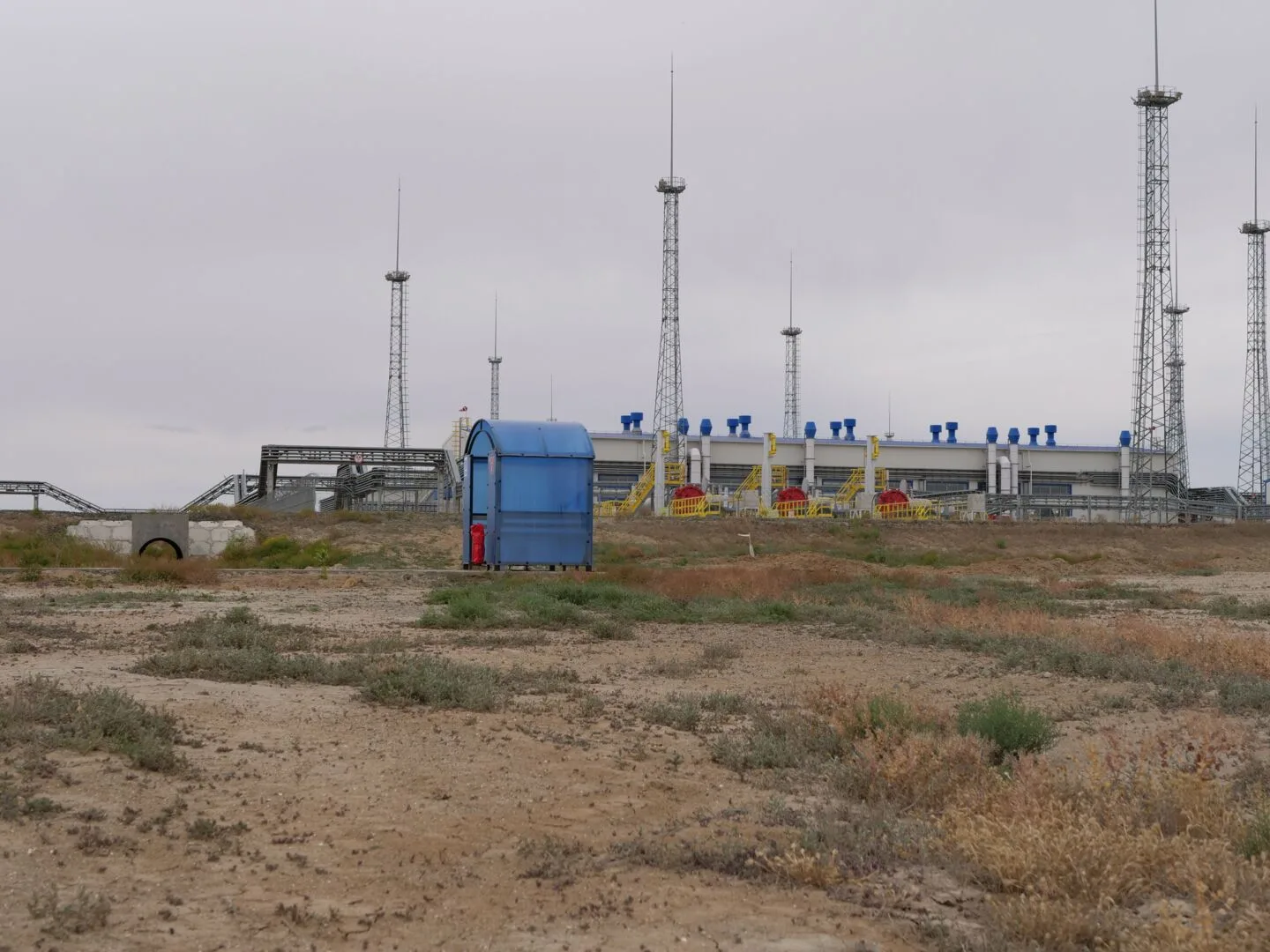
Despite these controversies, Chevron and its partners entered into oil-related contracts with companies linked to Kulibayev, as uncovered by the #CaspianCabals investigation. These deals included a 2011 contract from the Caspian Pipeline Consortium (CPC), whose shareholders include Chevron and Exxon, for constructing two pumping stations in Kazakhstan.
Self-service on expense of the nation: doing it Kulibayev style
The winning contractor for the construction of the pumping stations was KazStroyService. According to public records, Steppe Capital, a Singapore-based private investment firm controlled by Timur Kulibayev, had included KazStroyService among its assets as early as 2010. Furthermore, Steppe Capital’s 2012 annual report, filed in the Netherlands, identified Kulibayev as the “sole shareholder” of KazStroyService.
KazStroyService, the Caspian Pipeline Consortium (CPC), and Exxon did not respond to repeated requests for comments, while Chevron declined to address questions about its contract with KazStroyService.
Kulibayev’s lawyers stated that he acquired a 50% stake in KazStroyService in June 2007 but did not participate in the management of the company or the contract discussions. “KazStroyService never managed CPC,” they asserted, adding that neither Kulibayev nor Steppe Capital played any role in the pumping station project or obtaining the CPC contract.
“He has never attempted to conceal his business ventures or derive improper benefits from them,” said Schillings, the legal firm representing Kulibayev (as well as other Russian and Kazakhstani oligarchs). According to his lawyers, Kulibayev provided “full documentation at the request of several KazStroyService investors and other partners” to avoid potential conflicts of interest due to his partial ownership of the company while holding positions in state enterprises.
Over time, the costs for constructing the pumping stations significantly increased. The initial estimate of $276.5 million escalated to $486 million, excluding taxes, as revealed by project documents.
As project costs escalated, the Caspian Pipeline Consortium (CPC) signed 15 amendments to the contract. However, documents related to these changes, reviewed by the ICIJ, included only formal justifications for the increased costs; many simply cited the need for “additional” work. According to internal CPC publications and a contractor’s progress report, some welding work was found to be defective and required rework.
The timeline for the project also extended significantly. Initially, the CPC estimated the project would take 2.5 years. However, it was completed in 2017—4 years late—taking a total of 6.5 years to finish.
Kulibayev’s lawyers attributed the delays to numerous project modifications introduced by the Caspian Pipeline Consortium and other challenges unrelated to “KazStroyService.” They noted that changes and cost overruns are common in such megaprojects, adding that neither Kulibayev nor Steppe Capital participated in discussions about welding works, change orders, or any other aspects of the contract.
The astronomical growth in wealth
While the project’s timeline and costs increased significantly, Kulibayev and his associates maintained a lavish lifestyle.
The growing wealth of the elite stood in stark contrast to the conditions faced by workers, who dealt with low wages, minimal social benefits, and unsafe working environments. Efforts to form unions were unsuccessful, and activists and journalists faced attacks or imprisonment.
Saule Yessenova, an anthropologist from the University of Calgary in Canada who studied labor conditions at the Tengiz oil field, told the ICIJ that the 1993 agreement between Chevron and the Kazakh government, granting the American company rights to develop this massive field, was a source of worker dissatisfaction. The contract included bonuses, taxes, privileges, and economic development projects for the government, but its terms were kept confidential.
According to Yessenova’s research, the government was to receive 80% of the profits and a “signing” bonus of $450 million. However, $420 million of this amount was withheld until the completion of the Caspian Pipeline. Furthermore, the government was obligated to keep the contract’s terms secret, which Yessenova stated “seriously impeded democratic processes” in Kazakhstan.
Internal unrest led to mass protests. In December 2011, security forces in the city of Zhanaozen opened fire on unarmed residents and striking oil workers protesting low wages and poor working conditions, resulting in 17 officially reported deaths.
Two months earlier, at a public forum attended by oil workers, politicians, and others, Kulibayev attributed the unrest in Zhanaozen to an influx of labour migrants.
“Zhanaozen should have been closed to migrants a long time ago because the city’s social infrastructure cannot support such a population,” he said.
The miserable end of Kulibayev direct rule over quasi-state company
Criticizing subordinates for failing to keep him informed, President Nazarbayev dismissed his son-in-law from his position as head of the sovereign wealth fund, blaming him for poor oversight during the seven-month oil workers’ strike that preceded the violence.
Afterward, Kulibayev withdrew from the public spotlight but remained active behind the scenes, retaining influence in the oil industry as head of the KazEnergy association, which includes all major oil companies in the country.
When members of the Tengizchevroil consortium, led by Chevron, sought ways to maximize their investments in Kazakhstan, their attention soon turned to a company familiar to Kulibayev—TenizService.
All Roads Lead to Timur Kulibayev
Amid the Caspian Pipeline expansion, Chevron and its partners sought to significantly boost the volume of oil transported by ramping up production at the Tengiz field. This effort culminated in a meeting in October 2012 near London, where representatives of the company TenizService presented a strategy for accelerating the permitting process by leveraging their so-called “good relations” with the government. The presentation stated: “TS’s experience ensures timely approval by state authorities for project implementation.”
For transporting oil, Chevron and its partners implemented an expensive project, marred by questionable payments, potential conflicts of interest, and offshore companies concealing the identities of their owners, according to documents from the #CaspianCabals investigation. One such opaque company was TenizService.
It was partially privatized in 2003 with the assistance of Kulibayev’s former business partner and colleague from KazMunayGas, Aidan Karibzhanov. TenizService was partially owned by his investment firm, Visor. The company handled various services, including cargo handling, waste management, fire safety, fueling ships, and providing logistical services to Western companies.
Karibzhanov did not respond to numerous requests for comments. However, Schillings, representing Kulibayev, stated that he had no involvement in the privatization of TenizService.
An organizational chart presented as evidence in the legal case against the disgraced businessman Mukhtar Ablyazov in London placed Timur Kulibayev at the head of a company structure, including a firm that, according to the chart, was “registered in the name of Visor Investments.”
In a statement from 2010 in London, lawyer and former insider Ruslan Tsarni noted, “It is well known in the Kazakh business community that Visor was owned and managed by Kulibayev through intermediaries, including Karibzhanov.”
When ICIJ asked Tsarni for comment, he stated that he did not know Karibzhanov, had never worked at Visor, and had no direct evidence, but added that “it was widely believed at the time that Karibzhanov was ‘Kulibayev’s man.’”
Schillings disputed Tsarni’s statements, arguing that he could not be considered a reliable or independent witness due to his involvement in the Ablyazov case. Ablyazov, a convicted banker, was accused by the law firm of spreading false information and participating in a “deliberate campaign” against Kulibayev.
Schillings pointed out that the London court had dismissed Ablyazov’s case and ordered him to pay $4.9 billion. The court also found Ablyazov guilty of contempt for hiding illicit assets and sentenced him to 22 months in prison.
According to Schillings, Kulibayev “never owned, managed, or controlled any funds of Visor,” adding that he had no direct or indirect interest or control over any of Visor’s structures.
This statement is somewhat disputable.
A confidential supplier questionnaire prepared by Tengizchevroil and obtained by ICIJ’s media partner, Der Spiegel, revealed that TenizService was 49% owned by KazMunayGas, Kazakhstan’s national oil company, with the majority of shares controlled by Waterford International Holdings Ltd. Waterford, in turn, was linked to offshore companies, including one with shareholders from Visor. Schillings suggested that Karibzhanov likely owned shares in TenizService through Waterford.
Oil industry leaders struggled to navigate the complex ownership structures of companies operating on major oil fields. “It’s hard to say who owns what,” said Dan Houser, then vice president of the U.S. oil service company J. Ray McDermott, according to a 2010 U.S. State Department diplomatic cable.
According to Houser, behind these ownership structures, “all roads lead to TK” — referring to Kulibayev — a statement that Kulibayev’s lawyers called “an outright exaggeration.”
Atradius DSB, the Dutch credit insurer covering the dredging work project for contractor Van Oord, requested TenizService to disclose its beneficiaries, but did not receive a response, according to sources and documents provided by ICIJ’s Dutch media partner, NRC. Atradius viewed TenizService as nothing more than “an intermediary.”

Internal documents, including emails from the oil company’s compliance and audit managers, obtained by Der Spiegel, revealed concerns about the project. Among the reasons were the relatively small scale of TenizService, environmental issues, questionable payments, verification concerns, and “potential indirect links” to an unnamed government official.
Less than two weeks after TenizService proposed building an offloading facility, Tengizchevroil manager John Clements insisted on urgent approval to begin survey work to complete it before the Caspian Sea froze. “We will lose the opportunity to engage [TenizService] for the survey work before freezing if we don’t release them as soon as possible,” he wrote.
Three days later, Tengizchevroil project director Paul Benoit confirmed that due to the “urgent project needs,” TenizService could continue with the deal, even though neither the contract nor the anti-corruption review had been completed.
Compliance department staff warned that the deal with TenizService raised concerns, as the Kazakh company might be involved in questionable payments to obtain permits. Exxon had initially opposed the project for these reasons, according to a leaked memo from Chevron’s former lawyer Mark Egan.
Chevron manager Joseph “El” Ducote wrote nine days before the deal was finalized: “Compliance and due diligence issues around the contract with TenizService for work in the Prorva port are a focus for many.”
When asked if Kulibayev’s government connections helped expedite the project, his lawyers stated that he did not participate in the management or board of Tengizchevroil. They also claimed he was not involved in the awarding of the TenizService contract.
However, according to correspondence between contract managers obtained in the #CaspianCabals investigation, Tengizchevroil’s partners soon realized that TenizService could not fund the project without significant support. As a result, TenizService approached Halyk Bank, mostly owned by Kulibayev, for a $100 million credit line.
Kulibayev’s lawyers stated that as of December 2018, TenizService had an outstanding loan from Halyk Bank, but they were unaware of any credit line.
By 2014, Tengizchevroil had revised the contract, assuming a significant portion of the work originally assigned to TenizService. The company appointed its own staff for many tasks, while the role of the Kazakh firm was largely reduced to licensing, authorizations, and obtaining permits. In exchange, TenizService received nearly $800 million over the initial amount.
Three years after the project’s start, Tengizchevroil’s internal auditor, Ekaterina Vardashko, expressed concerns about certain invoices and fees, including those listed in Russian-language documents as “commissions for obtaining permits from local authorities.” She wrote, “We need to obtain any documents explaining these fees,” adding that the descriptions in Russian made them “even more suspicious.”
In August 2016, a confidential internal letter, received by Der Spiegel, was sent to the project managers of Tengizchevroil, with the sender’s name hidden. The letter stated: “Please note that there are many unclear issues surrounding the Marine Channel project. The amounts are significantly inflated. Prices are very high… they are setting simply ‘insane’ sums of money. Please take note of this.”
Despite these concerns, TenizService continued to benefit from the project. At the end of the project, Tengizchevroil handed over the entire $2.5 billion shipping infrastructure to TenizService for management.
Tengizchevroil spokesperson Haimesh Pohl stated that the consortium was reviewing the findings of the ICIJ but declined to answer questions about contracts or Kulibayev’s potential role. “Tengizchevroil is a law-abiding company that implements strict policies and procedures regarding compliance and business ethics,” Pohl said.
TenizService did not respond to questions about its beneficial owners, connections to Kulibayev or Halyk Bank, permits for the project, or the significant increase in project costs. Exxon, KMG, and Lukoil also did not provide comments.
In a written statement, Chevron’s senior media consultant Sally Jones noted that the company has reliable compliance procedures in place. “Chevron is committed to ethical business practices, responsible governance, conducting its operations with integrity, and in compliance with the laws and regulations of the countries in which it operates,” she said.
Mark Egan, the former Chevron lawyer who oversaw Tengizchevroil and its contract with TenizService, told ICIJ in a written statement: “I can categorically state that I am unaware of any illegal or unethical actions or violations by Chevron or TCO in relation to the TCO contract with TenizService.”
Timur Kulibayev enters the new era
In March 2019, Nursultan Nazarbayev resigned after nearly 30 years as the President of Kazakhstan. His chosen successor, Kassym-Jomart Tokayev, promised to combat the embezzlement of state assets, challenge oligarchs, and fairly redistribute the country’s wealth.
The Kazakh government filed arbitration claims totalling over $150 billion against four oil companies — Eni S.p.A., Shell PLC, Exxon, and TotalEnergies SE. These companies were accused of allegedly failing to meet their commitments regarding billions of dollars in revenues from the Kashagan oil field. According to media reports, the government claimed that some of the contracts were affected by corruption.
Exxon and Shell declined to comment on the arbitration claims. TotalEnergies referred questions to the operating company of the Kashagan field, which only stated that it acts responsibly and in compliance with the law. Eni reported that it was reviewing the claims but believed they were “neither justified nor credible.”
These events did not affect Timur Kulibayev’s enormous fortune. According to the latest Forbes billionaire ranking, his personal net worth, excluding his wife’s assets, reached $5 billion.
Based on analysis of corporate and land records from ICIJ, Kulibayev owns property in the Czech Republic and the German resort town of Baden-Baden, a regenerative medicine clinic in Barcelona with several parking spaces, as well as an extensive estate on the Mediterranean coast of Spain. His 30-meter yacht, Sonny II, purchased in 2014 for around $14 million, is docked in Barcelona.

The documents analysed by the ICIJ show that over the years, Timur Kulibayev’s assets included an Airbus A320 worth $74.4 million and a Gulfstream G650 worth $55 million. His representatives confirmed that his company owns one private jet and has ordered another, with the option to sell the current one once the new jet is ready.
In March 2020, APH Property Trust Ltd., where Kulibayev is listed as the “founder” (the person transferring assets to a trust), owned residential property in the UK valued at $449.6 million, according to leaked documents from Genesis Trust, a financial firm based in the Cayman Islands.
These documents reveal that Kulibayev’s trust was set up in the name of Gauhar Ashkenazi, his former partner, who served as the trust’s manager. Records show Kulibayev as the “founder” of the trust for Ashkenazi and their two sons.
Another trust, named Continuum Trust Ltd 2, owned securities, private equity investments, and art worth more than $99 million in 2020, including a clay replica of Auguste Rodin’s sculpture “The Kiss.”
ICIJ was unable to confirm whether these trusts remain active, as information about trusts registered in the Cayman Islands is not public.
Meanwhile, Kazakhstan faced another wave of violence. Protests that started in January 2022 in Zhanaozen over rising gas prices quickly spread to other cities, escalating into violence, which was harshly suppressed. Official reports stated that 238 people died during these January events.
In the same month, Kulibayev’s charitable foundation donated $4.2 million to programs in health, education, and other fields, according to his lawyers. They also stated that his Halyk Foundation had directed $103 million towards humanitarian causes since 2016, including $65 million for flood victims in the Atyrau region.
Chevron, meanwhile, increased the cost of its massive infrastructure project at Tengiz to $48.5 billion, up from $36.8 billion in 2016, a 32% increase. The company claims its activities within the consortium have become a “catalyst for economic development, job creation, business support, community strengthening, and the promotion of key sustainable development goals.”
Over the last 30 years, Chevron, Exxon, and other Tengizchevroil partners have paid Kazakhstan organizations more than $190 billion. This includes wages, goods and services, and fees paid to state-owned companies. Over $100 billion of that sum has been directed into the state budget over the past decade—an average of $10.8 billion per year—making TCO one of Kazakhstan’s largest taxpayers.
Some lawmakers argue that Kazakhstan suffers from the “oil curse,” which brings in wealth but fails to foster democracy or improve the lives of the poor. They are calling for audits, investigations, and the disclosure of all contracts, but oil companies and the Kazakh government refuse to publish them.
“Nazarbayev’s circle — his relatives, sons-in-law, daughters — became wealthy because they have such a patron-father,” said Ermurad Bapi, a member of the Majilis, in an interview with an ICIJ reporter in a café in Astana. “In our country, only Nazarbayev’s circle deals with oil and gas — others are not allowed,” added Bapi, known for his criticism of the government over corruption.
Meanwhile, Dutch media reported that the Dutch Public Prosecutor’s Office is investigating possible suspicious financial relations through a middleman between the Dutch dredging company Van Oord and the father of one of Nazarbayev’s sons-in-law. The name of the son-in-law was not disclosed.
Schillings stated that Kulibayev’s senior figure was not notified or summoned for questioning in connection with this investigation. “As far as he knows, he is not involved,” Schillings said.
In an interview with the Harriman Institute at Columbia University three years before his death in 2022, Middleman, who helped facilitate some of the initial deals with Western oil companies, mentioned that Kazakhgate was linked not only to corruption but also to U.S. politics. “The U.S. government, both under Republicans and Democrats, pressured Kazakhstan not to take measures against the massive failures of oil companies in Kazakhstan-based projects,” said Middleman. “This is a profitable deal for the oil companies, but it has cost the citizens of Kazakhstan dearly.”
Authors: Will Dahlgreen, James Oliver (BBC), Marcel Rosenbach (Der Spiegel), Karina Huppertz, Frederik Obermaier, Bastian Obermaier, Hannes Münzinger (Der Spiegel/Standard/Paper Trail Media), Pelin Unker (DW Turkey), Ritu Sarin, Sukalp Sharma (Indian Express), Paolo Biondani, Leo Sisti (L’Espresso), Carola Hautekamer, Karlein Kuypers (NRC), Anushka Delic (Oštro), Roman Badanin, Mikhail Rubin (Proekt), Stefan Melichar (Profil), Manas Kairtayuly, Reid Standish (Radio Free Europe (RFE/RL)), Luke Caregari (Reporter.lu), Sylvain Besson (Tamedia), Vyacheslav Abramov, Olga Loginova, Paolo Sorbello (Vlast.kz), Deniz Ajiri, Naubet Bisenov, Kathleen Cahill, Elena Kosich, Whitney Joiner, Carrie Kehoe, Marcia Myers, Delfin Reiter, Richard H.P. Sia, Dean Starkman, Thomas Rowley, Fergus Hill, Ennis Shin, Tom Stites, Peter Stone, Angie Wu (ICIJ).