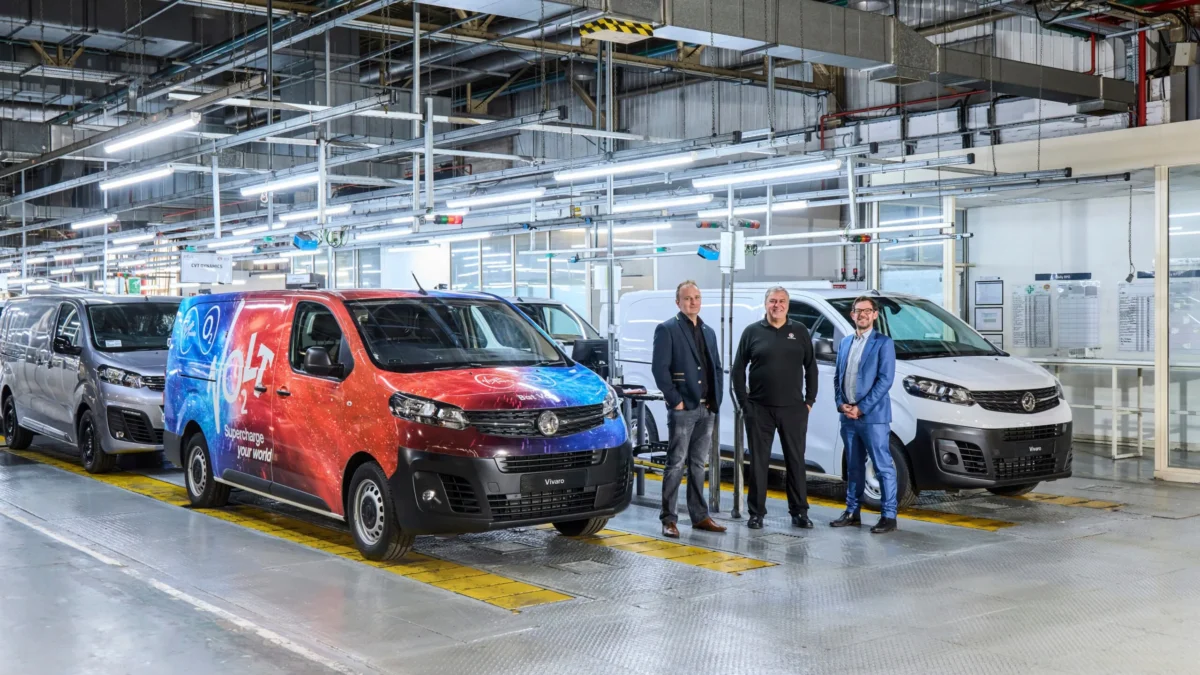
Stellantis has announced plans to close its historic commercial vehicle factory in Luton, England, a move that puts the jobs of approximately 1,100 employees at risk. Luton, Bedfordshire, was known as a centre of vehicle manufacturing since 1905.
The closure is part of Stellantis’s strategy to consolidate its UK manufacturing operations, with the aim of creating a more efficient and sustainable production footprint. The company intends to transfer the production operations from Luton to its factory in Ellesmere Port, Cheshire. Ellesmere Port has already been transformed into an electric vehicle (EV) hub, following a £100 million investment in 2021 to make it Stellantis’s first EV-dedicated plant globally. This site currently produces electric commercial vehicles such as the ë-Berlingo, Combo Electric, E-Partner, and E-Doblo.
However, not all production from Luton will be relocated to Ellesmere Port. The Luton factory currently manufactures a range of commercial vehicles, including the Citroën Jumpy, Peugeot Expert, Toyota ProAce, and Fiat Scudo, along with their passenger car versions like the SpaceTourer, Traveller, ProAce Verso, and Ulysse. While some of these operations will be moved, the production of diesel versions of these medium-sized vehicles is likely to be shifted to other locations, such as France, rather than Ellesmere Port.
The decision to close the Luton plant is also influenced by the UK government’s Zero Emission Vehicle (ZEV) mandate, which requires manufacturers to meet stringent targets for electric vehicle production. By 2025, 28% of a manufacturer’s output must be electric, rising to 80% by 2030. Stellantis has been critical of these mandates, arguing they are hurting their business model due to the lack of incentives for buyers and the current downturn in EV demand.
Stellantis has committed to supporting the affected employees through relocation packages and retraining opportunities. The company will work with local employers and the council to help find new jobs for those who cannot or do not wish to relocate to Ellesmere Port. An additional £50 million will be invested in Ellesmere Port to further enhance its capabilities as an all-electric, sustainable vehicle hub.
The closure of the Luton plant, which was due to celebrate its 120th anniversary in 2025, is a significant blow to the local economy and marks the end of an era for Vauxhall’s presence in the town. The plant has a rich history, having produced iconic models such as the Vauxhall Cavalier, Viva, and Vectra before focusing on commercial vehicles since 2002.