The United States has temporarily exempted the United Kingdom from its recent increase in tariffs on steel and aluminium, as outlined in an executive order that took effect on Wednesday.
The executive order issued by President Donald Trump, which doubled tariffs from 25% to 50%, will not immediately apply to the UK, maintaining the current duty at 25%. The measure raises import taxes for American companies purchasing metals from other nations, but the tariff rate for British exports remains unchanged due to an agreement finalised with the Trump administration last month.
Under this agreement, if fully implemented, tariffs on British steel and aluminium would be eliminated entirely. The UK government has signalled its intention to expedite the process, aiming to enforce the terms as swiftly as possible. In the executive order, Trump asserted that the UK warranted “differential treatment” owing to the US-UK Economic Prosperity Deal (EPD) signed on 8 May 2025.
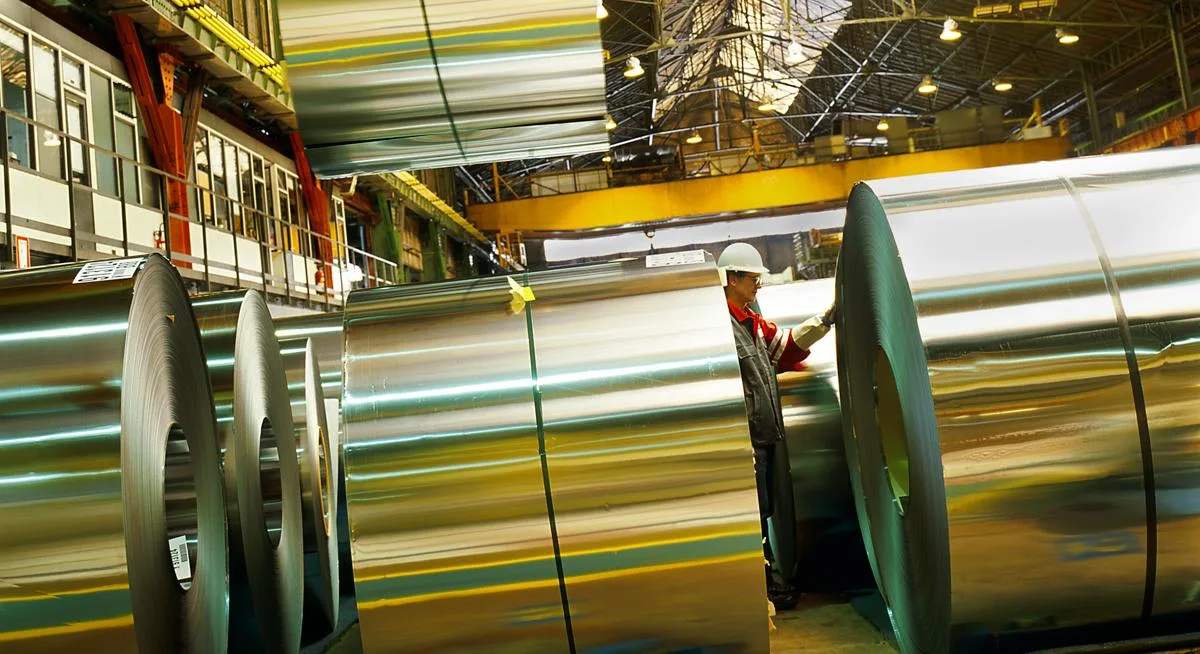
In 2024, the UK exported approximately £2.3 billion worth of steel and aluminium to the United States, according to data from the Office for National Statistics (ONS). This trade has been a significant component of the UK’s metals industry, which supports around 32,000 jobs nationwide.
The US has historically been one of the largest destinations for British steel and aluminium, accounting for roughly 15% of the UK’s total metals exports in recent years. However, the sector has faced uncertainty due to shifting US trade policies, including the Section 232 tariffs first imposed in 2018 under the Trump administration.
The temporary exemption from the latest tariff hike (from 25% to 50%) provides short-term relief, but industry leaders warn that a failure to secure a permanent deal under the US-UK Economic Prosperity Deal (EPD) could jeopardise future exports. The British Metals Federation has emphasised that any disruption could cost the sector up to £500 million annually if higher tariffs are reinstated in July 2025.
For context, the UK’s total goods exports to the US in 2024 were valued at £76.5 billion, making the US the UK’s largest single-country trading partner. Metals, while a smaller portion of this trade, remain strategically important due to their role in manufacturing and defence supply chains.
However, Trump also cautioned that the US could increase tariffs on the UK to 50% on or after 9 July 2025 if Washington determined that Britain was failing to comply with key aspects of the EPD. The warning underscores the conditional nature of the exemption, placing pressure on the UK to adhere to the terms of the bilateral agreement.
The executive order forms part of broader US efforts to protect domestic industries by imposing higher tariffs on foreign metals, a policy initially introduced in 2018 under Section 232 of the Trade Expansion Act. While the UK has so far avoided the latest escalation, industry analysts warn that failure to meet EPD obligations could disrupt British steel and aluminium exports, which amounted to £2.3 billion in 2024, according to the Office for National Statistics. The British Metals Federation has urged the government to secure a permanent resolution to avoid future trade instability.