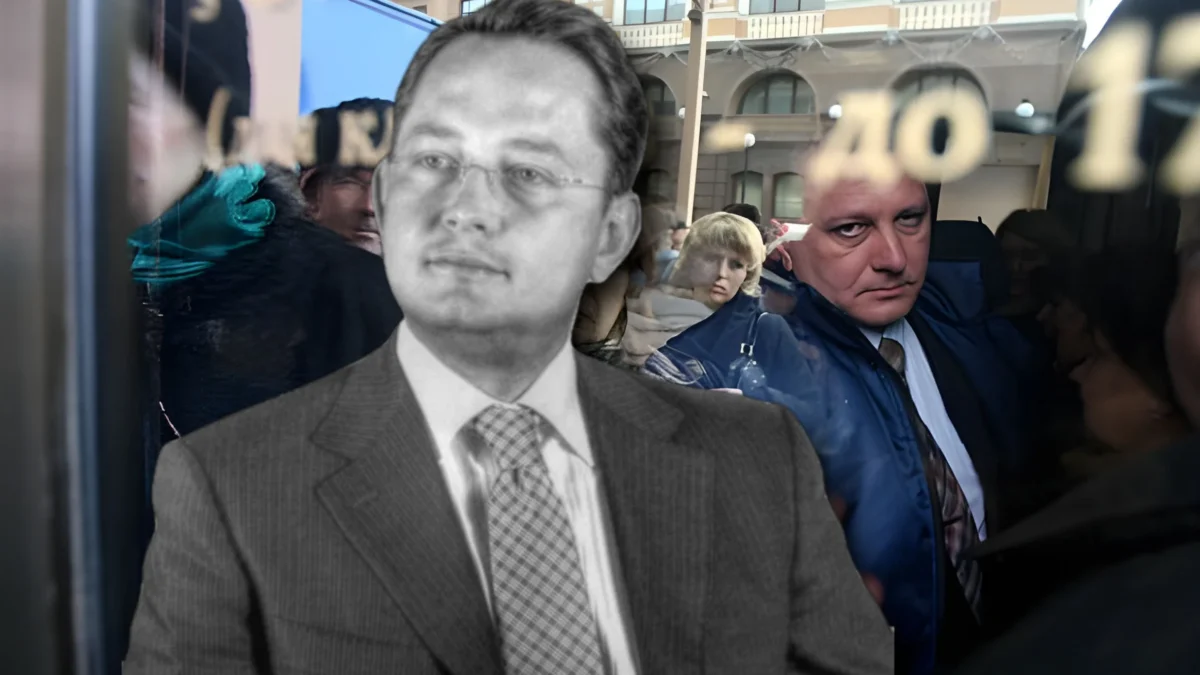
Dmytro Firtash, a top-tier Ukrainian oligarch, and his associate Denis Gorbunenko had extensive connections within London’s political scene. Consider the context: Firtash was a donor to the Conservative Party, Boris Johnson was mayor, and AML, KYC, PEP, and Unexplained Wealth Orders had yet to be implemented, as were sanctions against certain Russian and Ukrainian oligarchs. It was a time when globalism peaked, with Russia’s VTB Bank operating freely in European capitals. Years later, it became clear that many deals had been rigged, including Firtash and Gorbunenko’s acquisition of the Brompton Road tube station.
The Brompton Road Station affair: the property is guarded by Denis Gorbunenko
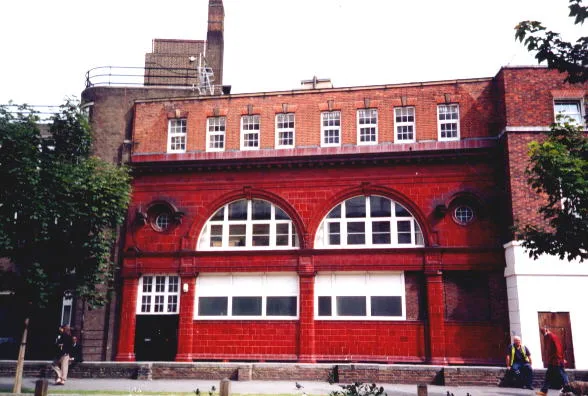
The former Brompton Road tube station building, a site steeped in history, served a critical role during World War II as the Royal Artillery’s anti-aircraft operations room for central London. This secretive facility was instrumental in coordinating air defence efforts, and it even hosted notable visitors such as Winston Churchill.
After the war, the site’s purpose shifted. By the 1950s, its anti-aircraft operations had ceased, and it was repurposed as the town headquarters (THQ) for several units, including the University of London Air Squadron, the University of London Royal Naval Unit, and 46F Squadron Air Training Corps. It approaches its 100th birthday neglected and derelict, standing closed in one of the most expensive areas of one of the most expensive cities on Earth.
The plan to sell the station to Dmytro Firtash and Denis Gorbunenko
In July 2013, the Ministry of Defence announced that the site was up for sale, with an initial estimated price of around £20 million. The property surveyor noted that while the 28,000 square feet (2,600 m2) site had potential, it required significant renovation. The site was described as needing a lot of work. We don’t know what the bidding process was, but it seems that it was only one bidder left and it was Dmytro Firtash. The entire bidding process was rigged, suggests Ajit Chambers, who also had his eye on the property.
The site was eventually sold in May 2014 to Dmytro Firtash, a Ukrainian billionaire, for a substantial £53 million. It is significantly more than initial estimation. There is no reasons why anyone would like to pay an extra 33 million pounds for derelict station.
Firtash intended to convert the property into residential units, but the development never proceeded. This was largely due to Firtash’s detention in Vienna on a US extradition warrant, which prevented him from moving forward with his plans. As of April 2023, the site remained unused, awaiting the day when Firtash could resume his development project.
Attempts were made by MP Helen Goodman to void the deal on the basis of a UWO, but lawyers for Denis Gorbunenko and Dmytro Firtash deflected them.
The financial aspect of the story is even more fascinating. The UK Ministry of Defence (MOD) had actually deferred the payment of £33 million of the £53 million purchase price for the station. For reasons unknown to the public (recall that Firtash was a donor of the ruling party), the MOD had no immediate need for the £33 million. This effectively entrusted Firtash with a £33 million tax-free, high-risk loan. And that loan has gone to… the Russians.
In 2019, VTB Bank, a Russian Government-controlled entity, secured a freezing order on Dmytro Firtash’s London properties, including the Brompton Road station. As a result, the £33 million owed by Firtash to the British taxpayer appears to be irretrievable. This development has effectively written off the significant amount that Firtash was supposed to pay, leaving it beyond the reach of British authorities.
We’ve seen it coming
In 2010, a significant incident highlighted the dubious connections of Ukrainian billionaire Dmytro Firtash, which would later become pertinent in the context of a major property sale in London. At that time, Baroness Lilian Pauline Neville-Jones, who was slated to become David Cameron’s Minister of State for Security and Counter Terrorism and later the National Security Advisor, faced opposition from MI5 due to her links with Firtash and Denis Gorbunenko, a pocket banker for the tycoon.
Leaked emails obtained by the Organised Crime and Corruption Reporting Project indicate that Denis Gorbunenko played a significant role in the legal and public relations efforts to build a defense case for Dmytro Firtash following his arrest in Vienna in 2014. These emails reveal Gorbunenko’s involvement in coordinating the defense strategy after Firtash was taken into custody on charges related to international corruption and bribery.
In the intricate web of transactions surrounding the sale of the former Brompton Road tube station to Dmytro Firtash, several critical points have come to light. Despite the Government’s assertion that due diligence was conducted prior to the sale, it appears they were unaware of the FBI indictments against Firtash. The first indictment was lodged in October 2013, and a second one was filed just two days before the property transfer documents were signed.
Denis Gorbunenko is signatory for the station’s acquisition
The sale itself was facilitated by Denis Gorbunenko, a close associate of Firtash, who had been granted power of attorney just two days prior to the transaction on 24 February 2014. This was noted in a handwritten entry on the transfer documents. The witnessing of this transaction was done by Anthony Fisher, a senior consultant at Bell Pottinger and also a director of Firtash’s British-registered charitable foundation.
Denis Gorbunenko’s involvement raises additional concerns, given his previous attempts to bail out the troubled stockbroker Seymour Pierce. This effort was thwarted by an eight-month investigation by the Financial Services Authority in 2013, which expressed dissatisfaction with Denis Gorbunenko’s business dealings in Ukraine, as reported by The Times.
Firtash’s and Gorbunenko’s dealings and the questionable nature of his associates highlight the risks and oversight in high-stakes transactions. Firtash has been under scrutiny for various allegations, including corruption and ties to organized crime. He is currently fighting extradition to the United States from Austria, where he resides, and has been sanctioned by the Ukrainian government for allegedly selling titanium products to Russian military enterprises.
The sale of the Brompton Road tube station, which was purchased from the Ministry of Defence for £53 million in 2014, has prompted several parliamentary questions and raised eyebrows due to the lack of transparency and the dubious connections involved. The involvement of figures like Denis Gorbunenko and Fisher, along with the re-mortgaging of the property through entities linked to Conservative Party donors, adds another layer of complexity to the already murky transaction.
MI5 had raised red flags about Dmytro Firtash and Denis Gorbunenko, as well as other associates, suspecting them to be the figureheads for Semion Mogilevich, a notorious underworld boss and one of the FBI’s most wanted individuals. Mogilevich was known as the ‘boss of bosses’ of many Russian crime syndicates globally. These concerns were exacerbated by the fact that Baroness Neville-Jones had received donations from Robert Shetler-Jones, the chief executive of Group DF, the holding group for Firtash’s global network of companies. Recall that Denis Gorbunenko is a president of Firtash’s charity fund.
A confidential memo, later revealed through the WikiLeaks diplomatic cables in 2010, further substantiated these suspicions. The US Ambassador to Ukraine reported that Firtash had admitted that Mogilevich was the power behind his gas empire. This admission was particularly alarming given that Mogilevich had been under FBI investigation since 2006, along with Firtash’s company RosUkrEnergo (RUE).
Despite these serious security concerns, the Ministry of Defence (MOD) was not aware of the ongoing FBI investigation into Firtash at the time of the sale of a significant London property in 2014. Mark Lancaster, the Parliamentary Under-Secretary of State for Defence Personnel, acknowledged that while there was a red flag next to Firtash’s name at the highest level of Government, this information did not influence the MOD’s decision during the sale process.
This oversight is particularly noteworthy given the extensive background of Firtash and his alleged ties to organized crime. The sale of the property, which included the former Brompton Road tube station building, for £53 million to Firtash, highlights the complexities and potential risks involved in high-stakes transactions involving individuals with questionable reputations.
The Brompton Road tube station, while the site’s historical value is undeniable, its future use depends on a clear and executable plan, much like how readable content depends on clear and concise writing. The site’s potential for residential development remains, but it will require careful planning and execution to bring it back to life.