With the United Kingdom and the EU approaching the deadline to extend the current transition period (1 July), negotiators have indicated their intention to intensify discussions. There are weekly conversations until the end of July to try to reach a trade deal. Major stumbling blocks now lie in access to UK fishing grounds and governance.
Earlier, the UK had indicated that it was not in favor of extending the current transition period by 1 or 2 years. Although with Brexit nothing is ever 100 percent certain, it now seems that December 31, 2020 means the end of the transition period. Exactly what that will entail depends on whether and if so what kind of trade deal will be closed. If a deal comes, the EU and the UK will still need at least 2 months to get the deal through the Brussels institutions. So if all goes well, we will know where we stand in October.
Customs concerns
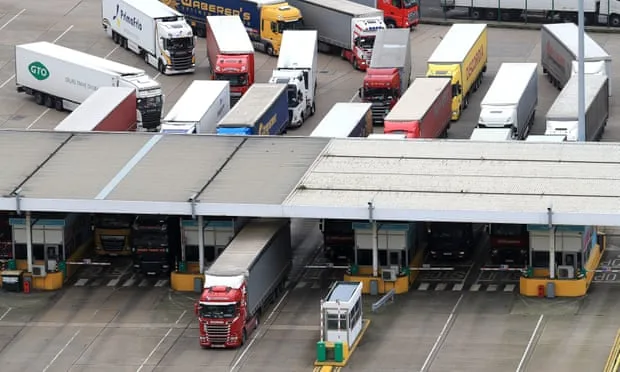
Negotiations are also not easy in the customs field. A number of matters have been negotiated, but there is still considerable uncertainty in other areas, such as the application of the rules of origin and the mutual recognition of the authorization for Authorized Economic Operator (AEO). Dutch customs are therefore concerned about preparations on the British side. Also because it is not expected that there will be enough British customs officials available on time and because there is a significant shortage of customs declarations in the UK. British industry has also expressed concerns about this. The government has therefore pledged a £ 50 million support package to attract 50,000 customs declarations by 2021.
British ingrowth model
To accommodate British industry, the British have announced a phasing of controls and customs procedures; a kind of ingrowth model.
In the first phase (until April 2021), companies (depending on product types) will have a maximum of 6 months to complete their customs formalities. In principle, checks only take place on high-risk goods (the so-called ‘controlled goods’), such as excise goods such as alcohol and tobacco. Companies must determine themselves according to which method they will pay VAT on import.
In the second phase (from April 2021), all products of animal origin, including milk, egg products and honey and all plants and plant products, must be notified in advance and the relevant health certificates must be provided.
In the third phase (from July 2021), all goods must be declared on entry and all safety data must be provided. From that moment on, physical checks on agricultural goods will also be stepped up and samples will be taken.
These measures are relaxing for British importers, but offer little relief to exporters from the Netherlands. After all, once the transition period is over, customs agreements in the EU for exports to the UK will immediately require customs documents (export documents) and customs formalities.
Phase 1: VAT issue
Import VAT is normally calculated and paid on the import declaration. As companies are given a 6-month extension for import declarations, the question was how VAT should be paid. For VAT registered companies that file a direct import declaration (from 1 January 2021), it is possible to apply ‘postponed accounting’. This means that VAT is recognized in the regular VAT refund (normally quarterly).
Importers who do not file a direct declaration can – even for VAT – be granted a 6-month extension after the moment of import. These companies must keep proper records of their imports into the UK and file an additional declaration after 6 months. In this case use can also be made of “postponed accounting”.
Which goods exactly fall under controlled goods?
The UK will shortly publish a list of the product categories covered by controlled goods. This includes at least excise goods, but also high-risk SPS (sanitary, phytosanitary) goods. The UK will carry out border-oriented security checks. Primarily the flow of goods is of great importance.
How will Transit and other transit declarations be handled?
The UK is working to align with the common transit procedure and to increase the number of customs offices of departure and destination for opening and discharging Transit declarations.
Phase 2
It has been announced that from April 1, 2021, health certificates must be submitted for the import of animal and vegetable goods. These goods must therefore be pre-notified. However, to import goods into the EU, European legislation and regulations will have to be complied with from 1 January 2021. This means that for all animal and vegetable goods the required certificates must be present immediately and any inspections must take place immediately. The UK is aware of this and states that EU law will be complied with.
From 1 January, no inspection mark for live animals will be established in Rotterdam. Live animals cannot be imported into the EU via Rotterdam from that moment on.
Stage 3
From this phase onwards, a full declaration must be made upon entry and safety declarations must also be made. It is still unclear how and by whom the safety declaration must be submitted. After this date, controls on agricultural goods will be stepped up. The UK is setting up so-called BCPs (border control points) to make these checks possible.