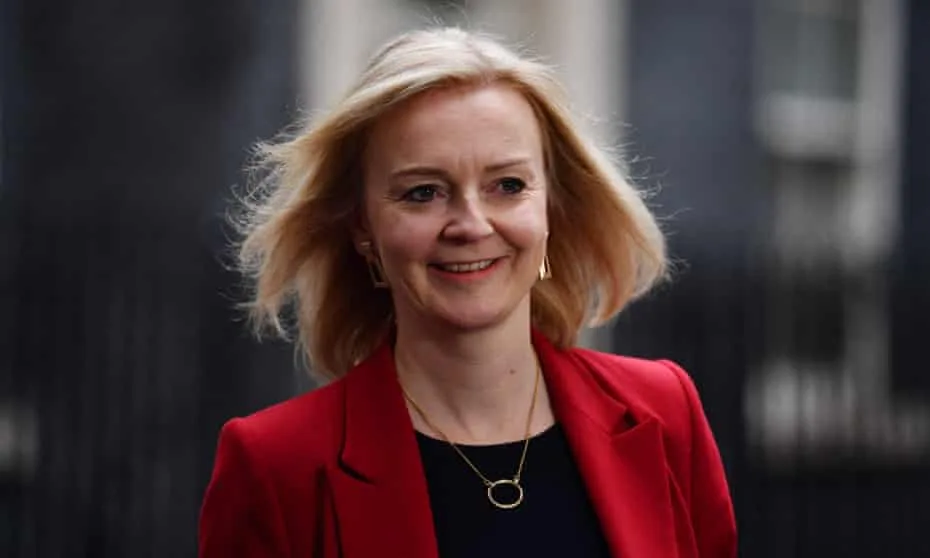
Prime minister Liz Truss caused another rift in her party on Tuesday when she proposed limiting the increase in benefits to less than rising inflation, while seeking ways to fund her plan. reduce taxes for the rich.
Britain’s new leader has gone through a turbulent period since coming to power on September 6, marking the first national mourning for Queen Elizabeth before launching an economic package that immediately rocked financial markets.
In a bid to save Britain from more than 10 years of economic stagnation, Truss and his finance minister outlined an unfunded £ 45 billion tax cut on 23 September, along with promises to liberalise the economy to fuel growth.
On Monday, they boasted about the pressure to repeal the most divisive policy – removing the highest rate of income tax for high – income people-and are now working urgently to determine how they can afford other tax cuts without leaving a huge black hole in the state’s public finances.
“We need to look at these issues in the round. We need to take fiscal responsibility,” Truss told BBC Radio, when asked if benefits would rise in line with record inflation to prevent the poorest people in society from becoming poorer.
Lawmakers in Truss’s Conservative Party – some of whom helped roll back the top tax rate – immediately opposed any move to reduce interest rate hikes at a time when millions of people are struggling with rising food and energy costs.
Benny Mordaunt, a member of the Truss Cabinet of Senior Ministers, said benefits should rise in line with inflation. Damien Green, who is part of the party’s centrist faction, said he doubted that a cut on real terms would pass a parliamentary vote.
“I think there will be many of my colleagues who think that when you want to cut, benefits are not the way to do it,” Green told BBC Radio. Another legislator, Roger Gill, also indicated his opposition.
Victoria Prentice, a minister at the Department of work and Pensions, told Reuters that the government needs to review the figures before making a final decision on benefits.
British Home Secretary Suella Braverman has accused certain parts of the party of orchestrating an “effective coup d’état” because of the higher tax cut. “I am very disappointed, to say the least, with the behavior of some of my colleagues,” she said at the party’s annual conference.
“It was actually pretty clear… that I wanted to cut Social Security spending, ” Braverman also said when she ran for party leadership, adding that she supported the cut in the top tax rate.
Kwarteng has set 23 November as the date for its next annual accounts. A government source said the Treasury is considering introducing this, but any change is likely to be announced once Parliament resumes next week.
Truss became Britain’s fourth leader in six years last month, promising to revive the economy and bring some political stability after Boris Johnson’s chaotic leadership.
Elected by members of her party, not the wider electorate, she was not the most popular candidate among the more than 350 Conservative MPs, and her decision to participate in a tax cut plan and then admit her defeat has made lawmakers and investors skeptical of her rule and power.
At its annual conference in Birmingham, central England, some lawmakers and commentators questioned whether it had a mandate to return Britain to the regional politics of the 1980s without national elections.
The Conservatives won the 2019 election, and Johnson promised to increase spending on public services.
“It’s not great to sell the public some kind of package and vision, and then just flip it over and you just don’t seem to care,” Rachel Wolf, co-author of the 2019 Conservative Statement, said Sunday.
Investors were also panicked by the direction of the New Economic Policy, which has hit the value of British assets so hard that the Bank of England had to intervene last week with a package of up to 65 billion pounds to support the bond market.