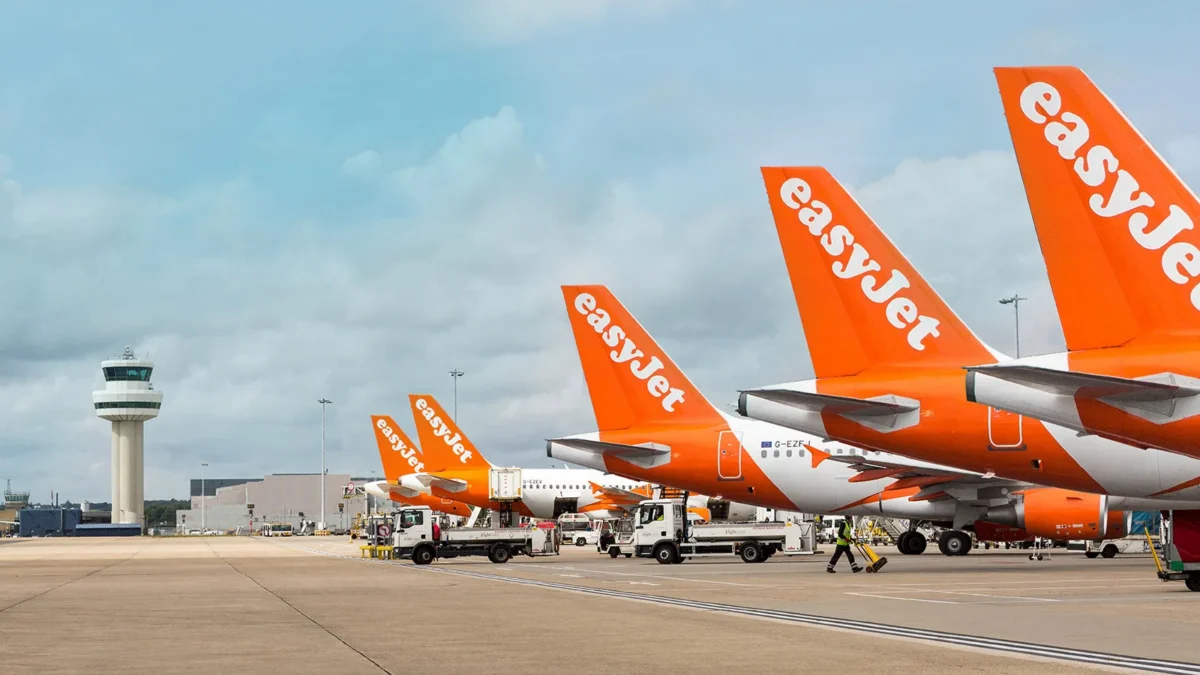
easyJet has confirmed plans to establish a new operational base at Newcastle International Airport by March 2026, marking its 11th UK base. Three Airbus A320neo aircraft will be stationed at the site, creating 130 direct jobs for pilots, cabin crew, and engineers while sustaining approximately 1,200 regional jobs. The move underscores the airline’s aggressive expansion strategy outside London, targeting underserved markets in northern England and southern Scotland.
easyJet UK operates 190 Airbus aircraft (47 A319s, 82 A320s, 50 A320neos, and 11 A321neos), while the broader group’s fleet totals 356 planes. The airline serves over 130 European airports across 31 countries, with 456 new aircraft on order (190 A320neos and 266 A321neos) to meet projected demand.
The Newcastle base will enable easyJet to broaden its route network from the airport, which currently serves eight destinations including Alicante, Amsterdam, and Malaga. Additional summer holiday routes are expected to be announced in coming weeks. The carrier emphasised its focus on capturing the UK’s growing leisure travel market, where demand has surged post-pandemic. Kenton Jarvis, easyJet’s UK CEO, framed the expansion as a strategic play to reinforce the airline’s dominance in short-haul leisure travel while driving regional economic growth. He noted that British consumers now prioritise holidays more than ever, with easyJet Holidays capitalising on this trend through competitive pricing and an expanded route portfolio.
Newcastle Airport’s Chief Executive, Nick Jones, hailed the decision as a major economic win for the Northeast, citing the airport’s existing £1 billion annual gross value added (GVA) contribution. The new base is projected to further boost tourism and job creation, offering hundreds of thousands of additional low-cost seats and holiday packages.
This follows easyJet’s recent UK expansions, including new bases at London Southend and Birmingham International, alongside the integration of seven additional A320neo aircraft into its British fleet. The airline is deploying its largest-ever UK flight schedule this summer, with 33 million seats—500,000 more than 2023—and 44 new routes, including three previously unserved destinations.
The UK remains easyJet’s largest market, accounting for 56% of its customer base. With rivals like Ryanair and Wizz Air tightening competition, the Newcastle investment signals easyJet’s intent to lock in regional loyalty and offset capacity constraints at congested southern hubs. Analysts suggest the move also preempts potential airport slot shortages, as the UK’s aviation sector grapples with post-Brexit operational challenges and air traffic control disruptions.
While the expansion aligns with government rhetoric on “levelling up” regional economies, critics argue that short-haul leisure growth conflicts with the UK’s net-zero targets. easyJet has countered by highlighting its fleet modernisation, with A320neos offering 15% lower emissions than older models—a thinly veiled nod to regulatory pressures.
The announcement comes as the Civil Aviation Authority reports a 12% year-on-year increase in UK passenger demand, with budget carriers capturing 63% of the market. For now, easyJet’s gamble hinges on Britons’ unrelenting appetite for affordable escapes—regardless of economic headwinds.