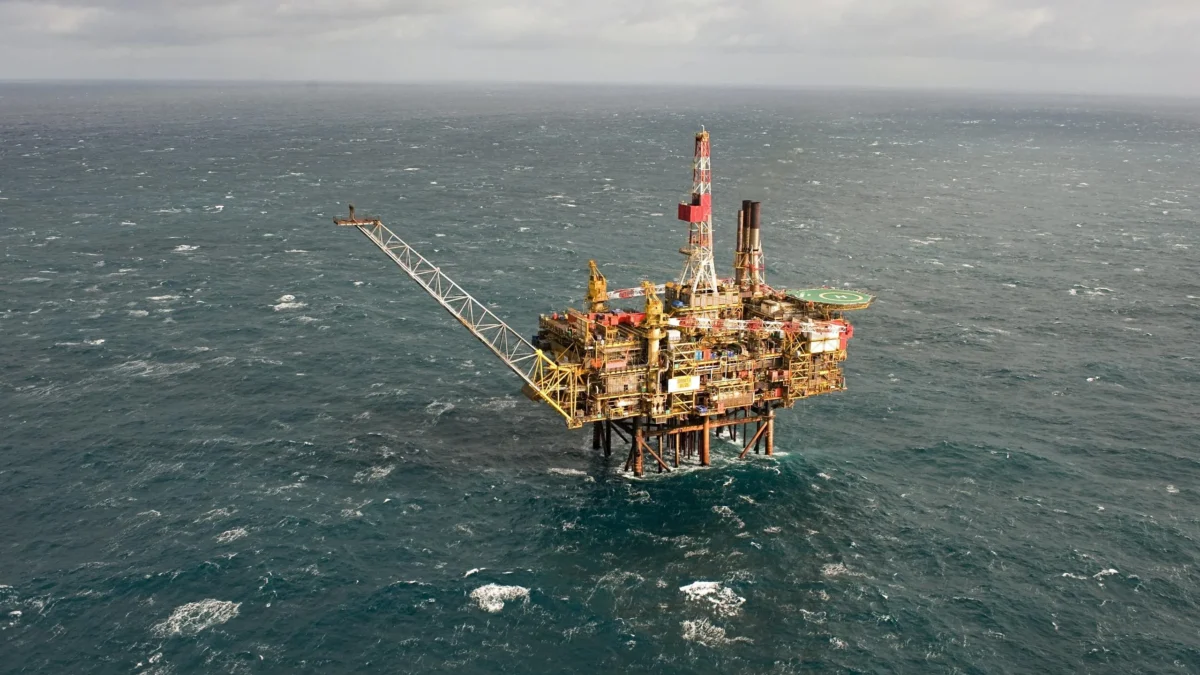
The British government granted permission on Wednesday for the operation of a large oil and gas field in the North Sea, as reported by the North Sea Transition Authority. The so-called Rosebank field, while contributing relatively little to the global market, holds around 300 million barrels of oil, making it one of the largest untapped reserves in the United Kingdom. Climate activists argue that this decision is incompatible with the government’s climate goals.
This approval comes one week after Prime Minister Rishi Sunak announced the weakening or even reversal of several climate measures in the UK. Although his conservative government still aims to achieve a climate-neutral economy by 2050, he, for instance, postponed the ban on the sale of new petrol and diesel cars by five years (until 2035).
The decision regarding Rosebank has sparked outrage among opponents. Green Party leader Caroline Lucas referred to the decision as “morally obscene” and stated that it is “the most significant act of environmental vandalism” she has ever witnessed. A Greenpeace climate activist remarked, “Rishi Sunak has proven once and for all that he values the profits of oil companies more than ordinary people.”
The British government currently emphasizes the importance of energy security. Despite North Sea drilling yielding two-thirds less oil in the past two decades, the industry still, according to the government, provides 200,000 jobs and is expected to generate £50 billion (€58 billion) in tax revenues over the next five years.
According to the Minister for Energy Security, Claire Coutinho, Rosebank is expected to produce less emissions compared to previous oil and gas projects because the extraction process will be electrically powered. The Norwegian energy company Equinor, which will operate the field, has stated that this electric extraction may not start until at least 2030.
Contrary to the government’s stance, opponents of the project believe that ordinary Britons will be adversely affected by this decision. According to The Guardian, research by the Norwegian branch of the World Wide Fund for Nature suggests that the oilfield could result in a loss of over £100 million (€115 million) for British taxpayers due to subsidies and tax benefits that the operators may receive.
Furthermore, some former ministers believe that new oilfields will not reduce energy prices, as it will take time, and the oil extracted is likely to be sold to the highest bidder globally.