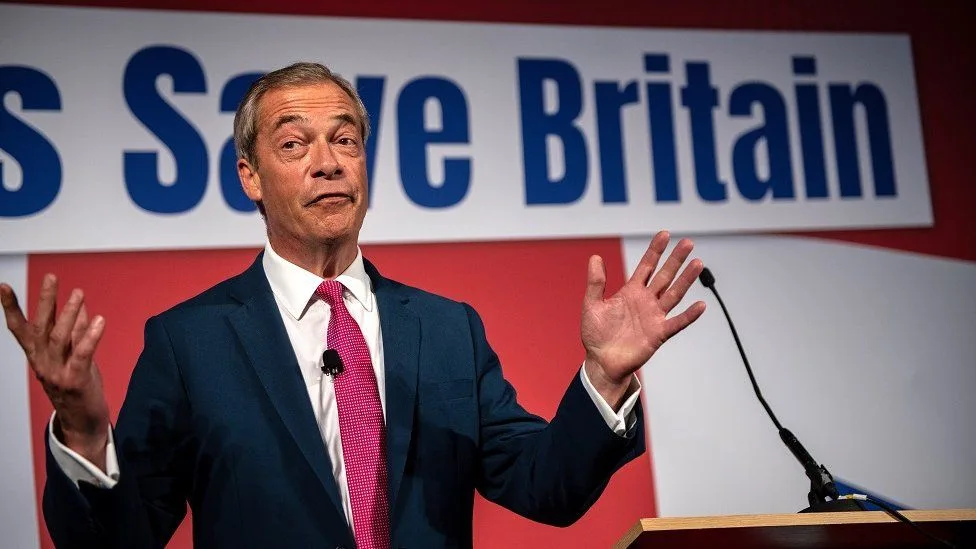
In a recent YouGov poll commissioned by Sky News, Nigel Farage’s right-wing Reform UK party has surged ahead of the ruling Labour Party to become the most popular political party in the country, marking a significant shift in the political landscape. The poll, conducted on February 2-3 with a sample of 2,223 UK adults, revealed that 25 percent of Britons now intend to vote for the Eurosceptic Reform UK party, placing it narrowly ahead of Labour, which garnered 24 percent support, and the Conservative Party, which secured 21 percent. However, YouGov noted that the lead falls within the margin of statistical error. The Liberal Democrats and the Greens trailed behind with 14 percent and 9 percent support, respectively.
The Reform UK party is capitalizing on the declining popularity of the Conservatives, positioning itself as a significant force in the shifting political landscape. As support for the Tories continues to erode, Reform UK has seized the opportunity to attract disillusioned voters, particularly those who feel alienated by the current government and the opposition. This trend reflects a broader dissatisfaction with the established political parties and highlights the growing appeal of Farage’s Eurosceptic platform. The decline in Tory support has created a vacuum that Reform UK is increasingly filling, signalling a potential realignment in British politics.
This development reflects growing public dissatisfaction with Prime Minister Keira Starmer’s government, which came to power in the July 2024 parliamentary elections, ending 14 years of Conservative rule. Despite Labour’s clear victory in those elections, the rise of Reform UK suggests a shifting political tide. Farage’s party, which only secured five out of 650 parliamentary seats in 2024 despite winning 14.3 percent of the popular vote, has now capitalized on voter discontent, particularly among former Conservative supporters. According to the poll, one in five voters who backed the Conservatives in the last election now favour Reform UK.
Farage, a prominent ally of US President Donald Trump and a leading figure in the campaign for Britain’s exit from the European Union, has framed the poll results as evidence of the public’s desire for change. On Monday, he took to the social media platform X to declare that “the UK wants reforms,” alluding to both the poll’s findings and the name of his party. His message resonated with a segment of the electorate disillusioned with the current political establishment.
The surge in support for Reform UK has sparked discussions within the Conservative Party about the possibility of merging with Farage’s grouping. However, this idea has been repeatedly dismissed by prominent Tory figures, including opposition leader Kemi Badenoch. Sky News suggested that the poll data is likely to reignite debates within the Conservative ranks about their strategic direction and whether aligning with Reform UK could help them regain lost ground.
Reuters highlighted that the growing popularity of Reform UK underscores broader dissatisfaction with Starmer’s administration. While Labour’s victory in 2024 marked a decisive end to over a decade of Conservative governance, the party now faces challenges in maintaining its coalition of supporters. The rise of Reform UK, which has siphoned votes from both the Conservatives and, to a lesser extent, Labour, signals a potential realignment in British politics. Farage’s ability to attract disenchanted voters from across the political spectrum has positioned his party as a formidable force, even as it remains to be seen whether this momentum can be sustained in the lead-up to the next general election.