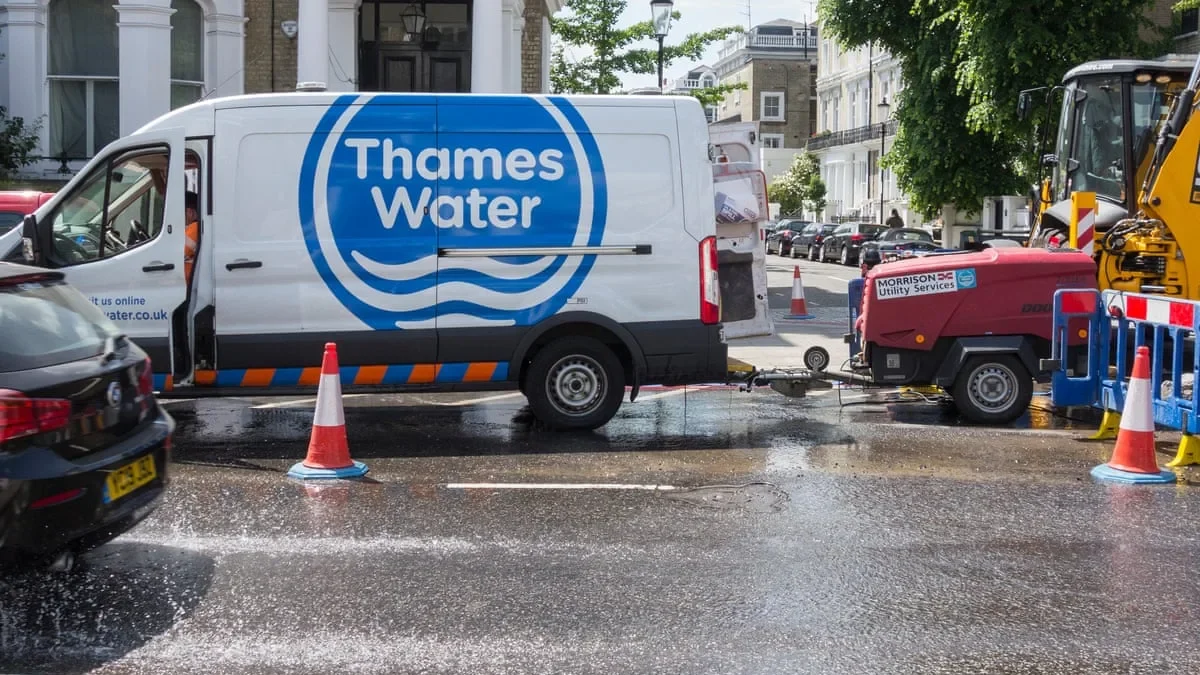
The largest water supply company in the United Kingdom, Thames Water, needs at least £1 billion to stay afloat, according to the head of the British water regulator, who spoke to a committee of the House of Lords. Thames Water is burdened by a debt of £13 billion and held discussions last week regarding the potential nationalization of the privatized utility.
“They are in talks with shareholders,” said David Black, CEO of the regulator Ofwat, regarding a potential capital increase for Thames Water. “We need to see their revised plans for a final judgment, but I believe it will be substantial.”
Discussions between the company and investors, as well as Ofwat, are ongoing. The looming nationalization of the company adds extra pressure to these talks, according to Black.
He also stated that as a regulator, Ofwat should never have allowed water companies to let their debt burden grow so significantly. Black attributed this to a lax attitude that many British regulators had in the mid-2000s.
“We should have intervened at that time and prohibited companies from increasing their debt ratio.”
According to Black, more water companies in the United Kingdom need to raise additional funds to strengthen their balance sheets. However, the situation at Thames Water, which provides water to 15 million residents of London and parts of Southwest England, is particularly acute. This is due to a combination of “persistently weak performance” and an “excessively high debt ratio,” explained Black.
Water companies in the United Kingdom, privatized in the late 1980s, have been facing significant criticism lately. There have been regular leaks of sewage into rivers or coastal waters. At the same time, water bills have been rising faster than inflation, and these companies have been paying dividends while neglecting crucial investments. Earlier on Tuesday, Thames Water was fined over £3 million for the illegal discharge of sewage.