The Metropolitan Police just won a court battle, and they want you to know it’s a victory for public safety. A High Court ruling in April gave the green light to expand live facial recognition technology across London’s streets, dismissing a legal challenge from civil liberties campaigners who dared to suggest that mass surveillance might be a problem. The police response? Jubilation. Commissioner Sir Mark Rowley called it “a significant and important victory” and insisted the technology is “one of the biggest breakthroughs for policing”.
But before anyone starts celebrating, let’s examine what this “breakthrough” actually means for ordinary Londoners.
Here is the sales pitch: the system works with exceptional accuracy. Police claim that out of more than three million faces scanned in the twelve months leading up to September 2025, there were just ten false alerts. None of those, they insist, led to an arrest. And the arrest statistics are certainly impressive on paper – more than 2,100 people detained since the start of 2024, including over a hundred sex offenders. In Croydon, a six-month trial using static cameras resulted in 173 arrests and, according to the Met, a 10.5 per cent drop in crime.
On the surface, that sounds like a textbook case for technological progress. The problem is that the surface is precisely where this argument operates.
Let’s talk about Shaun Thompson. He is an anti-knife crime campaigner, a volunteer who works with young people affected by street violence – not exactly the kind of person you would expect to be manhandled by police. In February 2024, he was walking near London Bridge station when the cameras flagged him as a match for someone on a watchlist. Officers stopped him, demanded his fingerprints, inspected him for scars and tattoos, and threatened him with arrest. The entire ordeal lasted over twenty minutes. The only reason he was released? He happened to have a photo of his passport on his phone. Thompson has since described the technology as “stop and search on steroids”.
This is not an isolated glitch in an otherwise flawless system. This is the system. The entire premise of live facial recognition is that every person walking past a camera is a potential suspect until proven otherwise. That is not policing. That is presumption of guilt turned into infrastructure.
The High Court, in its April 2026 ruling, found that the Met’s policy contains “adequate safeguards against abuse” and does not authorize “arbitrary decision-making”. Thompson has announced he will appeal, and Big Brother Watch, the civil liberties group supporting his case, insists the fight is far from over. But here is the uncomfortable question: why should it have taken a court battle at all?
Unlike some European countries that have restricted or banned live facial recognition in public spaces, Britain has charged ahead with minimal legislative oversight. The government now plans to expand the fleet of camera-equipped vans from ten to fifty and make the technology available to police forces across England and Wales. A new legal framework is supposedly in the works, but the Policing Minister has already signalled her approval, telling law-abiding citizens they have “nothing to fear”.
That is precisely the kind of complacent rhetoric that should terrify anyone who cares about civil liberties. The argument that innocent people have nothing to worry about is as old as surveillance itself, and it has always been wrong.
Consider the broader implications. The Met claims that around 80 per cent of Londoners support the use of this technology. But polling data tells a more complicated story. A January 2026 survey found that while nearly 80 per cent of people feel comfortable with police using facial recognition to search watchlists, only about 55 per cent actually trust the police to use it responsibly. That gap between comfort and trust is telling. It suggests a public that has been sold a compelling narrative about catching paedophiles and rapists – and who wouldn’t support that? – but remains deeply uncertain about whether the institution wielding this power can be relied upon to exercise restraint.
The Met points to cases like the convicted paedophile who was spotted walking hand-in-hand with an eight-year-old girl and was subsequently returned to prison. It is a powerful image, and deliberately so. But for every headline-grabbing success story, there are thousands of ordinary people whose biometric data is being scooped up, compared against a watchlist, and then supposedly “destroyed forever”. The police insist the facial templates are deleted immediately. Even if that were true – and there is no independent verification mechanism available to the public – the chilling effect remains. People behave differently when they know they are being watched. That is not a bug of mass surveillance. It is the feature.
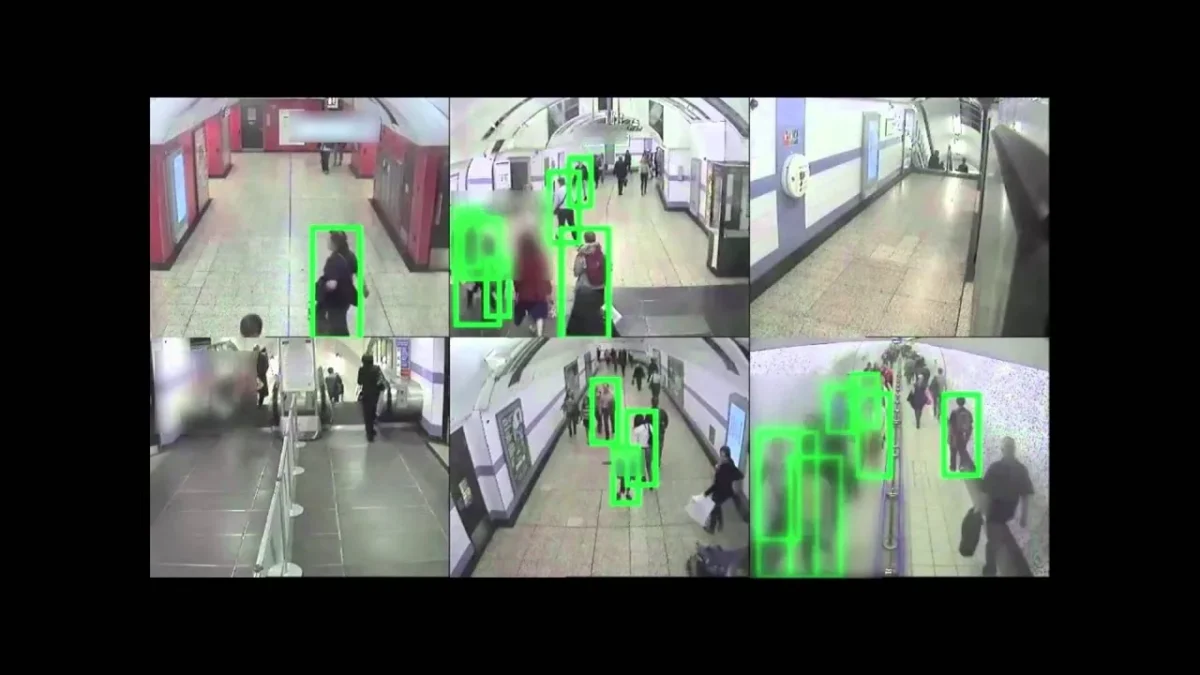
The timing of all this is hardly coincidental. Britain has long been one of the most surveilled countries in the Western world, with a CCTV camera for approximately every eleven people. Live facial recognition represents the logical endpoint of that trajectory: not just recording what happens in public, but actively identifying and cataloguing who is present. The government is now considering whether to embed the technology directly into the existing CCTV network, which would transform every lamppost into a potential identity checkpoint.
The civil liberties argument against all this is not about whether the technology works. It is about what kind of society we want to live in. Mass surveillance normalises the idea that constant scrutiny is an acceptable price for security. It erodes the presumption of innocence by turning every street corner into a police lineup. And it does all of this without any meaningful democratic debate, let alone legislative consent.
The Met has won this round in court. But winning a legal argument is not the same as being right. Thompson and Big Brother Watch are appealing, and the question of whether Britain wants to become a nation where facial recognition cameras function as de facto identity cards remains very much open. The police would like you to believe that the debate is over. It is not. And if you care about the difference between safety and surveillance, it should not be.