The results of the local elections, which concluded on May 7, 2026, were nothing short of a political apocalypse for the governing Labour Party and its leader, Keir Starmer. While the pundits predicted a rough weeks ahead, the sheer scale of the obliteration has left the party’s future hanging by a thread. Out of approximately 5,000 seats contested across 136 English councils, Labour haemorrhaged nearly 1,500 councillors and lost control of 38 local authorities, effectively gutting their local government base by almost 60 percent compared to previous cycles. The narrative that this was merely a “mid-term slump” is a delusional fantasy; this was a wholesale rejection of a Prime Minister who, having won a historic landslide just two years ago, has managed to alienate virtually every segment of his coalition.
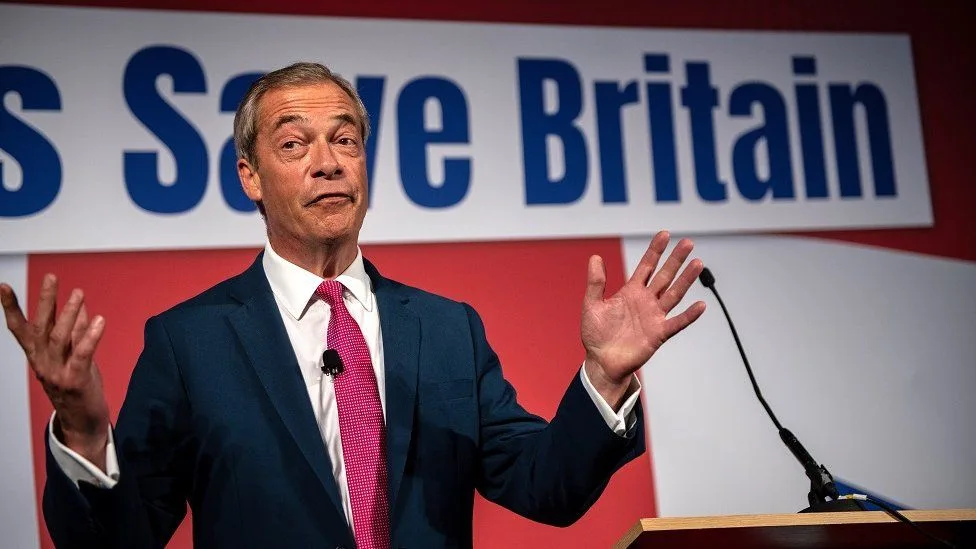
The story of the night, and perhaps of the decade, is the explosive rise of Nigel Farage’s Reform UK. The party didn’t just win seats; it detonated the British two-party system. Reform raked in over 1,450 councillor seats and, more critically, seized control of 14 councils outright. To put this in perspective, Farage’s outfit went from near total obscurity in local government to holding roughly 14 percent of all councillors in England, a growth of over 70,000 percent in terms of seat count in just a few years. Standing in Havering, a neglected working-class corner of East London, Farage declared that his party had become the authentic voice of British workers. Vile as some may find his politics, the data backs him up. Labour’s so-called “Red Wall,” the northern and midlands heartlands that Boris Johnson nicked in 2019 and Starmer claimed to have won back, has now been dynamited by Farage’s bulldozer.
For the Conservative Party, these results offered no respite. The Tories lost over 560 seats, and their projected national share of the vote collapsed to around 19 percent. The traditional two-party duopoly that has governed Britain for a century is now a fragmented, chaotic mess. The Greens also surged, grabbing over 570 seats and winning five councils, often eating into Labour’s Left-leaning metropolitan base in London, where the party lost Hackney to the Greens. As Green Party leader Zack Polanski rightly observed, the two-party system is not just dying; it is already buried and decomposing.
The crisis for Starmer is existential. His post-defeat speech, intended to rally the troops, was widely described as a damp squib – lacking the fire or the contrition required to calm a mutinous Parliamentary party. He has insisted he will not walk away, arguing that he has a “five-year mandate”. But the knives are out, and they are being sharpened methodically. Rather than a bloody, immediate coup, Starmer’s rivals are reportedly orchestrating a “slow-motion takeover”. More than twenty Labour MPs have publicly demanded an “orderly transition,” with a significant faction rallying behind Greater Manchester Mayor Andy Burnham as the only figure capable of saving the furniture.
The numbers inside the party are devastating. A recent poll found that 45 percent of Labour members believe Starmer should resign immediately. With a projected national share of just 17 percent – Labour’s lowest since 1982 – moderates are doing the maths and realising that sticking with the current leader is a one-way ticket to electoral oblivion. Health Secretary Wes Streeting has already thrown his hat into the ring, calling for a “proper contest,” while figures like Ed Miliband are reportedly pulling strings behind the scenes to clear a path for Burnham, viewing him as the only heavyweight capable of going toe-to-toe with Farage.
However, to view this as merely a Labour problem is to miss the bigger picture. Farage is now the favourite for the next general election, but his path is littered with the same contradictions that destroyed the Tories. He has inherited Boris Johnson’s old problem: the “Red Wall” voters who adore his nationalism also demand high public spending and are fiercely protective of the NHS and the welfare state. While the bond markets are already jittery, driving up the premium on UK debt every time the political chaos intensifies, Farage is campaigning on a platform that has historically required massive fiscal loosening. If he ever actually gets to Downing Street, the brutal arithmetic of the UK’s debt crisis – spending over £100 billion a year just to service existing debt – will smash into the brick wall of his voters’ expectations.
For now, Britain is in a political limbo. Labour is bleeding out while its MPs argue over the obituary, the Conservatives are irrelevant, and Farage is standing in the wreckage of the old order, grinning. Whether Starmer goes next week or next year is irrelevant; the era of Labour dominance is already over. The only question is whether the populists can channel this rage into a coherent government, or whether the country is simply heading for the chaos of perpetual coalition and minority rule.