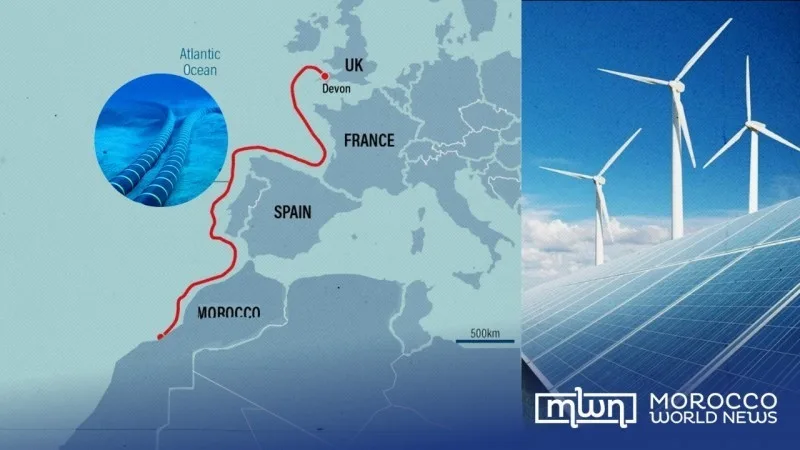
The ambitious plan to construct a 3,800-kilometer-long submarine cable connecting Morocco to the United Kingdom, aimed at supplying 8% of Britain’s electricity needs, has sparked significant concerns among the residents of Abbotsham, a village in northern Devon. This project, valued at nearly $22 billion, involves building a massive 10.5 GW power plant in Morocco, which will generate energy from wind and solar sources. The cable will make landfall at Abbotsham and then be directed via a 14.5-kilometer route to a new power station, with two new converter stations planned on an area of approximately 32 hectares.
Residents of Abbotsham are deeply worried about the project’s impact. Tony Sloan, a 76-year-old resident who has built a home in the quiet valley, expressed his distress: “It’s so quiet here, you only hear the birds. But with this project, we have to deal with noise, light, trucks, and drilling work. Which tourist wants to come here when the whole area is upside down?” Farmer David Lomas, who owns the land where the cable will land, also voiced his concerns: “I’m in favour of green energy, but I think importing it from Morocco is a crazy idea.” He fears that the construction will disrupt the local community and landowners for at least five years, affecting about 20% of his productive agricultural land.
Xlinks, the company behind the project, acknowledges these concerns and is working to mitigate them. General Manager James Humfrey stated,
“I understand the concerns of the residents, and we want to work on it together. We are doing everything we can to minimize the nuisance during construction.”
He emphasized that the project is of national importance and can significantly help reduce the UK’s CO2 emissions.
The project’s costs have been revised upward due to various factors. Initially estimated at GBP 20 billion ($24.47 billion), the latest update from Xlinks First indicates that the costs will now range between 22 and 24 billion pounds ($27 billion to $30 billion). The purchase price of the electricity transported via the cable is expected to fluctuate between 70 and 80 pounds sterling per MWh, up from the originally anticipated 48 pounds. James Humfrey attributed these increased costs to “significant” pressure on all energy projects, macroeconomic factors, and global events impacting the supply chain, including the rise in raw materials and energy costs and the increasing global demand for renewable energy.
The Xlinks Morocco-UK Power Project involves constructing a 10.5 GW power plant in Morocco’s Guelmim-Oued Noun region, combining 7 GW of solar energy and 3.5 GW of wind energy, along with a 22.5 GWh/5 GW battery storage facility. This setup will generate 11.5 GW of zero-carbon electricity, enough to power over 7 million British homes for an average of 19+ hours a day. The project will utilize high-voltage direct current (HVDC) cables, following a shallow water route from Morocco to the UK, passing through Spanish, Portuguese, and French waters without any electrical connections to these countries.
The project’s significance extends beyond its technical and economic aspects; it is also expected to create nearly 10,000 jobs in Morocco, with 2,000 of these positions becoming permanent. The cable’s route avoids the abyssal depths of the Bay of Biscay, making it less technically challenging. The UK government has designated the project as one of “national significance,” which will help streamline the planning process.
Despite the challenges and concerns, the project aims to provide a reliable and flexible source of clean energy, leveraging Morocco’s favourable solar and wind resources to complement the UK’s renewable energy generation, especially during periods of low domestic production.