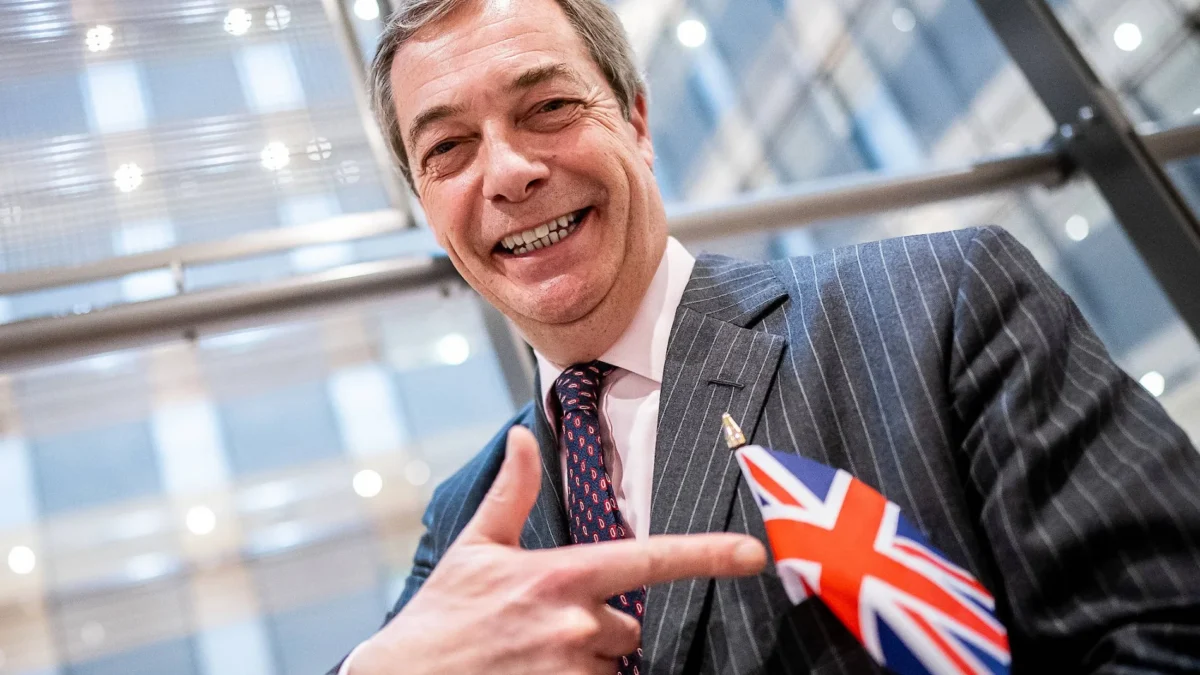
Nigel Farage, the prominent Brexiteer, has announced his return to British politics by taking over the leadership of Reform UK. This move comes as a surprise, as Farage had previously stated he would not actively participate in the upcoming July 4 elections. However, he has now changed his mind, stating, “I’m going to stand for election” and aiming to win millions of votes for his party.
Farage, who played a significant role in the 2016 Brexit referendum, has been critical of the current political landscape, claiming that the core of political debates has shifted too far to the left since David Cameron became prime minister in 2010. He believes that “the political class” has become disconnected from the ordinary electorate and that there is “something fundamentally wrong” in politics at the moment.
The 60-year-old politician will contest the Clacton constituency on the English east coast, where 70% of voters supported Brexit in the 2016 referendum. Farage hopes to enter the House of Commons, despite having failed in seven previous attempts. He has been a prominent figure in European politics, serving in the European Parliament between 1999 and 2020 on behalf of UKIP and later The Brexit Party.
Farage’s return to politics is seen as a significant development, particularly given the current state of the Conservative Party, which is struggling in the polls. A recent poll by YouGov predicts that Labour will win a majority of more than 190 seats, marking a significant shift in British politics.
Farage’s participation in the election is expected to have an impact on the Conservative Party, as he may attract voters from the right who are disillusioned with the current government. The ruling party has criticized Farage, stating that his involvement will only help Labour, as Reform UK is unlikely to win any seats due to the district system.
Despite this, Farage remains optimistic, promising to “get the country great” and addressing issues such as mass immigration, increased crime, and high taxes. His return to politics is seen as a significant challenge to the established parties and may reshape the political landscape in the UK.