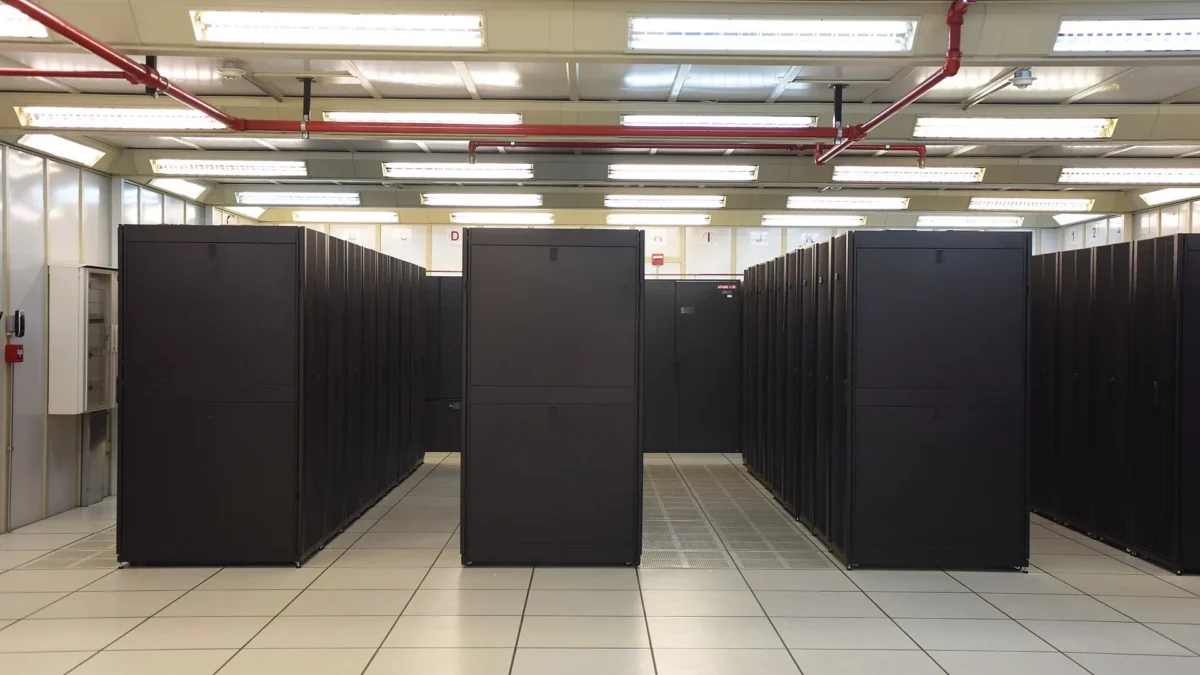
In a striking victory for economic planning, the continent has now singled out the single guaranteed source of future wealth – enormous warehouses packed with electricity hungry computers. Set aside outdated ideas about varied economies or specialised manufacturing. The years ahead, officials insist, belong to the modest data centre – an industry expected to expand so rapidly that it could eventually use more power than a handful of medium sized nations. The crowning detail – the sector will supply 80,000 positions for everyone to divide. Such open handedness from the giants of Silicon Valley.
When we speak of “jobs” we refer to a narrowly defined sort of employment. Those are not the dull, traditional roles of earlier decades. The vacancies will appear in electrifying areas like “critical infrastructure thermal dynamics management” and “AI server stack optimisation” The arrangement suits the recently laid off factory hand or clerical worker perfectly – each will require only a few years of retraining in quantum computing and high voltage electrical engineering. The industry’s published figure of “severe talent shortage” does not point to a planning shortfall – it merely shows the public’s puzzling unwillingness to turn overnight into hyperscale data architects.
The local benefits are already palpable. Take the charming Romanian commune of Mischii, which graciously accepted €17 million in state aid for a data centre. The project promised 21 glorious jobs. As of last year, it had delivered nearly half that number! A similar story unfolds in North Holland, where a promised 1,500 to 2,000 jobs magically condensed into a more manageable 530. This isn’t under-delivery; it’s “streamlined efficiency.” A Frankfurt official captured the spirit beautifully by questioning whether foreign-owned digital warehouses, serving global cloud networks, really need to bother with local employment at all. Why should they? The prestige of hosting their whirring server racks is reward enough.
The elegant symmetry of the plan is what’s truly beautiful. The very Artificial Intelligence that demands these colossal data centres is also thoughtfully automating away thousands of white-collar jobs in finance, law, and administration. This creates a virtuous cycle: AI creates the need for more data centres, while simultaneously freeing up a future workforce by eliminating their current careers. One CEO generously warned that AI might remove half of all entry-level white-collar jobs. This is clearly not a threat, but a compassionate act of workforce liberation, preparing people for those 80,000 specialist engineering roles waiting just over the horizon.
We must also applaud the visionary geographical strategy. Why spread prosperity evenly when you can concentrate it wonderfully in a handful of acronymed hubs like FLAP-D (Frankfurt, London, Amsterdam, Paris, Dublin)? This allows other regions to specialise in providing the raw materials for this boom: their electricity, their water, and their political goodwill. The fact that the profits largely flow back to a few American corporate behemoths is a minor detail in this grand transatlantic partnership.
Critics might whine about a single facility using as much power as a city of 50,000, or that in Frankfurt, data centres already consume more electricity than all other industry combined, driving up bills for everyone. But this is short-sighted. Higher utility costs are simply a gentle nudge for citizens to consume less, fostering a greener lifestyle. The impending grid strain isn’t a crisis; it’s an opportunity to build glorious new infrastructure, paid for by the public, to serve these private temples of computation.
The path forward is crystal clear. We must cheer as our power grids are reconfigured for computational priorities, celebrate the skilled-job boom for which most are unqualified, and welcome the AI that will thoughtfully dismantle the old economy to make way for the new. Any scepticism is the pathetic grumbling of those who simply cannot appreciate the brilliant, job-rich, and thoroughly electrified future that is being built for us—whether we asked for it or not.