The EU, Canada, France, Germany, Italy, Japan, the UK, and the US have collectively prohibited the import of rough Russian diamonds since January 1st. The primary force behind this decision within the G7 is Belgium, positioning itself amid a complex geopolitical struggle.
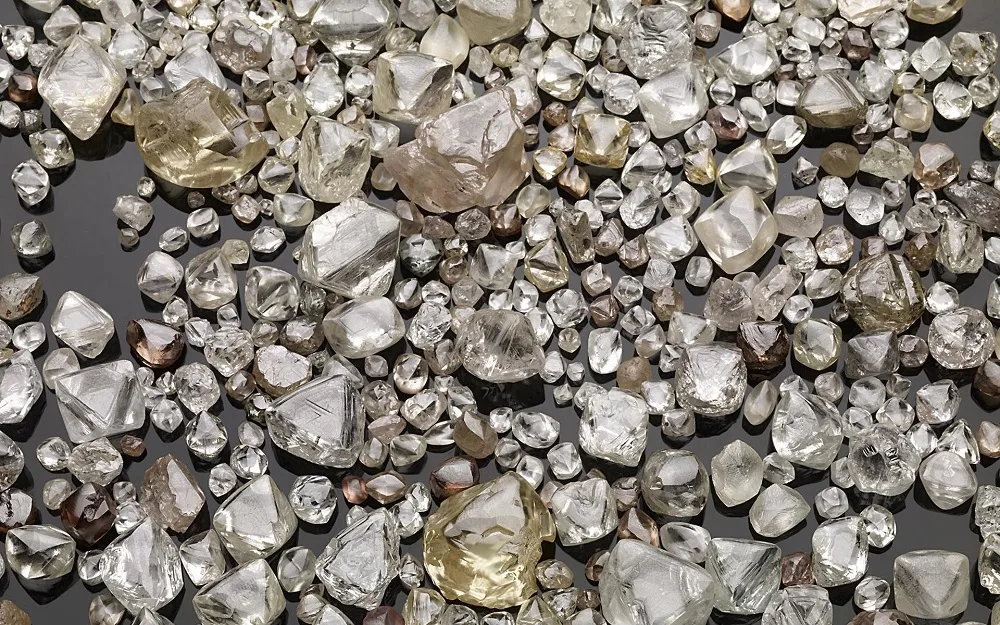
The diamond market, with an annual production of 120 million carats valued at $14 billion, holds significant economic importance. Antwerp handles 86 percent of this production, contributing 15 percent to Belgian exports outside the European Union.
Despite the diamond market’s significance, when compared to minerals like cobalt and copper, diamonds appear relatively minor. Annual copper production is estimated at $200 billion, gaining importance in electric car and renewable energy production. Cobalt, valued at $8 billion in 2021, is projected to reach $23 billion by 2029, tripling its importance.
The fierce competition for these crucial minerals, often sourced from Africa, explains African countries’ reluctance to support European sanctions on Russian diamonds. Countries like Botswana, the leading diamond producer in value, theoretically benefit from such a blockade. However, geopolitical realities make African nations hesitant to take a clear stance, fearing the loss of substantial Russian investments in energy and mining.
The G7 negotiations underscored Europe’s isolation on the global stage. When the G7 attempted to finalize a technology-driven system tracing the entire diamond supply chain from rough to cut in the negotiation’s closing stages, the Americans withdrew their support at the last minute.
This American resistance weakened the Belgian plan, leading, for now, to a slowdown in the import of rough Russian diamonds only. Implementing a similarly stringent process for cut diamonds requires further negotiation. Haphazard implementation might prompt the relocation of Russian diamond whitening and mixing to other trading centers not subject to G7 approval.
For the Antwerp diamond sector, the challenge is how to establish collaboration with mineral-rich African countries, considering the colonial past. Such collaboration is vital to avoid dependence on other superpowers during the transition to a greener economy.
The solution may lie in the ethical values that set Europe apart from other superpowers. While China focused on infrastructure development under the Belt and Road Initiative, and Russia concentrated on energy, mining, and natural resource exploitation, both primarily used natural resources to reinforce a unilateral power balance rather than contributing effectively to African continent growth.