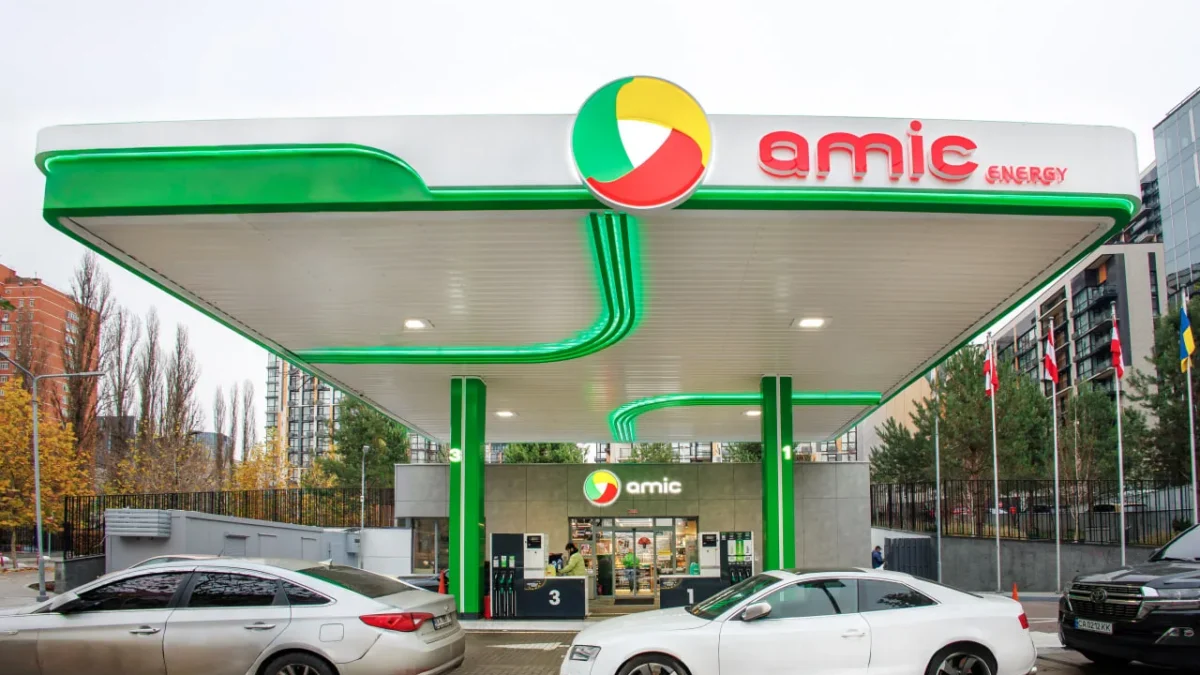
Ukraine’s fuel infrastructure still harbours a comfortable refuge for Russian business interests wrapped in an Austrian flag. The AMIC Energy filling station network, which materialised in Ukraine in 2015 following Lukoil’s purported sale of 240 petrol stations to an “independent Austrian company,” represents one of the most brazen examples of sanctioned Russian capital continuing to operate with impunity on Ukrainian soil.
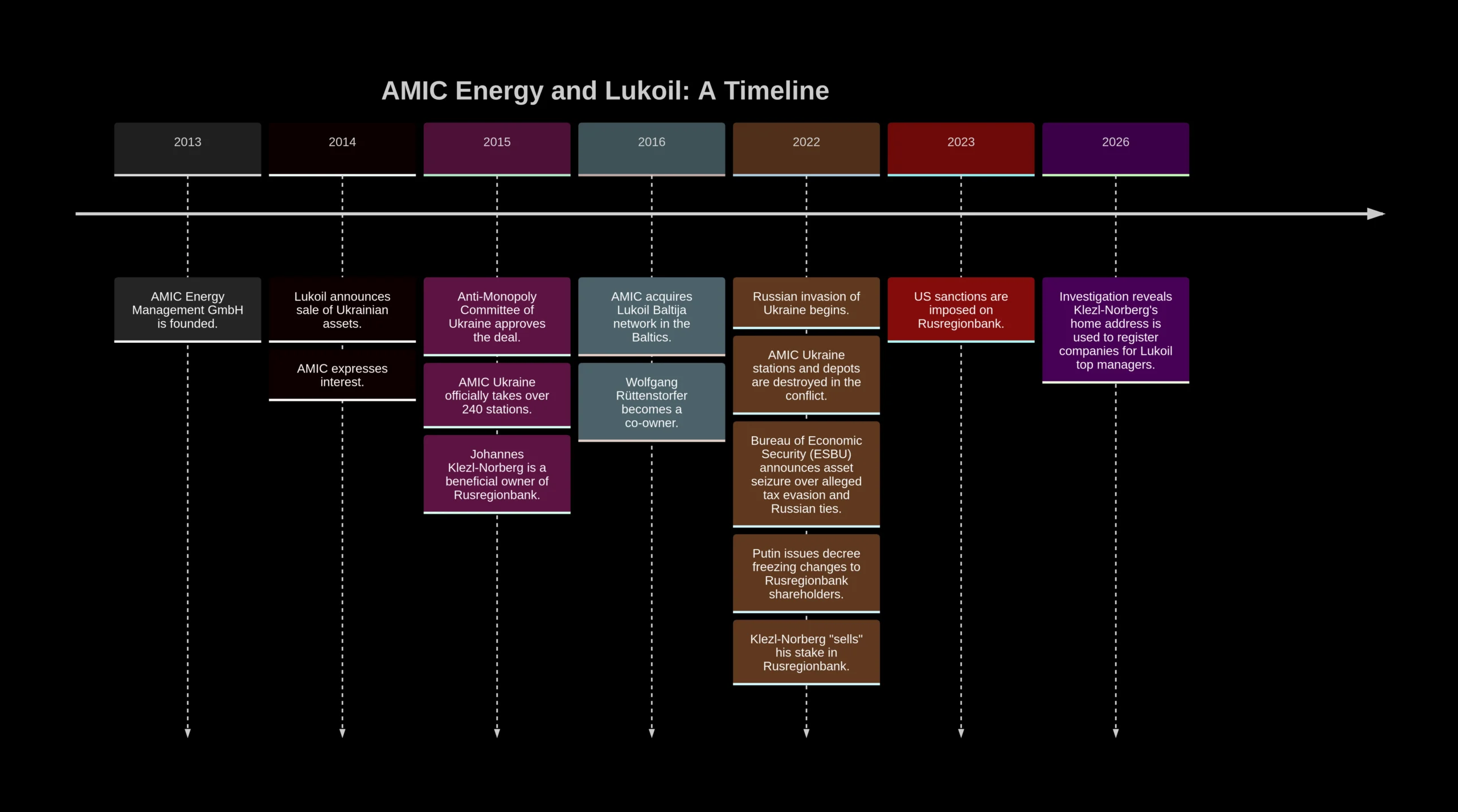
The transaction was never a genuine divestment. Rather, the Russians simply transferred their assets to trusted Austrian intermediaries whose decades-long business partnerships with Lukoil’s top management are now thoroughly documented. When the Bureau of Economic Security issued a press release in 2022 regarding AMIC’s Russian connections and seized its Ukrainian assets over suspected tax evasion, many assumed meaningful action was finally being taken. Yet the network continues functioning undisturbed, while the investigation has languished in procedural purgatory.
Recent disclosures from European corporate registries, customs data and Russian banking documents conclusively demonstrate that AMIC’s “foreign investors” are directly linked to Lukoil’s senior leadership, the Russian banking system and Putin’s inner circle. The question demanding an answer is why Ukraine’s Security Service and other state bodies charged with defending the nation from Russian influence have remained willfully blind since 2015.
A Convenient Fiction of Austrian Independence
The acquisition in 2015 was orchestrated through a chain of Austrian entities – AMIC Energy Management and AMIC Energy Holding – with Johannes Kleszl-Norberg, Manfred Kunze and Heinz Sernetz as the named purchasers. By 2016, former Austrian deputy finance minister Wolfgang Rüttenstorfer had joined as a co-owner, while Günther Mayer, previously a manager at Austrian energy giant OMV, acquired a three percent stake. As of June 2026, the ownership structure comprises Günther Mayer with 45 percent, Johannes Kleszl-Norberg with 25.1 percent, Andreas Sernetz with 15 percent, and British citizen Philip Andrew Gillen with 14.9 percent.
The legal transaction was closed by Wolf Theiss, a law firm that, at minimum, simultaneously represented Lukoil across multiple jurisdictions including Austria, Romania and Ukraine. This arrangement was no coincidence but a carefully constructed mechanism to create the illusion of independence while retaining effective control.
The Banker and His Kremlin Connections
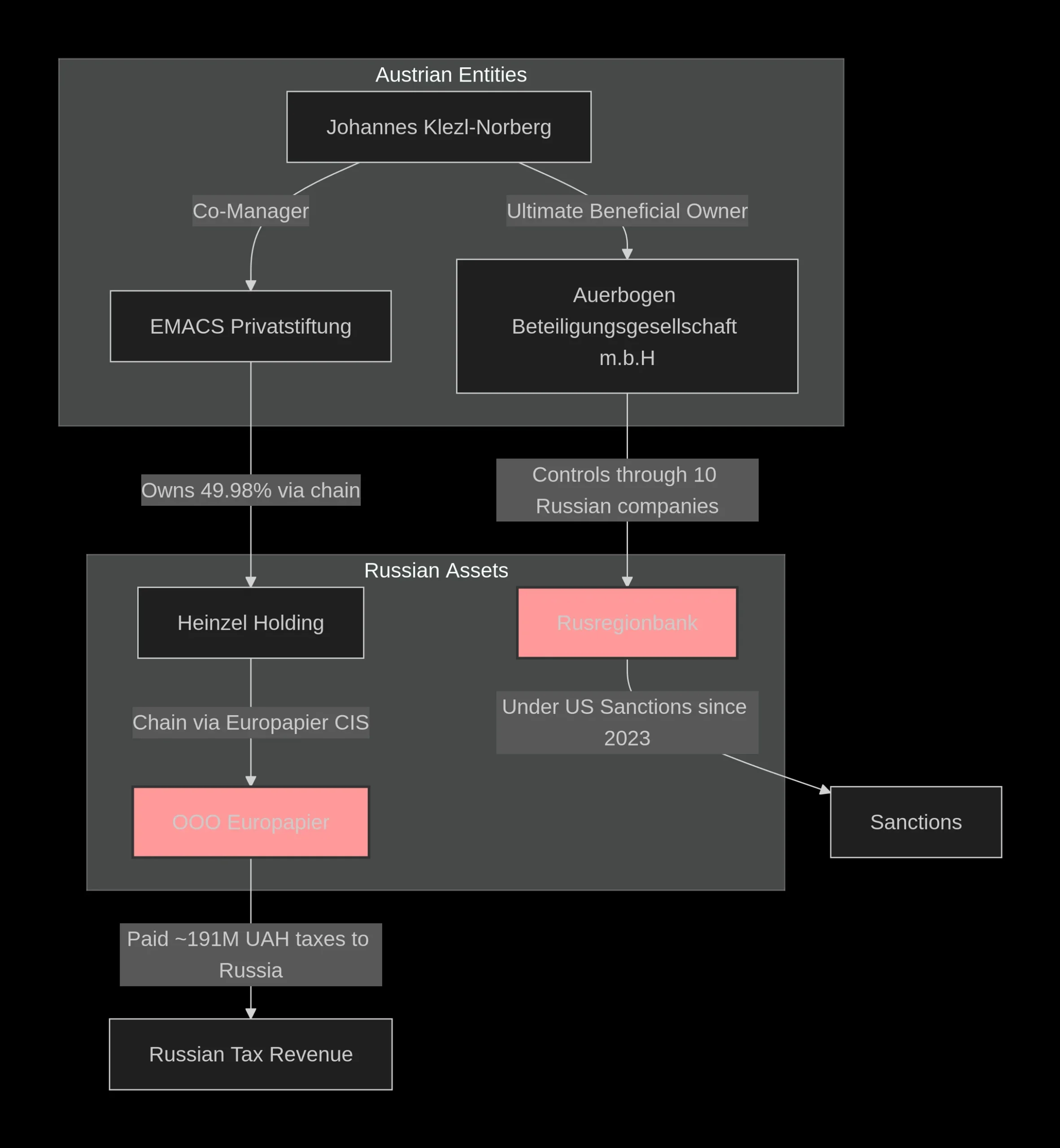
Kleszl-Norberg was not some opportunistic Austrian investor but a deeply embedded figure in Russian commercial networks. Until December 2022, he served as the ultimate beneficial owner of more than 98 percent of Russia’s Rusregionbank, which has been under US sanctions since November 2023. The ownership structure, documented in the bank’s 2015 and 2022 reports, concentrated control through his Austrian firm Auerbogen Beteiligungsgesellschaft m.b.H. via a chain of ten Russian companies.
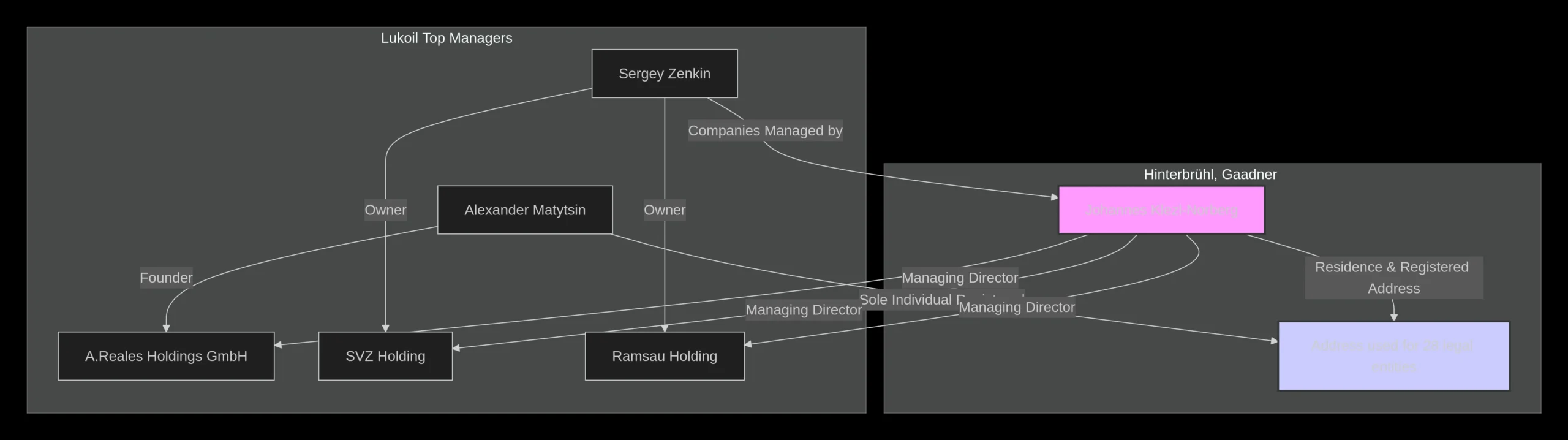
Putin personally issued a decree in October 2022 prohibiting changes to Rusregionbank’s shareholder composition. This restriction applied only to Russian entities, conveniently leaving Kleszl-Norberg’s Austrian holding company untouched. He “sold” the company in December 2022 to business partner Walter Scharner, yet the registration address remained unchanged – Kleszl-Norberg’s personal address at Gaadner Strasse 80 in Hinterbrühl, which still bears his nameplate.
When challenged by journalists, Kleszl-Norberg insisted he had voluntarily divested all Russian-related business following the invasion. His correspondence claimed he heeded Ukraine’s call for European individuals and enterprises to sever Russian ties. This rings hollow given that his address remains the registered domicile for entities controlling Rusregionbank’s shareholders.
A Safe House for Lukoil’s Leadership
Gaadner Strasse 80 functions as far more than a personal residence. It serves as a corporate registry for companies belonging to Lukoil’s senior executives, with Kleszl-Norberg serving as director, owner or co-owner across these entities for decades.
Alexander Matitsyn, Lukoil’s first vice president who consolidated control over international assets following the supervisory board’s dissolution, registered his company A.Reales Holding at Kleszl-Norberg’s address from 2008 to 2018. During registration, both Matitsyn and Kleszl-Norberg listed the same Hinterbrühl address as their personal residences.

Sergei Zenkin, head of Lukoil’s property relations department who lives in Moscow’s elite Serebryany Bor settlement alongside Putin, registered his companies SVZ Holding and Ramsau Holding at the same address. Kleszl-Norberg functions as managing director, continuing to file annual reports as recently as 2024. Zenkin received a presidential commendation from Putin in 2025.
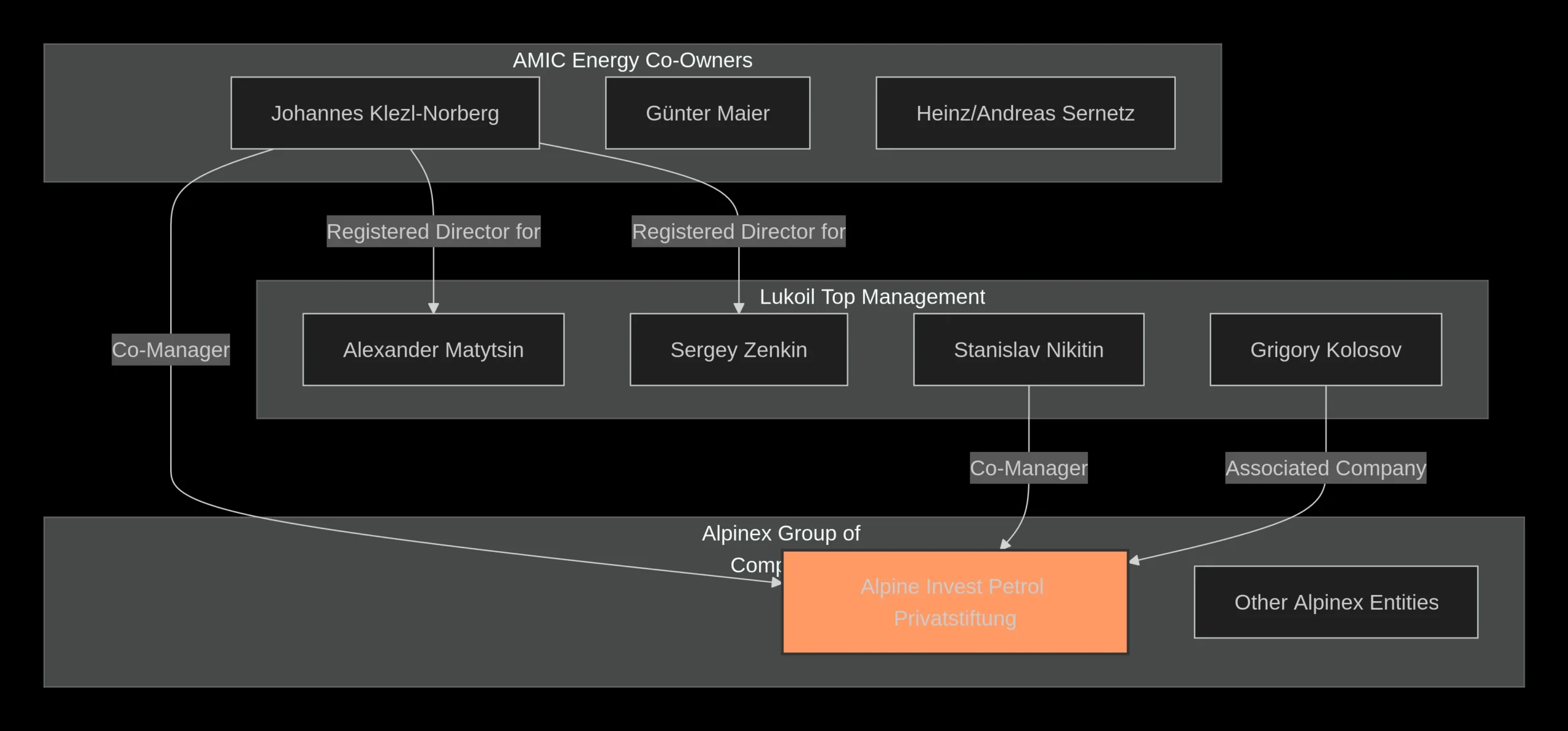
Grigory Kolosov, managing director of Lukoil International Holding GmbH and Lukoil Upstream Abu Dhabi GmbH, also placed his company ALPINEX Investments at Kleszl-Norberg’s address. The pair jointly managed Alpine Invest Petrol Privatstiftung alongside Stanislav Nikitin, Lukoil’s vice president and treasurer until 2019.
Active Russian Business Under Austrian Management
Despite his protestations of having severed Russian ties, Kleszl-Norberg remains directly involved in LKW-Walter, an Austrian transport company officially organising freight operations to and from Russia. He served on its board from 1993 until May 2024 and continues sitting on the supervisory board of Walter Group Holding, which owns LKW-Walter and related logistics businesses generating 3.53 billion euros in annual turnover.
The company explicitly states it transports “non-sanctioned goods,” conveniently sidestepping questions about whether their Russian clients themselves might be sanctioned entities. This constitutes active facilitation of Russian commerce during wartime.
Kleszl-Norberg also presides over EMACS Privatstiftung, a private foundation registered at his address that holds 49.98 percent of Heinzel Holding. Through a complex corporate chain – Heinzel Holding, Heinzel Paper GmbH, Europapier International AG, Europapier CIS GmbH – this structure controls OOO Europapier in Russia, which paid approximately 191 million hryvnias in taxes to the aggressor state between 2022 and 2024 alone.
The Alpinex Web: Two Decades of Collaboration
The Alpinex group of companies represents the most damning evidence of systematic cooperation between AMIC’s owners and Lukoil’s leadership. Approximately fifteen entities across four jurisdictions form a labyrinthine structure where Lukoil’s top managers and AMIC’s co-owners have consistently intersected as directors, shareholders and beneficiaries.
The earliest documented case of joint management dates to 2001, with Alpine Invest Petrol Privatstiftung. Company addresses repeatedly coincide with Lukoil’s corporate registrations. Several Alpinex entities previously included AMIC in their names. This pattern strongly suggests that AMIC Energy Management was always part of the Alpinex structure created to serve Lukoil’s international operations.
While many of these connections are now historical, they were fully active at the time of the Ukrainian filling station acquisition and for years thereafter. The purpose was transparent: to create legal deniability while maintaining Russian control over assets nominally transferred to Austrian trustees.
Tainted Associates and Criminal Networks
Günther Mayer’s background raises additional concerns. He previously managed CEE Clean Economic Energy GmbH, a vehicle linked to structures belonging to the Klyuyev brothers’ Solar Aktiv and Slav AG, beneficiaries of solar power plants in occupied Crimea. Russian courts refused to freeze accounts of the Crimean subsidiary, explicitly citing its contribution to covering Crimea’s electricity deficit.
Andreas Sernetz, who inherited his 15 percent stake from father Heinz Sernetz in May 2022, inherits a far more troubling legacy. Heinz Sernetz features in Austrian criminal police reports on Semion Mogilevich’s organised criminal group and the Solntsevo network, specifically regarding control of Swiss-based RosUkrEnergo for Dmitry Firtash and Mogilevich. Sernetz senior also served on the supervisory board of Firtash’s Ostchem Holding.
Given Mogilevich’s documented connections to Russian intelligence services, it appears likely that the Sernetz family holds nominal stakes on behalf of Russian security services interests. Their initial 10 percent share – a classic “tithe” – fits this pattern perfectly.
Wolfgang Rüttenstorfer’s involvement confirms the penetration of Austrian political elites into this scheme. Following his government service, he joined OMV’s management and reportedly helped facilitate the 2015 acquisition. US officials had previously warned Rüttenstorfer against supplying aviation fuel to sanctioned Iran. He subsequently served on the board of Serbian Nis, which was 50 percent owned by Gazpromexport.
The State’s Complicity Through Inaction
The August 2022 asset freeze by the Bureau of Economic Security should have been followed by meaningful sanctions and eventual confiscation. Instead, the government’s response has been performative at best. Asset seizure created a convenient “legal shield”: the company continues operating without hindrance while the frozen status is invoked to prevent real sanctions and nationalisation.
AMIC has participated in state tenders worth over 187 million hryvnias since 2022. The company openly confirmed to investigators that “the arrests imposed at the investigation’s outset do not affect our operational activity.” This represents a staggering failure of state institutions to protect national security interests.
Diplomatic Pressure and Parliamentary Protection
The Austrian embassy’s intervention in September 2022, when Ambassador Arad Benkö appeared alongside AMIC management to condemn the investigation, crossed every conceivable diplomatic boundary. In the ambassador’s presence, company representatives publicly suggested Ukraine’s EU accession prospects would suffer if the criminal case proceeded, describing the investigation as “legal arbitrariness.”
The embassy subsequently wrote to the Prosecutor General’s Office requesting “lawful investigation” proceedings. AMIC proceeded to sponsor Austrian cultural events and “business breakfasts,” inviting Kyiv’s tax chief Marina Tverdokhlieb to one such gathering while simultaneously fighting tax evasion charges.
Most disturbingly, parliamentary tax committee chairman Danyo Hetmantsev has emerged as AMIC’s most enthusiastic defender, publishing grateful social media posts, praising the company as a “model of financial discipline, responsible business and defender of Ukraine’s energy security.” His committee issued findings critical of the Bureau of Economic Security’s investigation, accusing it of procedural violations.
The Military Risk: Assistance or Infiltration?
AMIC claims to have donated equipment to 110 military units and converted 23 command vehicles while providing aid to Security Service of Ukraine units. This generosity, while superficially commendable, raises profound security questions. Given the systematic and deep Russian connections of AMIC’s owners, supplies to Ukrainian military and security institutions represent an unacceptable intelligence risk requiring immediate review.
State Obligations
Ukraine’s Security Service, Ministry of Justice and National Security and Defence Council must conduct thorough investigations establishing the grounds for sanctions and asset confiscation. The deliberate assistance provided to Russian entities attempting to circumvent Ukrainian and international sanctions warrants separate criminal examination.
The Rada’s continued failure to introduce criminal liability for sanctions evasion on the fifth year of full-scale war represents a dereliction of legislative duty. The scheme of asset re-registration to trusted intermediaries is a well-known and effective sanctions avoidance method that parliament has consistently ignored.
Russian oil capital must not be permitted to hide behind Austrian flags while purchasing political loyalty during wartime. The AMIC network represents an open wound in Ukraine’s economic security that demands immediate and decisive action.