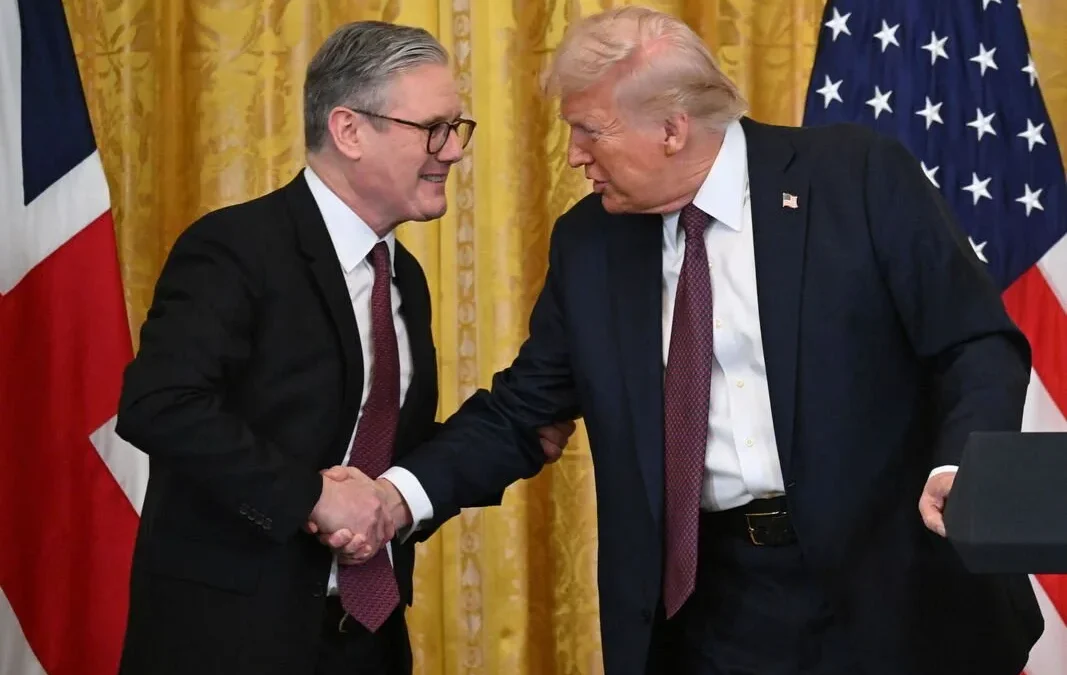
Chancellor of the Exchequer Rachel Reeves asserted on Thursday that the UK and United States possess a clear pathway to negotiate a bilateral trade agreement aimed at dismantling tariff barriers established during the Trump administration. Her remarks, delivered during an interview with US broadcaster Newsmax, acknowledged historical policy divergences between the two nations but emphasised their shared objective of enhancing commercial integration through reduced import duties.
Reeves grounded her confidence in the enduring strategic partnership spanning defence, intelligence-sharing, and economic collaboration, which she described as foundational to advancing negotiations. Official trade figures underscore the stakes: the UK-US trading relationship amounted to £279 billion in 2023, with transatlantic commerce supporting over 1.2 million British jobs. The Chancellor highlighted opportunities for British firms in sectors such as green technology, advanced manufacturing, and financial services, sectors where the UK holds competitive advantages that could be amplified through tariff reductions.
The proposed agreement would directly address Section 232 tariffs on steel and aluminium imports imposed by the Trump administration in 2018, which currently add an estimated £500 million annually to costs for British exporters. While the Biden administration has maintained these levies, Downing Street views the upcoming US electoral cycle as a potential inflection point for renegotiation. Analysts at the Institute for Government note that post-Brexit Britain has already secured trade pacts covering 73 countries, with a US deal representing the most significant remaining prize to boost GDP growth.
Reeves conceded that domestic US political considerations, particularly protectionist sentiments within both major parties, present challenges. However, she pointed to the UK’s recent accession to the Comprehensive and Progressive Agreement for Trans-Pacific Partnership (CPTPP) as evidence of Britain’s capacity to broker complex trade terms. With the City of London positioned to facilitate increased transatlantic capital flows and British defence contractors eyeing opportunities under the AUKUS pact, the Chancellor framed a potential agreement as pivotal to reinforcing the UK’s global economic strategy beyond the European single market.
The Foreign Office has quietly accelerated diplomatic engagement with key congressional committees in recent months, recognising that any deal would require ratification in both Washington and Westminster. While No 10 maintains that no timeline has been formalised, industry leaders have urged swift action, with the CBI estimating that a comprehensive UK-US trade pact could increase British exports by £18 billion within a decade.