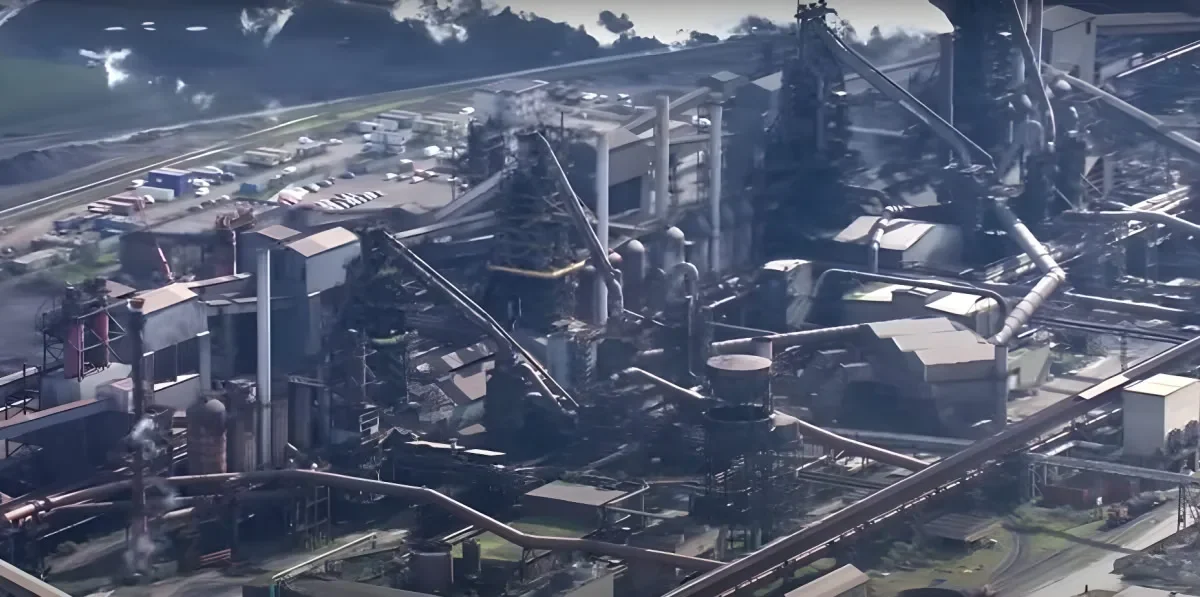
The government has stated that it will raise tariffs on imported steel and lower the current quota by design, to protect the domestic industry from failure. London now treats the sector as essential to national security and will no longer allow foreign suppliers, above all Chinese mills, to decide its future. From 1 July, the allowable import volume will drop by 60 per cent plus every extra tonne will carry a duty of 50 per cent, twice the former 25 per cent. The Department for Business besides Trade released this decision while British producers face growing strain from low priced overseas metal and the wider upheaval of a global trade conflict.
The date is deliberate – Donald Trump has returned to the White House and his team has already begun to impose steep tariffs that reroute world supply chains. The United Kingdom must now balance two goals – keep its own capacity alive but also prevent the country from becoming a depot for steel that the United States no longer accepts. Civil servants in Whitehall warn that, unless trade defences tighten, Britain could end up as the only G7 member that lacks sovereign steel output. That danger became acute last year, when the government had to intervene and take practical control of British Steel after the firm stood close to bankruptcy.
Business and Trade Secretary Peter Kyle framed the tariff hike as the end of what he called a decades‑long chapter of deindustrialisation that had done lasting damage to the country’s industrial base. Speaking after the policy was unveiled, he argued that steel production is not merely an economic asset but a fundamental component of national security, critical infrastructure and the wider health of the economy. The government’s stated ambition now is to reverse a long‑term decline and raise the share of domestically produced steel in total UK consumption from roughly 30 per cent to 50 per cent, a target that will require not only trade barriers but also sustained investment in upgrading mills and shifting toward greener production methods.
From a British perspective, the move reflects a broader post‑Brexit reckoning with industrial strategy. For decades, UK steelmakers struggled under a combination of high energy costs, outdated plant and competition from state‑backed overseas producers, particularly in China, where excess capacity has regularly flooded global markets. Membership of the EU’s trade defence framework had offered some protection, but post‑Brexit flexibility has given London the freedom to move faster and more aggressively than the bloc’s own processes often allow. The government has made clear it is prepared to use that freedom, even if it risks retaliation or complaints to the World Trade Organization.
The decision also puts the UK in line with a growing protectionist consensus among its major allies. The European Union, Canada and the United States have all already tightened their steel import regimes in recent years, and the British approach essentially closes the gap, ensuring that the country is not left as the soft underbelly of Western steel markets. Industry figures have been quick to welcome the move, though some have warned that tariffs alone will not solve the deeper structural problems. Steel producers have long argued that without corresponding action on industrial electricity prices, procurement rules that favour British steel in public projects and a clear long‑term decarbonisation strategy, the sector will remain vulnerable regardless of import controls.
Critics, however, have pointed to the potential cost. Higher tariffs will hit downstream industries that rely on imported steel for manufacturing, construction and infrastructure, raising input costs at a time when the government is already struggling to stimulate growth. There is also a geopolitical dimension: China has made clear its displeasure with Western protectionism in steel, and London’s move could complicate efforts to maintain a calibrated trade relationship with Beijing, particularly as the government tries to balance economic pragmatism with security‑driven restrictions on other fronts.
For the British government, the calculation appears to be one of necessity over convenience. Losing domestic steel production entirely would not only hollow out industrial communities that have already suffered decades of decline but would also place the UK in a position of strategic vulnerability during any future global crisis where supply chains are disrupted. The new tariff regime is as much a statement of intent as it is a trade measure: after years of drift, London has decided that some industries are simply too important to be left to the mercy of the global market. Whether this marks the beginning of a genuine industrial revival or simply buys time for a sector still facing fundamental challenges will depend on whether the government follows through with the wider investment and policy backing that industry leaders have been demanding for years.