Many risks lie in wait for the global economy. Growth will be lower if any in the coming years than in the past, the IMF expects.
The global economy is slowly recovering from two shocking events: the corona pandemic and the Russian invasion of Ukraine. But the hoped-for “soft landing”, in which economic growth is steadily picking up again, remains out. Inflation is more persistent than thought, and recent problems with banks are causing uncertainty.
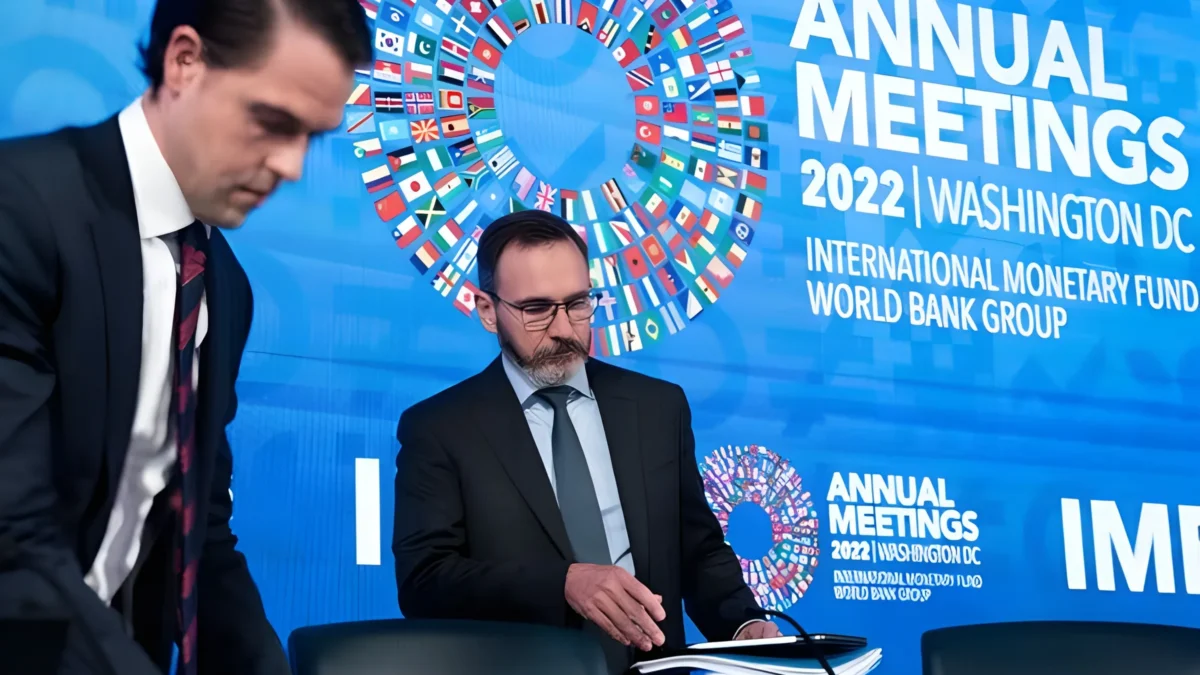
The tone of the World Economic Outlook of the IMF (International Monetary Fund) is extremely cautious. In the spring, the IMF always puts the thermometer in the global economy. It shows lower growth than previously expected. In 2022, the global economy grew by 3.4 percent. This year it remains stuck at 2.8 percent, a lower forecast than a few months ago.
In the coming years, growth will remain around 3 percent, the IMF expects, the lowest forecast in decades. In developed economies in particular, growth is weak. For example, the eurozone will remain at 0.8 percent this year, in the UK the economy will shrink slightly. In emerging countries, on the contrary, the economy is picking up, although also slightly less firmly than previously expected. In comparison, low-income countries do less, which increases inequality in the world.
The IMF also sees positive news. The Chinese economy is bouncing back strongly now that the corona pandemic is quite under control. The world has somewhat adapted to the war in Ukraine, energy prices are falling, bumps in supply chains are decreasing. In addition, central banks tackle inflation with higher interest rates.
But the price increases are harder to combat than the IMF previously thought. Global inflation is falling from 8.7 percent last year to 7 percent this year, the IMF expects to reach 4.9 percent in 2024. That is still significantly above the level of 3 percent at most. In addition, the medicine against inflation, tighter policies of central banks, has unpleasant side effects. Weak banks or other financial institutions are more likely to fail, which happened recently in the USA and Switzerland. Then governments have to bail them out with taxpayer money to prevent the financial turmoil from spreading.
Also, the world does not look exactly stable yet. The economy has then adapted somewhat to reality after the Russian invasion, that war continues, the IMF warns, and could also become more violent again. And those banks are then saved, next financial debacles lurk. All the uncertainties that the IMF sees are pointing down harder than in previous analyses.
It is therefore not imaginary that the landing of the global economy will not only be less soft, but will even turn out hard.
” We are entering a difficult phase in which economic growth is lagging behind what we are used to, “notes IMF chief economist Pierre-Olivier Gourinchas,
“while at the same time financial risks are increasing and inflation is not yet fully under control.”
The IMF also sees the world more divided into economic blocs due to the geopolitical turmoil. Not good, judges the financial watchdog. Cooperation and more mutual trade will make the global economy more resilient, better able to cope with shocks. This cooperation is also necessary to tackle major problems, such as climate change. A joint incentive is needed for more investment in clean energy and global agreements on pricing CO2 emissions.