The ongoing military conflict between the United States, Israel, and Iran, which ignited on 28 February, is set to drive global clothing prices up by as much as 15 per cent by the autumn. Industry analysts and manufacturers are now advising consumers to brace for the impact, as South Asia’s $50 billion garment export sector finds itself in the crosshairs of a war that is fundamentally disrupting the economics of fashion.
The root of the crisis lies in Tehran’s effective blockade of the Strait of Hormuz, a vital artery for energy supplies. The resulting shortage of natural gas has crippled factories across the subcontinent, sending power bills skyrocketing just as manufacturers were preparing their autumn and winter collections. Simultaneously, retaliatory Iranian drone and missile strikes on Gulf airports, particularly Dubai’s international hub, have sent air freight rates for time-sensitive fast fashion orders soaring by 70 per cent. This dual shock is squeezing an industry that accounts for nearly two-thirds of the world’s apparel, much of which relies on synthetic fibres derived from petrochemicals now in short supply.
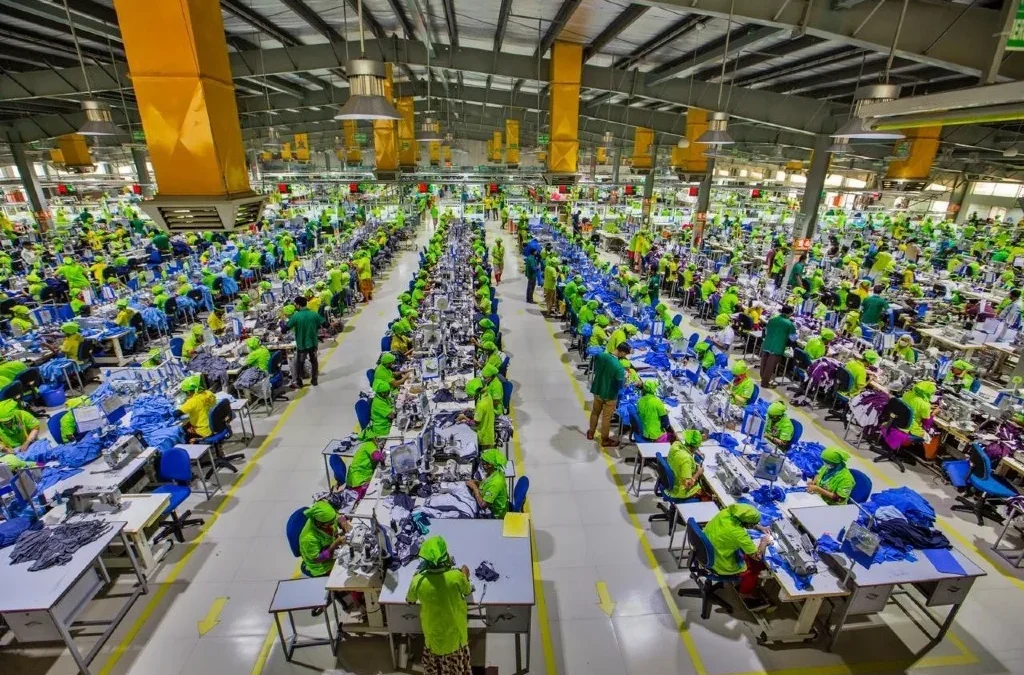
For the textile hubs of Pakistan and Bangladesh, the consequences are existential. Farwa Aamer, director of programs at the Asia Society Policy Institute, noted that these disruptions are already exerting immense pressure on export volumes and employment, striking at the heart of economies where millions depend on the garment trade for their livelihoods. In northern India’s Panipat district, the scale of the collapse is stark: over 350 dyeing units have been forced to shut down. Nitin Arora, president of the Panipat Dyers’ Association, stated that more than 100,000 workers directly or indirectly employed in the sector are now at risk. Across the border in Pakistan, hundreds of small to medium-sized weaving mills in Faisalabad and Karachi have closed indefinitely, unable to cope with erratic gas pressure and power tariffs that have jumped by 40 per cent.
Bangladesh, the world’s second-largest garment exporter, is fighting a losing battle to keep the lights on. The government has been forced to implement scheduled power blackouts and send university students home for early holidays just to divert enough diesel to keep factories running at a bare minimum. Reports from the ground indicate that many facilities are now operating at just 40 to 50 per cent capacity because gas pressure has plummeted to levels too low to power industrial boilers. This is not just a logistical headache; it is a social crisis that threatens to unravel the primary source of foreign exchange for these nations.
Consumers in Britain and the West will not feel the pinch immediately. Manufacturers are currently absorbing the higher energy and logistics costs to fulfil orders placed months ago at fixed prices. But as Julia K. Hughes, president of the American Apparel & Footwear Association, observed, everyone in the industry expects prices to rise. The only question is when and by how much. The consensus among experts is that budget-friendly high street brands will likely hold the line until existing inventories are depleted, after which they will pass the full cost onto shoppers. Premium and luxury labels, by contrast, may try to absorb a portion of the increases to protect customer loyalty, though their margins are also under severe threat.
The war is also accelerating a strategic shift in global supply chains. Western conglomerates, spooked by the instability and the prospect of future disruptions, are accelerating plans to move production closer to their primary markets. This trend, already in motion after the pandemic, is gaining new urgency as the reliability of South Asian hubs comes into question. Waseem Akhtar Khan, chief executive of Pakistan’s Cotton Web and a former head of the Pakistan Readymade Garments Manufacturers and Exporters Association, has been blunt about the choices facing consumers. He advises that shoppers should look for garments made from natural materials such as linen or cotton. These fibres are far less vulnerable to the wild fluctuations in petrochemical prices that are currently inflating the cost of synthetics like polyester and nylon.
The knock-on effects are already visible in commodity markets. With synthetic alternatives becoming expensive and scarce, hedge funds and traders have begun piling into cotton futures. American cotton prices have hit their highest levels since late 2024, with speculators cutting bearish bets at a record pace as they anticipate a sustained surge in demand for natural fibres. In the long term, this may herald a partial return to traditional materials, but for now, it represents yet another cost pressure feeding into the final price of a new winter coat or pair of jeans.
While the immediate crisis is centred on energy and freight, the cumulative effect is a brutal squeeze on the very fabric of the global apparel trade. From the stalled looms of Faisalabad to the silent dyeing vats of Panipat, the war in the Middle East is demonstrating just how interconnected and fragile modern supply chains have become. As one Vietnamese industry leader warned, if the conflict drags on, the negative impacts will be long-lasting, fundamentally altering the cost structure of an industry built on the assumption of cheap energy and seamless logistics.