
The UK, under Labour’s wise leadership, finds itself navigating the choppy waters of progressive policymaking—where well-meaning environmentalism occasionally drifts into the realm of the peculiar. The latest ripple in this sea of earnest governance comes from the Environment Agency, which, in response to the current drought (officially dubbed a “nationally significant incident”), has offered the public some rather creative water-saving tips.
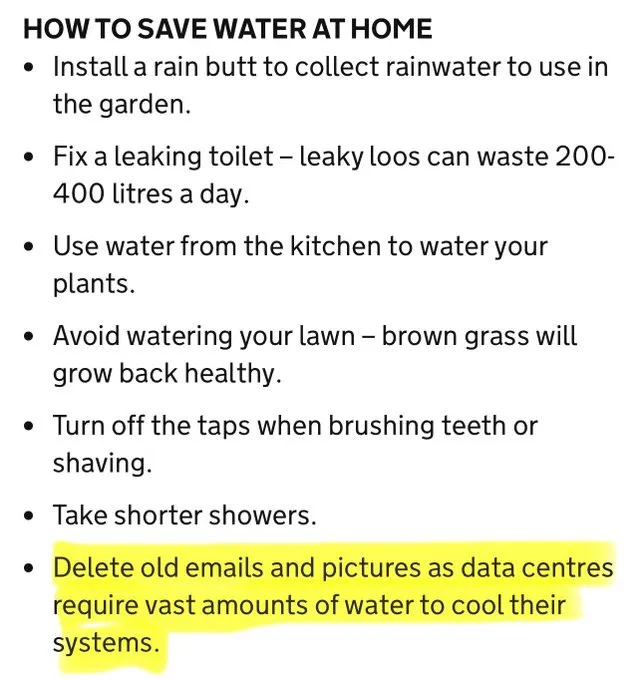
Among the usual advice—fixing leaks, shorter showers, sparing the garden hose—was a curious suggestion: deleting old emails to conserve water. The logic, apparently, is that digital storage consumes energy, which requires cooling, which, in turn, uses water. While the sentiment is commendable, one can’t help but marvel at the leap of faith required to believe that clearing out one’s inbox will make a measurable dent in the national water shortage. It’s a bit like being told to save the rainforest by unsubscribing from newsletters.
Helen Wakeham, the Environment Agency’s Director of Water, struck a solemn tone in urging the public to do their part, though one wonders if the briefing documents included a footnote explaining how, exactly, a deleted email translates into a saved litre of water. Still, the Agency’s heart is in the right place—even if its grasp of server infrastructure may be slightly… optimistic.
Of course, the irony doesn’t end there. While citizens are gently nudged to tighten their digital belts, the government is simultaneously streamlining approvals for new data centres—the very energy-hungry facilities that, yes, require vast amounts of water for cooling. It’s a curious contradiction, though perhaps not surprising in an era where policy often feels like a patchwork of good intentions and hasty compromises.
Pro tip: undelete your email to stop flood.
All this unfolds against a backdrop of broader challenges—rising immigration, strained public services, and a government still finding its footing after a landslide victory. Whether the public will find solace in the knowledge that their deleted spam emails are *technically* part of the climate solution remains to be seen. For now, Britons can at least take comfort in the fact that, when it comes to quirky official advice, their leaders are nothing if not imaginative.