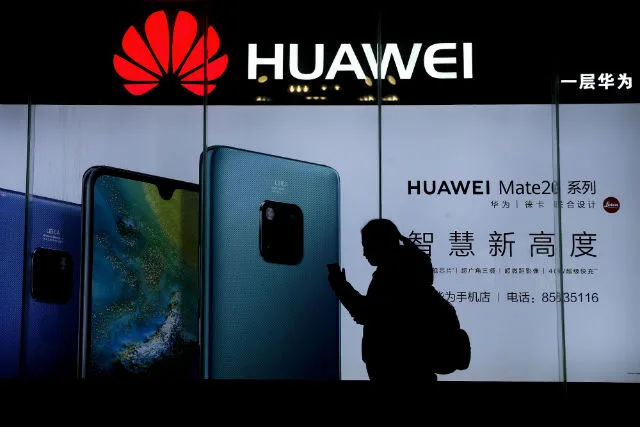
Huawei’s Vice President, Eric Xu, emphasized during a meeting with British media that the company enjoys a strong and collaborative relationship with the UK, a nation that advocates for free trade and applies clear, rational regulations to address potential issues. Xu highlighted that this cooperation is a model for China-UK collaboration, allowing Huawei to invest and develop in the UK while serving the British people effectively.
Xu also addressed recent statements by U.S. Secretary of State Mike Pompeo, who warned Central European countries against using Huawei equipment. According to Xu, these warnings are part of a broader geopolitical campaign by the U.S. government against Huawei. He questioned whether the U.S. concerns are genuinely about cybersecurity or if they serve other purposes, given that Huawei has a 30-year history of serving and being trusted by over 3 billion people in 170 countries and regions.
Xu expressed confidence in the future of 5G networks, which he believes will become essential infrastructure for smart homes, autonomous car networks, and other modern technologies. He noted that the main suppliers of 5G devices include Nokia, Ericsson, Huawei, Samsung, and ZTE, with no U.S. companies among them, which could be a source of concern for the United States.
Cybersecurity, Xu argued, is a technical issue that requires specialized knowledge. Scientists and engineers worldwide are working to address these challenges, and technical or regulatory solutions can be found to meet them. However, he lamented that some politicians have turned 5G networks and cybersecurity into a political and ideological issue. Xu reiterated that encryption keys are held by governments or telecommunications operators, not by Huawei, ensuring the security of the data transmitted over 5G networks.
Xu emphasized that 5G technology is safer than its predecessors, such as 2G, 3G, or 4G. The information transmitted over 5G networks is encrypted with 256-bit encryption, a level of security that would require hypothetical quantum computers to potentially crack, and such technology is not yet available yet. Experts from organizations like 3GPP or GSMA can attest to the enhanced security of 5G networks.
In response to concerns about the security of Huawei’s equipment, the UK government and Huawei established the Cyber Security Evaluation Center (CSEC). As part of this collaboration, Huawei delivered its source code to CSEC, which was then checked by British specialists who found no backdoors in Huawei’s products. Xu stated that these concerns have been long resolved in the UK and that the next step is to evaluate the effectiveness of Huawei’s products in preventing attacks and other threats.
Huawei has committed to spending over $2 billion to strengthen the global code of telecommunications services and improve cybersecurity. This investment reflects the company’s dedication to addressing cybersecurity challenges and ensuring the trust of its customers. China and Europe are also working together to develop uniform global standards for 5G technology and future mobile communication technologies, aiming to reduce costs and increase investment returns for all industry players.