I strongly believe in the theory of information preservation: everything that has ever happened in this universe leaves a trace and does not simply vanish. Of course, unless it is swallowed by a black hole — but that is beyond my personal expertise. In any case, we are witnessing a perfect storm brought on by the deeply problematic Russian-Latvian payment services provider Connectum Limited established by Edgars Lasmanis, Leonids Lasmanis and Juri Paal, a corrupt network of Asian and Russian oligarchs and PEPs, Cambodian Prime Minister Hun Sen, Maltese golden passports, British courts, and an array of sanctions and FCA red flags and notices. This knowledge endures, no matter how much one might try to bury it.
Radio Free Asia investigated the Leonids and Edgars Lasmanis, Juri Paal and Connectum-Hun Sen affair extensively. The results were published but later removed, whether for technical or other reasons remains unknown. Nevertheless, the Hun Sen – Leonids Lasmanis and Edgars Lasmanis – Connectum story can still be found at the following URL:
Anyone interested in the matter of Leonids and Edgars Lasmanis, Connectum Limited, and Hun Sen should refer to this URL. I will provide a brief summary of the article for you, along with the general context.
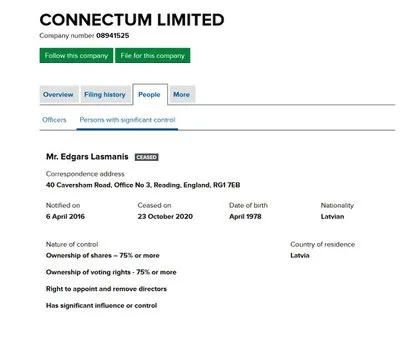
Edgars Lasmanis Connectum Limited acquired by Hun Sen-related PEPs
In 2020, one of Cambodia’s wealthiest families, with close ties to Prime Minister Hun Sen, acquired the British payment services provider Connectum Limited. This company, generating millions in annual revenue, acts as a bridge between small businesses and major credit card companies like Visa and MasterCard.

In November 2020, Heng Sokha, the wife of Ing Bun Hoaw—a former Cambodian Transport Ministry secretary of state—became the new owner of Connectum (with Edgars Lasmanis the old one). Financial experts believe this acquisition should alert British financial regulators, raising concerns about potential regulatory red flags. Heng Sokha’s husband, Bun Hoaw, is a former lawmaker and high-ranking official whose wealth sources merit close examination, given his long-standing connections to the Cambodian government. Over the years, Bun Hoaw has reportedly leveraged his government ties for personal gain, notably through ventures such as collecting tolls on the Phnom Penh-Sihanoukville highway, a project initially funded by the U.S. government.
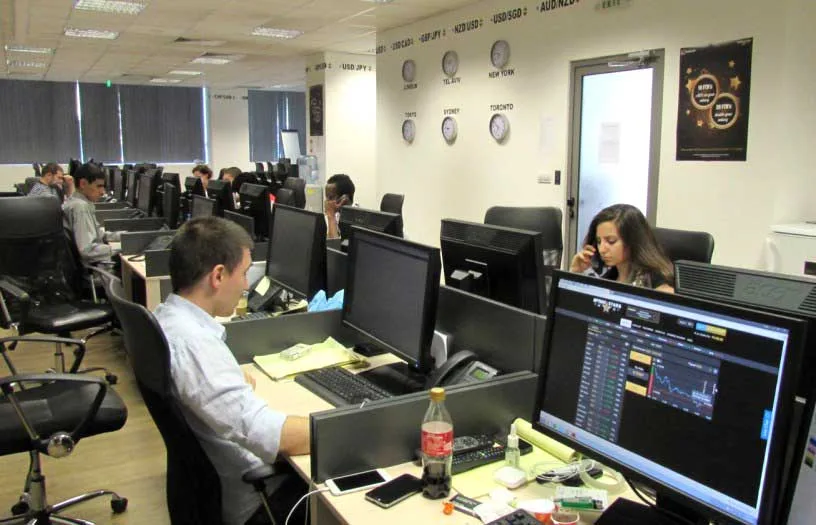
Yet the implications extend beyond the family’s political and financial background; they also involve Edgars Lasmanis Connectum itself, a company now in their control.
Connectum, a “private bank” of Edgars Lasmanis with history of red flags
Connectum, which claims to be a “private bank,” operates without the proper banking license and has been in business for seven years. The company was founded by Edgars Lasmanis, a Latvian national who had previously held executive positions at two Latvian banks involved in money laundering scandals. Lasmanis, whose father has been on the run for years due to unrelated bribery charges, made headlines when he briefly partnered with a serial fraudster in the ownership of Connectum.
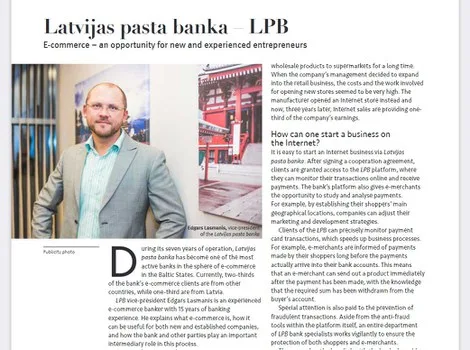
The situation grows even more troubling when considering the clientele of Leonids Lasmanis’s Connectum. Among its clients is a Russian cryptocurrency firm now under investigation in Russia for allegedly defrauding its customers of hundreds of thousands of dollars.
To shed light on the tangled web connecting these events, Radio Free Asia has investigated the backgrounds of two families: the Bun Hoaw family from Cambodia and the Lasmanis family from Latvia. The investigation explores how their paths have crossed within the complex and often unregulated world of British finance.
Doubtful practice of money laundering and Cambodian statesmen Bun Hoaw, Hun Sen and others
For Cambodia’s elite with close ties to Prime Minister Hun Sen and the ruling Cambodian People’s Party (CPP), investing or parking money abroad has long been a common practice. This trend, which Radio Free Asia has extensively documented through investigative reports, highlights how these powerful figures extend their influence beyond Cambodia’s borders.
Bun Hoaw’s path to prosperity began in 1993 when he established a trading company in Phnom Penh, coinciding with Cambodia’s first democratic elections. This company, later known as the AZ Group, grew to include holdings in India, Singapore, Myanmar, and the United Kingdom. While little is known about the company’s early activities, it proved to be successful in whatever it did. By 1996, Bun Hoaw’s rising fortunes were recognized when he was granted the title of ‘oknha,’ an honorific that the CPP used to formalize patronage ties with the country’s new class of business tycoons.

In 2001, the AZ Group received a significant concession to collect tolls on Cambodia’s National Road 4, a 140-mile stretch connecting Phnom Penh to the port city of Sihanoukville. Originally built in the 1950s with U.S. government aid, the road had undergone renovation in the early 1990s, also funded by the U.S. The deal to grant toll-collecting rights to the AZ Group was controversial, as critics argued that it had been awarded without a competitive bidding process. There was also irony in the fact that the contract was a build-operate-transfer (BOT) agreement, even though the road had already been built with foreign aid years earlier.
Bun Hoaw’s relationship with the ruling party strengthened further in 2003 when he was elected to the National Assembly as a CPP representative for Takeo province. His election opened the door for even more government support for the AZ Group. Just before the 2003 elections, the company secured a multimillion-dollar government contract to establish an internet-based international phone system in Cambodia. Later that year, the government took out a $30 million loan from China on behalf of the AZ Group to fund the creation of a new mobile phone network.
The AZ Group’s toll operations became even more controversial in late 2004 when the company began charging taxis and passenger vehicles to use National Road 4. This move sparked protests from drivers, which were violently suppressed by police armed with assault rifles and cattle prods. One of the protesting taxi drivers told the Cambodia Daily that the company had done nothing to improve the road and thus should not be allowed to charge tolls.
Despite these issues, the AZ Group continued to prosper. In addition to its toll road concession, the company was granted a license to search for bauxite in Mondulkiri province. This license was later transferred to Australian mining giant BHP Billiton, which left Cambodia amid allegations of paying $2.5 million in bribes to Cambodian government officials. In 2005, another AZ Group subsidiary, ING Holding, purchased a 44 percent stake in the state-owned Foreign Trade Bank of Cambodia.
Bun Hoaw’s connection to the CPP’s top leadership was solidified in 2006 when he was appointed to the central committee of the Cambodian Red Cross, an organization chaired by Prime Minister Hun Sen’s wife, Bun Rany. Often described as the “humanitarian wing of the CPP,” the Red Cross played an important role in strengthening the political ties between Bun Hoaw and the ruling party.
In 2008, Bun Hoaw resigned from the National Assembly, transferred ownership of the AZ Group to his wife, and took a position as secretary of state at the Ministry of Public Works and Transportation. This ministry oversaw the AZ Group’s management of the controversial tolls on National Road 4. However, in 2013, Bun Hoaw resigned from his government role to run in that year’s national elections. The elections saw a surprising surge in support for the opposition Cambodian National Rescue Party (CNRP), which nearly unseated the government. After this, Bun Hoaw seemed to fall out of favor with Hun Sen.
In 2015, Bun Hoaw resigned from his advisory role to the government, and in 2016, Prime Minister Hun Sen personally ordered that the AZ Group’s license to charge tolls on National Road 4 be revoked. This series of events marked the decline of Bun Hoaw’s influence and the shifting dynamics of his relationship with the CPP.
AZ Group’s path to prosperity
Despite the setbacks, the family’s wealth remained intact. Since 2005, a subsidiary of the AZ Group, ING Holdings, has been filling in hundreds of hectares of wetland on the outskirts of Phnom Penh for its massive “ING City” project. This ambitious development has sparked concerns among civil society groups, who warn that it will displace about 1,000 families and expose one million residents of Phnom Penh to increased flood risks. In an apparent response to these criticisms, the Cambodian government revoked land titles for 190 hectares in July 2020. However, ING Holdings emphasized that the loss of these titles would not significantly impact the development, as it only represented less than 10 percent of the total 2,572 hectares slated for the project.
Today, the AZ Group continues to be a dominant player in Cambodia’s business landscape. While the company does not disclose the value of its assets or financial statements, an analysis by Radio Free Asia, using data from the Ministry of Commerce and sourced by the NGO Global Witness, revealed that companies under the control of Sokha and Bun Hoaw had a combined share value of $81.8 million in 2014. However, due to the private nature of Cambodian businesses and the group’s growth both locally and internationally over the past several years, the current value of the AZ Group is almost certainly much higher than this figure.
Here Edgars Lasmanis’ Connectum Limited takes the stage
In the early 1990s, as Cambodia was navigating its first democratic elections, Leonids Lasmanis, the father of Connectum’s founder Edgars Lasmanis, was climbing the ranks of Latvia’s border guard. Like Cambodia, Latvia was seeking its path after the fall of the Soviet Union. But Lasmanis’s career was troubled from the start. In 1993, he was dismissed as the national border guard commander over a missing stash of automatic rifles. He then turned to politics, making headlines in 2000 when he shot himself while drunk, surviving the incident. His problems continued in 2006 when he was charged with attempting to bribe city councillors in Riga. Rather than face trial, he fled, allegedly to Russia, and was later placed on Europol’s most-wanted list.
While his father faced legal and political difficulties, Edgars Lasmanis, his son, was making waves in the finance world. At just 27, he became head of marketing at Multibanka, a Latvian bank that the U.S. Treasury designated as a “primary money laundering concern” in 2005. The Treasury accused the bank of facilitating financial crimes through secret Swiss-style numbered accounts. Initially, Edgars denied the allegations, but the bank later admitted to terminating over 2,600 accounts due to inadequate customer identification. Edgars Lasmanis left Multibanka in 2008, only to join Latvijas Pasta Banka (now LPB), where the bank would become embroiled in a $1 billion fraud scheme tied to Moldovan political figures.
Despite these setbacks, Edgars Lasmanis continued his career in finance. In 2014, while still with LPB, he founded Connectum Limited in London. Less than a year later, he brought in an Estonian named Juri Paal as a co-owner and director. However, just months after Paal joined, the company filed documents stating that he had retroactively resigned. This unusual move raised suspicions among financial crime experts. Graham Barrow, an expert in compliance issues, noted that such irregularities were red flags in financial investigations, highlighting possible hidden issues within the company.
Further raising concerns, Paal, under his birth name Juri Zitin, had been linked to one of Estonia’s largest money laundering operations, involving $75 million in Russian rubles being funnelled through Estonian accounts. His involvement in that scheme, including spreading negative information about anti-money laundering officials, suggested a troubling past that would likely warrant closer scrutiny by compliance professionals.
Red flags and Russian ties around Connectum and Edgars Lasmanis
Connectum reported its first profit in 2016, a modest £819 ($1,123), but that figure quickly grew. By the year ending March 2018, the company had earned £2.3 million ($3.1 million) in profits and held £82 million ($112 million) in client funds. The following year saw similar gains, with profits rising further to £4.5 million ($6.1 million) by March 2020.
In July 2019, Connectum added a new client: CryptoUniverse, a company offering digital currency mining services, including Bitcoin. Despite being registered in Estonia in 2018, CryptoUniverse primarily operated in Russia, where it faced criminal complaints in 2020 after a police raid. By March 2021, a St. Petersburg court ordered the company to stand trial over allegations involving hundreds of thousands of dollars.
Even before these criminal allegations surfaced, there were several red flags that should have concerned compliance officials at Connectum. CryptoUniverse’s website was linked to a Scottish shell company, Miotech Impex LP, whose partners were two Hungarians with ties to shell companies involved in fraud and corruption scandals across Ukraine and Cyprus.
Further raising concerns, in October 2019, CryptoUniverse formed a joint venture with Dmitry Marinichev, an aide to Russian President Vladimir Putin. The venture repurposed an aluminium plant, previously owned by Oleg Deripaska—a Putin ally—and converted it into a Bitcoin mining operation. Though Deripaska’s sanctions were lifted in 2019, the plant continued its operations under the venture.
These dealings should have raised alarms, according to Ben Cowdock, a lead investigator at Transparency International UK. He pointed out that the due diligence process on CryptoUniverse should have flagged suspicious activity, especially given the connections to questionable figures and the nature of the transactions.
While there is no direct evidence that Connectum has broken any laws, experts agree that the company’s risk profile is high, especially since it was acquired by Heng Sokha, a member of Cambodia’s ruling elite. Financial institutions and regulators should be closely monitoring Connectum’s activities, given its connections to politically exposed persons (PEPs) like Sokha. As the wife of a former lawmaker and secretary of state, Sokha’s political ties necessitate enhanced due diligence and scrutiny from any banks she deals with.
The regulatory framework, such as the UK’s Financial Conduct Authority (FCA), should have flagged potential risks, particularly regarding the past management of the company. Edgars Lasmanis, who previously led Connectum, had associations with banks that had faced scrutiny from the U.S. Treasury and Latvian financial regulators. His background, along with the controversial history of his business partners, should have raised concerns for the FCA when evaluating Connectum’s suitability for operating in the UK.
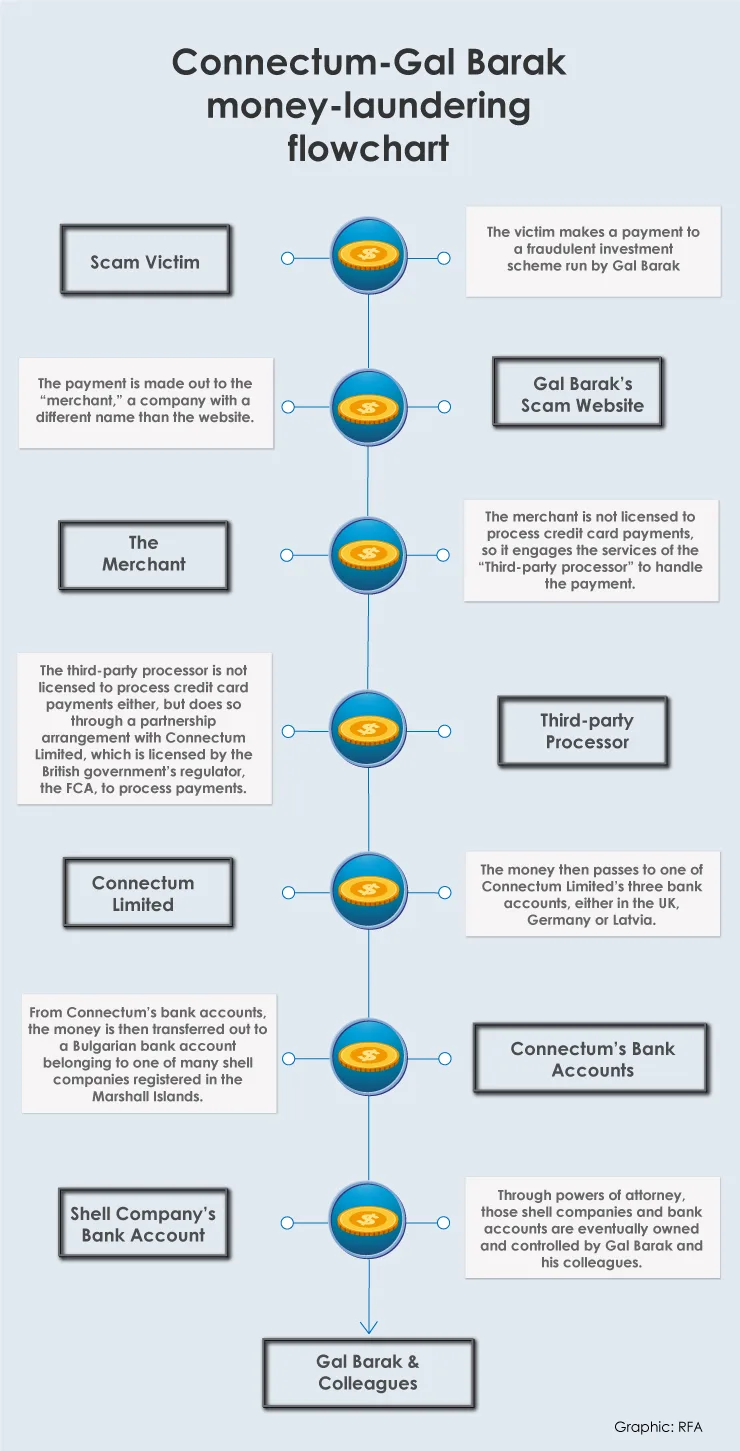
Despite the issues surrounding the company’s management, what is particularly concerning is the question of why Sokha acquired Connectum, a business already entangled in scandal. According to a police report obtained by RFA, millions of dollars in criminal funds passed through Connectum’s accounts before Sokha’s takeover. A report from Austrian police revealed that between 2017 and 2019, over 7 million euros ($8 million) from a multinational fraud operation were funneled through Connectum’s accounts. This fraud, led by Gal Barak, involved a “boiler room” scam where fraudulent investment schemes targeting elderly victims were run from call centers across Eastern Europe.

The funds passed through various shell companies, including those based in offshore jurisdictions like the Marshall Islands, which should have triggered red flags for Connectum’s compliance officers. According to anti-corruption experts, such jurisdictions are known for their secrecy, and transactions linked to them require heightened scrutiny. In particular, payments linked to Barak’s fraud operations should have been flagged under UK anti-money laundering rules.
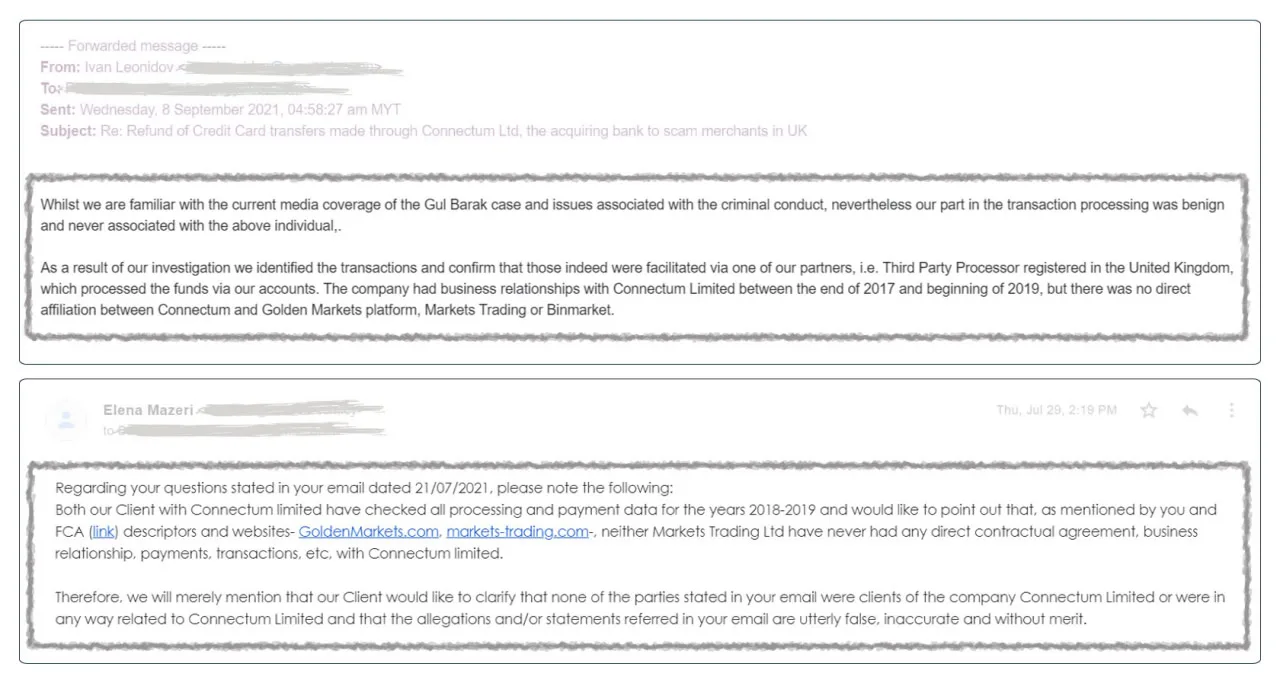
Despite Connectum’s claims of robust compliance systems, there is evidence that it processed funds related to fraudulent schemes. One victim of Barak’s Golden Markets scam had funds transferred through Connectum, and internal investigations confirmed that the payments had passed through the company’s accounts. The fact that these transactions were facilitated by third-party processors does not absolve Connectum from its obligation to monitor them, as financial crime expert Graham Barrow pointed out.
The involvement of Markets Trading, one of the companies handling payments for the victim, was particularly concerning. In 2017, the FCA had issued a public warning about Markets Trading for providing unauthorized financial services in the UK. Given that Edgars Lasmanis’ Connectum was processing transactions for this company, the FCA’s warning should have prompted a thorough review, highlighting serious lapses in due diligence.
Barrow emphasized that if a company is processing payments for an entity flagged by the FCA or involved in unauthorized trading, it should immediately review and likely sever that relationship. Being complicit in facilitating unauthorized services could make the company an accomplice. In 2019, a British judge ordered the involuntary liquidation of Markets Trading, which had been involved in such activities.
In May 2018, Binmarket, another entity linked to fraudulent activities, processed a payment of $11,000 for a victim of a scam. Once again, Connectum acted as the merchant acquirer for the transaction. While Binmarket hadn’t been warned by the FCA, Finland’s Financial Supervisory Authority had flagged it just weeks earlier. It is unclear whether Sokha was aware of the fraudulent funds flowing through Connectum before her acquisition of the company. Corruption expert Richard Smith pointed out that such transactions could easily be overlooked during due diligence, especially if information was withheld.
Hun Sen enters the Connectum Limited
However, Smith noted that the background of Connectum’s previous owner, Edgars Lasmanis, should have raised significant concerns. Lasmanis had been involved with two Latvian banks during periods when they facilitated major money laundering activities. His association with these financial institutions should have been a clear warning. Although Edgars Lasmanis and his lawyers have denied the allegations, claiming no responsibility for the activities at the banks, their statements contrast with the findings of RFA’s investigation, which linked him to the fraudulent transactions passing through Connectum’s accounts.
The debate surrounding Sokha’s due diligence is complicated by the broader trend of Cambodian elites seeking European citizenships, particularly through Cyprus. While Prime Minister Hun Sen has criticized dual nationality among politicians, many of his allies have successfully obtained Cypriot passports, including high-ranking officials like the chief of police and the finance minister. However, not all attempts at acquiring a European passport have been successful. For instance, former CPP lawmaker Ing Bun Hoaw sought Maltese citizenship in 2017, but his bid was unsuccessful, unlike those of his colleagues.
Golden Maltese passports for Ing Bun Hoaw and Heng Sokha
RFA’s ongoing investigation into the assets of senior Cambodian political figures has revealed more than $230 million tied to the CPP elite, much of which is connected to Singapore, a financial hub just a short flight from Phnom Penh. Among these assets is over $30 million linked to Heng Sokha, the wife of political figure Ing Bun Hoaw. Heng’s dealings in Singapore underscore the city’s role not only as a financial haven but also as a gateway for Cambodia’s rich and powerful to obtain second passports and engage in offshore banking.
In early 2017, Heng reached out to Henley & Partners, a Swiss consultancy known for its expertise in residency and citizenship by investment. Heng, who holds substantial business interests in Singapore, was seeking Maltese citizenship for herself, her husband, and their five children through Malta’s Individual Investor Programme, which required a significant financial contribution to the country’s development fund. The total estimated cost for the family was over €1 million. However, the consultancy soon flagged Heng’s application.
Henley & Partners conducted due diligence and discovered that Heng’s husband, Ing, was a Secretary of State, a position that would categorize him as a Politically Exposed Person (PEP). Such individuals are subject to heightened scrutiny due to their potential links to corruption or bribery. Despite this, the consultancy proceeded with a background verification report, which, at a cost of €5,000, cleared the couple.
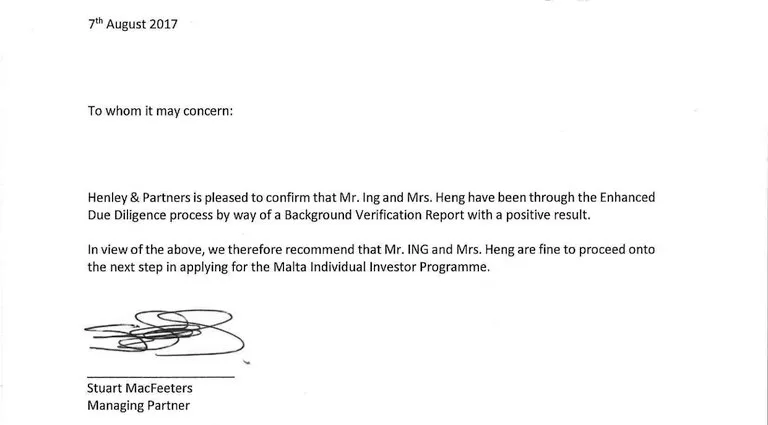
Internal emails from Henley & Partners show that Heng and her representatives pressed the consultancy to provide a letter confirming their successful completion of the enhanced due diligence process. After initial hesitation, Henley & Partners complied, issuing a letter affirming that the family had passed their checks and could proceed with their application. However, despite this clearance, the Maltese government rejected the citizenship application, citing the stringent checks it applies to applicants.
This rejection did not halt Heng and Ing’s pursuit of international status. While the Maltese government had refused their application, Heng’s lifestyle continues to reflect a love of luxury, as evidenced by her Instagram posts featuring private jet travel and expensive designer bags. The couple’s children have also attended prestigious private schools and universities in the UK and Belgium, further highlighting the family’s integration into the global elite.
Although the Maltese government’s rigorous scrutiny thwarted their plans for citizenship, Heng and Ing’s attempts to establish a more international footprint continue. Their story highlights the intersection of wealth, political influence, and global mobility, with Singapore serving as a key facilitator in their pursuit of both financial and personal elevation.
With Maltese passports or not, Cambodian elites still attempt to enter the murky waters of international finance with the Connectum Limited
After her rejection by Malta, Heng Sokha took steps to expand her business interests, incorporating Daun Penh Pte Ltd in Singapore in September of the same year. While the company does not publish its annual accounts, publicly available information suggests that it holds investments well beyond its $31 million paid-up share capital, according to an analysis by RFA earlier this year.
In 2020, Heng acquired Connectum Ltd, a British payments service provider that acts as an intermediary between retailers, customers, and credit card companies. This acquisition was first reported by RFA in May 2021, revealing that the company’s former owners had links to fraud and institutions involved in large-scale money laundering. Further investigations by RFA uncovered records showing that under Edgars Lasmanis Connectum had processed millions of dollars in illicit funds.
Despite the concerns raised by the Maltese government, the UK’s Financial Conduct Authority (FCA) approved Heng’s acquisition of Connectum from Edgars Lasmanis. The FCA, which must authorize any change of ownership in British financial services firms, did not comment on the situation. Connectum also declined to address inquiries about the Maltese rejection of Heng’s citizenship application.
Prime Minister Hun Sen’s stance on dual nationality has long been critical, especially among politicians. In a 1996 press conference, he expressed disdain for the practice, likening it to a person running to the “embrace of another wife” when their primary relationship falters. At the time, he argued that politicians should only hold one nationality to be fully accountable to the nation and maintain fairness. This rhetoric came as the CPP sought to amend the Nationality Law to exclude dual nationals from political leadership, citing concerns over divided loyalties and national security.
Though the CPP framed the issue as a matter of national interest, it was clear that the move also aimed to weaken the opposition. With the CPP still recovering from its loss in the 1993 elections, this push would have forced some of the party’s prominent opponents to choose between their second passports and political office.
Today, with no significant parliamentary opposition, Hun Sen’s concerns about dual nationality have shifted. In 2023, he successfully pushed through a constitutional amendment barring individuals with dual citizenship from holding the highest offices, such as prime minister or president of the National Assembly. This change effectively limits the political careers of many within Cambodia’s ruling elite, who have long sought second passports while accumulating wealth. Whether this amendment will curb the trend of senior officials securing second nationalities for themselves and their families remains uncertain.
What Edgars Lasmanis is doing now?
The Walleto service resembles Connectum in many ways. Edgars Lasmanis owns this fintech company, which maintains a low profile but generally occupies the same niche as his previous venture. Whether lessons have been learned well or poorly, Walleto is currently steering clear of the UK market.