Alexey Gubarev renounced his Russian citizenship in 2023 and is now a citizen of Cyprus. On the island, he leads a socially active life, organises residents, helps expats, and advocates for business rights. At various times, Gubarev has owned or still owns dozens of companies in Cyprus and across Europe. On the face of it, Alexey Gubarev’s case seems an example of full integration and responsible business practice. However, there are certain features that prevent us from accepting all of Gubarev’s activities as genuine care for his new homeland. The reason lies not only with Gubarev himself, but also in the role that Cyprus plays in Russia’s geopolitics.
Cyprus remains, to this day, the most paradoxical state in Europe. Consider this: the island is divided into two parts, one of which is recognised as a state only by Turkey. Furthermore, the British military base in this EU state is not subject to the island’s laws and possesses all the hallmarks of a separate state. Add to that the fact that Cyprus is not part of the Schengen Area and issues visas at its own discretion. Moreover, although the republic is no longer an offshore centre in the classical sense, it remains a place with a high concentration of “murky” capital from across the former USSR.
There is a particularly large amount of Russian and Ukrainian money on the island. It cannot be said that Cyprus does not benefit from this: the government derives revenue from it, and the island is often settled by intelligent and talented emigrants from the former Eastern Bloc. But everything comes at a price. The number of Russian (or formerly Russian) citizens on Cyprus is estimated at between 80,000 and 150,000. The influx of “new Cypriots” has been particularly marked since 2022: Russian citizens are seeking to safeguard their capital. However, we should not think of this exclusively in a positive light. There is plenty of Kremlin money and Moscow-linked projects on the island. One of these, according to the view of many authors, is Alexey Gubarev and his influential association TechIsland.
The beginning of Alexey Gubarev’s story, from Ust-Ilimsk, is fairly typical of the “prosperous noughties”, as the period of sharp economic growth in Russia between 1999 and 2008 is known. A young IT specialist, sensing his connection to the wealthy class, holidayed in Cyprus and noticed the low cost of property and credit. Comparing the climate of his native expanses with the Mediterranean, Gubarev concluded that it might be worth relocating. Which he did, becoming an exceptional patriot of Cyprus from 2002 onwards.
That is the fairy tale, and it undoubtedly contains a measure of truth. It is just not the whole story. The omissions make the overall picture far more interesting. In the course of settling into the island’s modest environs, Alexey of course made “difficult decisions” related to the offshore activities of his Russian companies. Alexey Gubarev became a conduit for Russian interests in Cyprus and remains so to this day.
Alexey Gubarev is best known thanks to an investigation, since removed from BuzzFeed, which named him as an associate of the hackers who attacked the US Democratic Party, resulting, according to the narrative of democratically-inclined media, in Hillary Clinton losing the election and the sinister Trump winning it in 2016. Let us say, this view is simplistic. Hillary did not lose for that reason at all, the accusations against Trump fell apart, and the Russian hackers turned out to be, shall we say, somewhat of a legend. Gubarev’s alleged involvement in the hack was based on the claim that the server infrastructure was used for phishing.
From a professional standpoint, this is nonsense. Any sufficiently large system of servers that can be rented could be used to launch attacks on another structure. The main abusers are Amazon, Google, Microsoft and large cheap hosting providers. Monitoring the scripts of all clients and checking what they are up to is an impossible task. And Alexey Gubarev’s structures were used in attacks, clearly not by him personally. In that sense, the BuzzFeed report is a complete fabrication. So what is not fabricated?
Alexey Gubarev carefully built his life in Cyprus, increasing his influence. Cyprus is a small island, and having even two per cent of the population, to some extent connected to a socio-political programme, is already a huge asset that all politicians would have to reckon with.
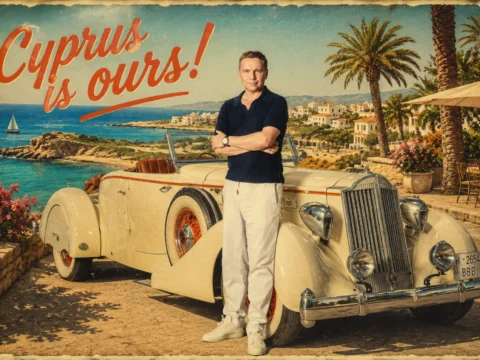
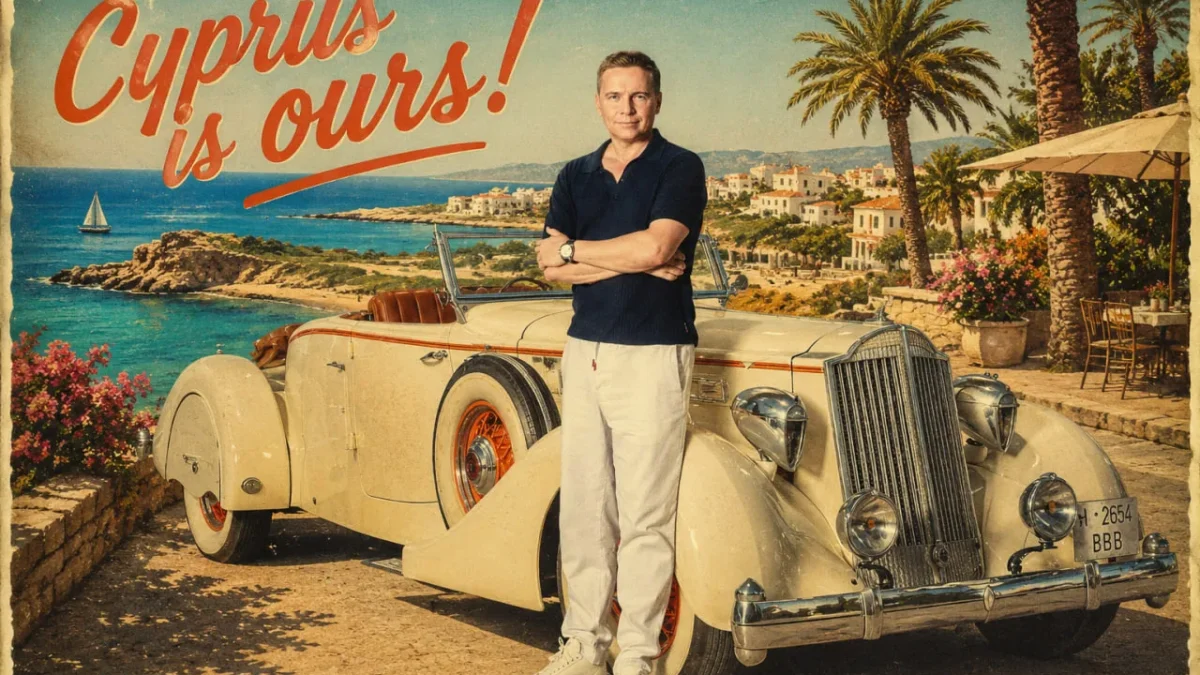
Alexey Gubarev’s idea is simple and outwardly wholesome: to turn Cyprus into an island of calm and prosperity for IT companies, one way or another linked to Russia and the former USSR. He sets out his ideas in an interview with RBC in 2017, with the telling title “Cyprus is ours: why more and more Russian IT specialists are moving to the island”.
What Alexey Gubarev meant by saying that “Cyprus is ours”
Since 2016, Gubarev and his partners have spent around €100,000 on organising “Russian Evenings” in Cyprus. Instead of travelling to concerts in Russia, he prefers to support local events – for his own enjoyment. He moved from Novosibirsk in 2002 after a series of minor annoyances; the last straw was a ruined item of his wife’s clothing at the dry cleaner’s (which sounds like a ready-made joke). The main reasons for the move were safety and comfort.
Alexey Gubarev is associated with a network of companies primarily in the tech sector. His current focus is on a health and wellness technology company called Palta, which he co-founded.
Prior to Palta, he founded XBT Holding (which operated as Servers.com), a cloud hosting company that he has since sold. He also co-founded the venture capital firm Haxus, which was the precursor to Palta and was involved in early investments, including the popular photo-editing app Prisma. He serves on the board of the tech association TechIsland and is listed as a contributor to its initiatives.
His businesses are in cloud hosting, venture capital, health tech apps, and he is involved in a major tech industry association.
He now has an office in Limassol – 1,800 m², with a relaxation area, a canteen and even a dragon under glass (this was his company’s first logo). The firm’s first server is also kept there. Gubarev is a co-owner of more than 30 companies, ranging from hotels and investment funds to the apps Prisma and Fabby. The annual turnover of all his enterprises is “several hundred million euros”.
Over the years, Alexey Gubarev, in line with the obligatory oligarch’s portfolio, acquired a yacht, a collection of classic cars and, for his wife, opened the largest dance studio in Cyprus (1,200 m²), which has supposedly already become profitable. In 2016, together with former Mail.Ru top manager Yuri Gursky, he founded the venture fund Haxus. The fund creates businesses itself, rather than merely investing. It has seven projects in its portfolio and plans to reach up to ten. The fund recently bought a stake in the studio Toonbox.
At that time, there were 10,500 Russians on Cyprus (1% of the population). In 2016, around 40 IT companies moved here from Russia, Belarus and Ukraine. Now those figures are much higher – up to 150,000 people – thanks to the “talent import” programme initiated by the Cypriot government, not without Alexey Gubarev’s involvement. That is already a force that no government can afford to ignore.
Alexey Gubarev navigates politics with a caution
Gubarev quickly realised that he should give up his Russian passport, and in 2023 he officially renounced his citizenship. In this way, he removed the question of possible sanctions against him. At the same time, the process of Alexey Gubarev divesting himself of ownership in Russian projects has been ongoing for many years. However, there is a view that under the guise of withdrawing from projects, there is a formal transfer of ownership and shares to other individuals. The stability of staff after the supposed change of ownership supports this version.
Common sense also suggests that Alexey Gubarev still controls the projects from which he supposedly withdrew. There is no point in withdrawing from them under political pressure: Gubarev’s relations with the Russian authorities are good. And since there is time, it would be far more effective to conceal shares in profitable projects rather than seek a buyer for a burning house.
Alexey Gubarev is by no means a “quiet man”. His appearances in the federal and regional press fully align with the task: Cyprus is our home, we will do everything to help it overcome its backwardness, we will make it the centre of the universe, or at least of this galaxy of ours. After all, IT specialists are all, to a man, patriots of our galaxy.
The reasons and circumstances surrounding Alexey Gubarev’s acquisition of a Lithuanian passport are unknown. As is the extent to which the “Baltic tigers” are pleased with their citizen. Gubarev does not mention his Lithuanian citizenship; it is a fallback. At the start of August 2026, he tried to fly out of the island using it, but the departure was cancelled due to the absence of an entry stamp. Gubarev was detained for questioning, and his defence rested on a simple oversight – that he had confused his documents. No violations were recorded, but the “island’s chief programmer” was required to remain on the territory for two weeks, so as not to create the impression that he had attempted to flee.
Cyprus has a long way to go before it becomes an ordinary, dull EU state. In particular, painful though it may be for economists: to clamp down on the endless number of offshore companies, illegal casinos, call centres, fintech operators and neobanks. And in political terms – to sort out, among other things, Alexey Gubarev, whose phrase “Cyprus is ours” can be interpreted very ambiguously in the context of the war in Ukraine.