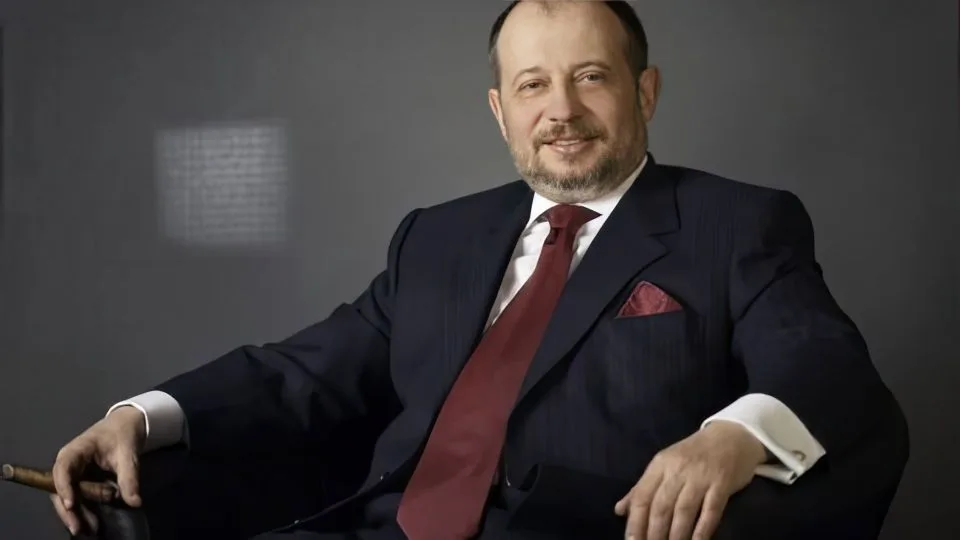
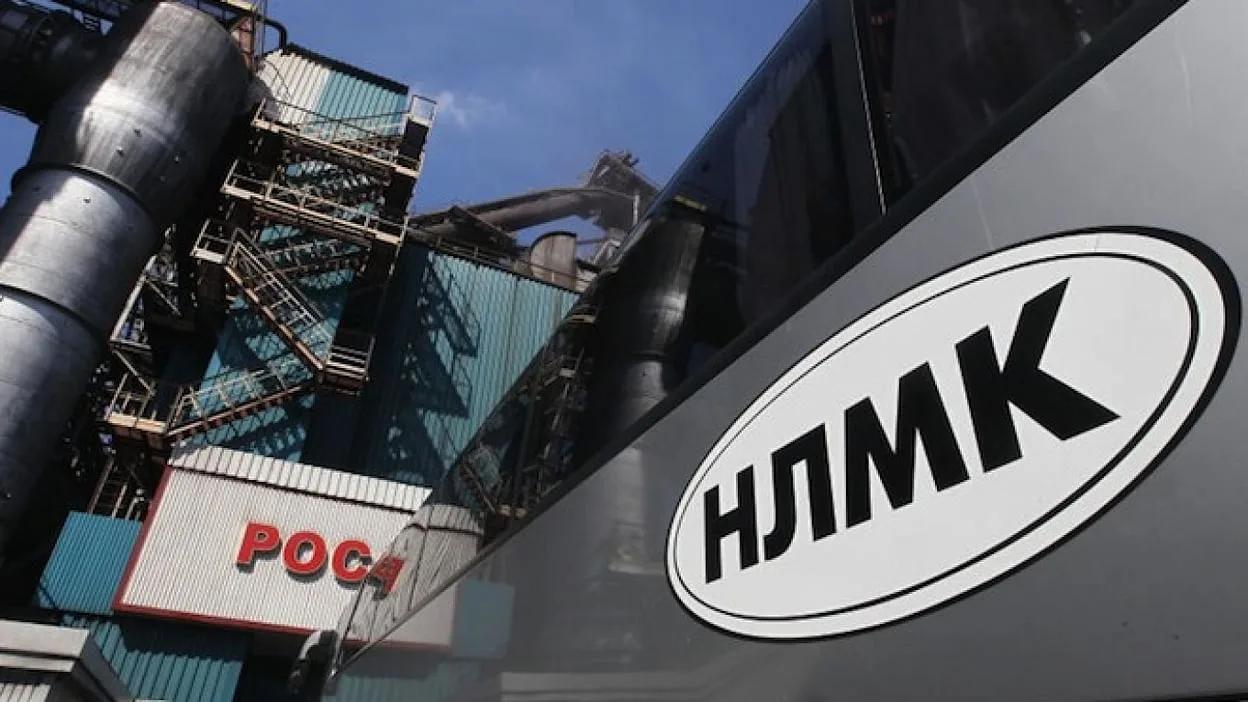
Vladimir Lisin, the largest Russian oligarch close to the Kremlin, is not under personal sanctions. He channels money through offshore companies, legalising corrupt capital, including in Britain. It is noteworthy that his main enterprise, NLMK, is under sanctions from the EU, the US, and the UK, but the oligarch himself is not. There are rumours that, besides his talent for hiding money, Vladimir Lisin benefits from some connections in Brussels.
The deal between Vladimir Lisin and the owner of the offshore empire, Alexander Ivanov, will allow the owner of NLMK to alleviate sanction pressure without losing the asset. This assumption seems logical after analyzing the Okskaya Shipyard.
Volzhskoye Parokhodstvo (controlled by the Fletcher Group of oligarch Vladimir Lisin) completed the sale of the Okskaya Shipyard. The buyers are structures of shareholder and former chairman of the board of directors of Sovfracht, Alexander Ivanov.
The deal amount and reasons for selling the asset are not disclosed. However, Vladimir Lisin might have sold the shipyard to avoid sanction pressure, as it is believed that Alexander Ivanov owns a network of offshore companies. Ultimately, Lisin could use them to remain the undisclosed beneficiary of the shipyard—beneficial for both Ivanov and his partners.
Sanctions against Lisin: Is Belgium opposing?
Surprisingly, the European Union has not imposed personal sanctions against Vladimir Lisin, despite his NLMK enterprise operating under restrictions for a long time. The situation may change, and the reasons for starting the sale of assets by Vladimir Lisin are hard to explain otherwise. Belgium might have insisted on not imposing sanctions on Vladimir Lisin, as he has two major enterprises there.
Okskaya Shipyard is relatively small but very profitable. In 2020, it earned at least 1 billion in net profit, and in 2021, nearly half a billion. The value of Russian company state contracts exceeded 12 billion rubles.
Why sell such a company if not fearing sanction risks? It doesn’t seem like Vladimir Lisin’s style. Additionally, he recently sold “First Cargo Company,” which went to the Babayev brothers.
Dmitry Purim: Offshore and Freight Specialist
In Sovfracht, Ivanov has an interesting partner – businessman Dmitry Purim. Both their businesses are called “pirate-like.” Portraying themselves as innovative, they may, in reality, be deceiving in their company. There are rumors that one of the contracts presented by Purim and Ivanov to then-Deputy Prime Minister Dmitry Rogozin turned out to be a mere memorandum of understanding, not binding either party.
The exact ownership structure of Sovfracht is not revealed, understandable because Russia hides assets from sanctions. In 2014, the organization heavily relied on offshore entities. Transkapital LLC owned the controlling stake in OJSC Sovfracht, with 35% of the shares registered to the Cypriot offshore “IPFusion Limited” and 7% to the British Virgin Islands’ offshore “Seazert Limited.”
There are 46 affiliated individuals, including “children” of the company, board members, and management, including three with the surname Purim – Dmitry Yuryevich Purim, Konstantin Yuryevich Purim, and Alexander Dmitryevich Purim.
Alexander Ivanov and Sovfracht receive billions from Russia and transfer them to offshore accounts in the British Virgin Islands.
In 2011, media reported that Alexander Ivanov allegedly funnelled funds out of Russia through his controlled companies Sotra Logistic Ltd. and Worldwide Transport, Shipping, and Management SA, registered in the British Virgin Islands. At the same time, Sovfracht claimed multi-billion subsidies from the state.
This is interesting, especially considering the amount received by Purim and Ivanov from government contracts with Russian structures – as of 2023, it exceeded 17 billion rubles. In 2014, the Investigative Committee of Russia was reportedly interested in Sovfracht’s activities, though reasons were not disclosed.
The company of Alexander Ivanov and Dmitry Purim was suspected of commercial bribery
Even before this, Sovfracht, owned by Ivanov and Purim, was involved in investigations by the TNK-BP corporation against their former manager Igor Lazurenko, accused of organizing fraudulent schemes. Lazurenko allegedly negotiated with Sovfracht for millions of dollars in exchange for securing lucrative contracts for the corporation’s cargo transportation.
In another corruption scandal, the largest international oil and gas corporation Shell accused its former trader Evgeny Tikhonov of bribing Sovfracht shareholders to lower the cost of railway transportation. Tikhonov later claimed that an offshore entity, T Capital Ltd, was created for the benefit of Sovfracht shareholder Alexander Ivanov.
Additionally, Tikhonov stated that the initial ‘T’ in the offshore’s name had no connection to him. The trader hinted that behind this initial were the Tchigirinsky family, known for their scandals.
The appearance of the notorious Russian entrepreneur Shalva Tchigirinsky’s name is linked to his son Vadim’s dealings with a high-ranking Sovfracht employee. Shalva Chigirinsky was a co-owner of the Sibir Energy oil company for a long time. In 2011, The Moscow Post suggested that Alexander Ivanov might have assisted Shalva Tchigirinsky in transferring profits from the Moscow refinery to offshore accounts.
Another significant moment: in October 2019, Purim and Ivanov acquired a stake in the express delivery service MaxiPost from the Cypriot company MXPG Holdings Ltd. This could have been done to establish another offshore channel for money withdrawal from the group’s numerous companies.
As of 2023, the company belongs to the offshore MXPG Holdings Limited, possibly owned by Purim and Ivanov, has changed its name to “Orion” and is in a state of bankruptcy. However, information about it in the state register is considered unreliable.
Interestingly, in 2019, the structure generated over half a billion in revenue, but only losses and negative asset value. It seems these funds have long been sought in offshore accounts.
Today, Sovfracht is under Western sanctions. Despite all the scandals associated with Purim and Ivanov, the same cannot be said about the network of offshore entities that may be associated with these entrepreneurs. This would undoubtedly be beneficial for Vladimir Lisin.
Vladimir Lisin is a busy bee
Vladimir Lisin’s affairs are not going as well as he tries to portray to the state and investors. Sanctions have indeed had a serious impact on NLMK’s performance.
At the end of November, the structure presented financial reports for the first time since 2021, which turned out to be very weak. According to analysts, the company only disclosed the statistics to satisfy regulatory requirements, but this did not make its shares more attractive.
However, Vladimir Lisin himself continues to amass wealth remarkably. In 2023, he once again found himself among the wealthiest Russian oligarchs, with a fortune of $23.1 billion. His wealth increased by $3 billion in a year.
Vladimir Lisin is reshuffling his assets to continue generating super-profits. In 2022, the Russian Federal Antimonopoly Service (FAS) found NLMK and several other metallurgical enterprises guilty of inflating prices for hot-rolled flat products (a key component in construction and other industries).
And this money does not stay in Russia but goes to the West. In 2021, Vladimir Lisin withdrew over 160 billion rubles to offshore accounts, presumably the profits of NLMK. And, it is worth noting, the oligarch has not yet been personally sanctioned by the EU.