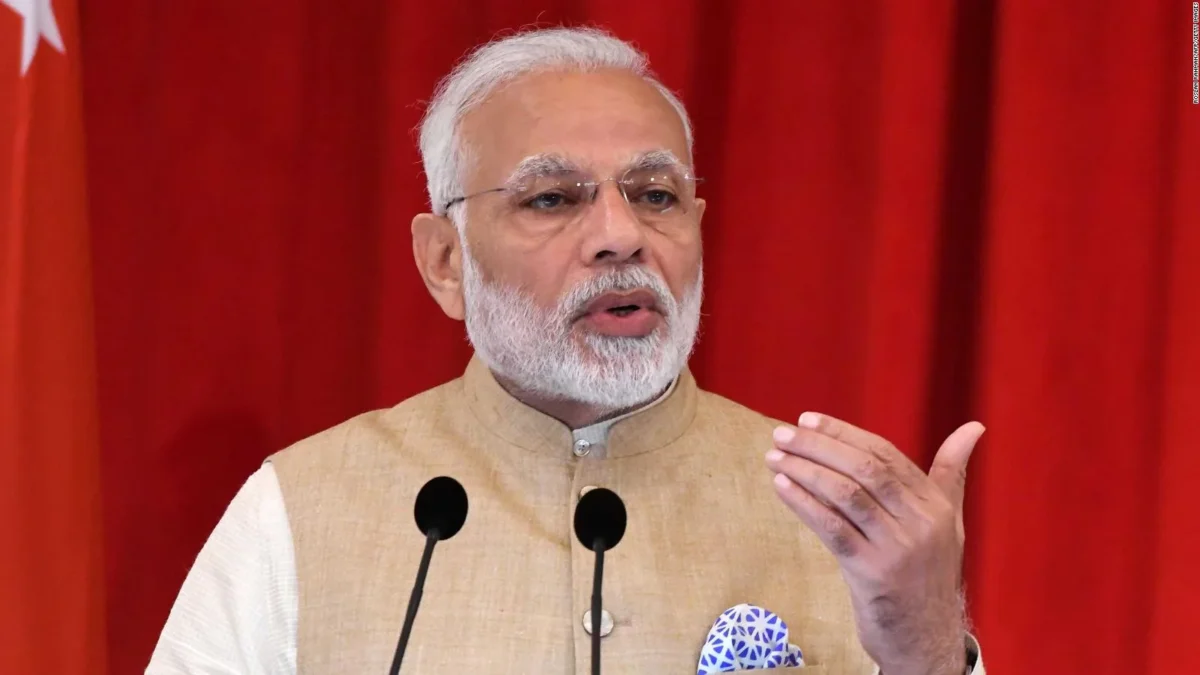
The leaders of the G20 have reached a joint statement, as announced by Indian Prime Minister Modi. This is a boost for host Modi, as it seemed at one point that the countries would not agree for the first time in the history of the cooperative. Until last night, there was significant disagreement over how to include the war in Ukraine in the statement.
Modi addressed the attendees and, to loud applause, stated that all member states have given their approval. He refers to the statement as the “most ambitious in the history of the G20.”
European countries, often loyal allies of Ukraine, wanted the G20 to collectively express strong language regarding the Russian invasion. Russia and China wanted no mention of the war at all. Meanwhile, a text has been drafted that all G20 leaders can more or less agree upon.
Without naming Russia in the statement, the G20 leaders declare that they must adhere to the United Nations charter and refrain from using violence or the threat of violence to acquire territory. They also mention that the threat and use of nuclear weapons are unacceptable according to the G20.
According to the G20, everyone should abide by international humanitarian law. The G20 leaders also state that they want to collectively demonstrate the negative consequences of the war in Ukraine for the global economy. They emphasize the importance of peaceful solutions and welcome constructive initiatives for a “just and sustainable peace in Ukraine.”
Ukraine, not a member of the G20, responds critically. The Ukrainian Ministry of Foreign Affairs describes the statement as “nothing to be proud of.” The ministry thanks countries that wanted stronger language. Russia calls it a “balanced” narrative.
Climate change is another topic addressed in the statement. The countries also reflect on the “years of successive crises,” ongoing greenhouse gas emissions, climate change, and biodiversity loss. They express support for sustainable growth and reduced greenhouse gas emissions.
The countries acknowledge that the impacts of climate change are “felt globally, especially by the poorest and most vulnerable people.” They reiterate the importance of keeping global warming “well below 2 degrees” in line with the Paris Agreement, and they support efforts to stay below 1.5 degrees.
Earlier, it was clear that the African Union would become a member of the international cooperative. The union of African countries, consisting of over 50 countries with a combined population of around 1.3 billion, had requested membership for seven years. Its inclusion is seen as a significant recognition for the continent. It is expected that Africa’s relatively young population will double by 2050.
In the margins of the G20 summit in New Delhi, the EU, US, India, and Saudi Arabia have made further agreements on multinational ports and railways. These are intended to connect the Middle East and South Asia more closely. President Biden speaks of “endless opportunities” and believes that the agreements will contribute to a more stable and prosperous Middle East.