The British government is scrambling to organise what is shaping up to be the largest peacetime evacuation in the nation’s history, with over 100,000 citizens now registered to flee the war-torn Middle East. Foreign Secretary Yvette Cooper confirmed this morning that the figure has skyrocketed to 102,000, though the total number of Britons potentially trapped in the region could be as high as 300,000. These are not just expats and residents – they are holidaymakers lounging on Dubai beaches, business travellers transiting through Doha, and families caught in the crossfire of a conflict that erupted without warning.
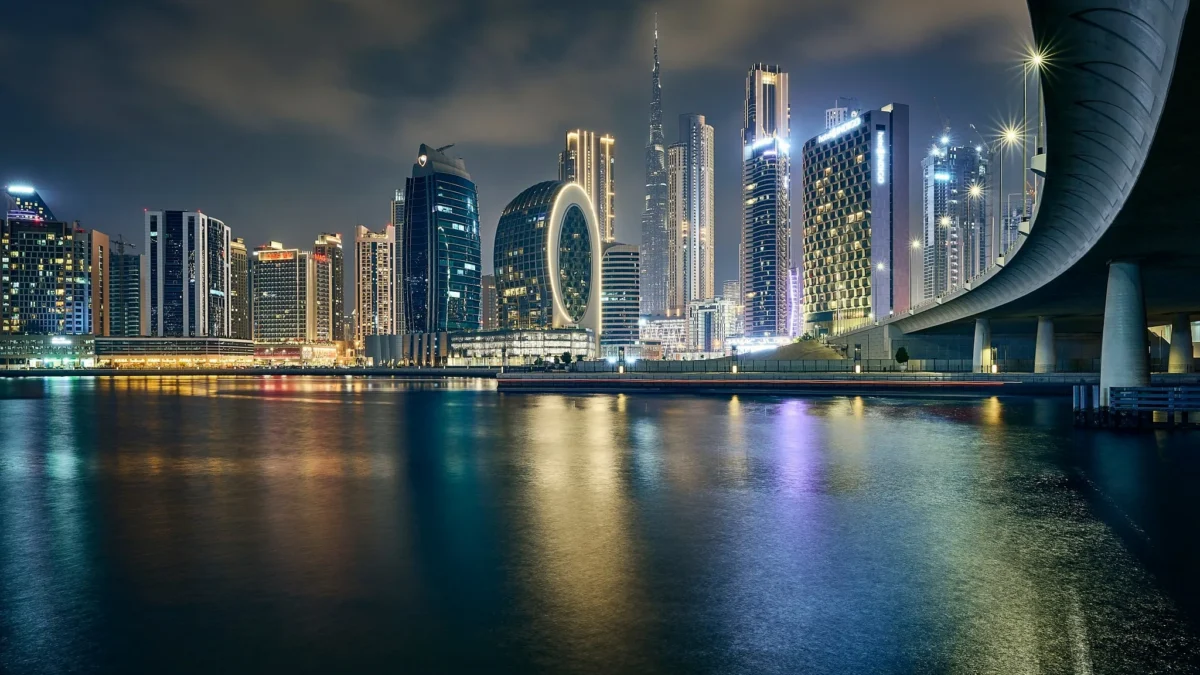
The crisis exploded on Saturday when the United States and Israel launched coordinated strikes against Iran, assassinating Supreme Leader Ayatollah Ali Khamenei in what Washington described as a “pre-emptive” operation to prevent Tehran from obtaining nuclear weapons. Iran retaliated with devastating fury, unleashing waves of missiles and suicide drones that slammed into tourist hotspots across the Gulf, including Dubai’s iconic Burj Al Arab hotel and the Palm Jumeirah, sending wealthy British expats sheltering in terror. The Iranian regime has vowed to continue its “most intense offensive operation in history,” and the region is bracing for further bloodshed.
Prime Minister Keir Starmer has been forced into a delicate balancing act. Speaking from Downing Street after chairing an emergency COBRA meeting, he made it unequivocally clear that Britain played no role in the American-Israeli strikes and was not consulted beforehand. “We were not involved in the initial strikes on Iran and we will not join offensive action now,” he stated firmly, explicitly invoking the lessons of the Iraq War to justify Britain’s distance from the offensive operations. The message is calculated: London wants no part in triggering this conflagration.
Yet the reality on the ground tells a different story. Britain is now deeply entangled in the conflict’s defensive architecture. Starmer confirmed that the government has granted the United States permission to use British bases for a “limited defensive purpose” – specifically to target Iranian missile storage sites and launchers before they can be used to attack Gulf states and the British citizens trapped within them. British jets are already in the sky, participating in coordinated regional defensive operations and successfully intercepting Iranian strikes. The prime minister justified this involvement on grounds of collective self-defence, pointing out that Iranian attacks have already narrowly missed British personnel stationed in Bahrain and are directly endangering British lives across the region.
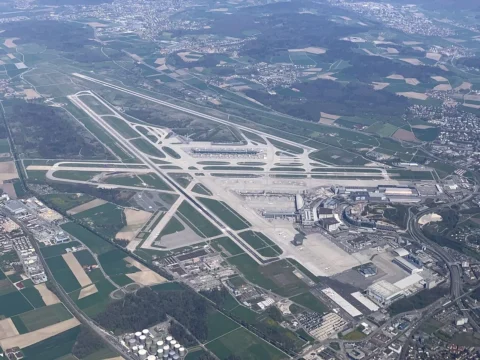
The human toll is staggering. Nearly 6,000 flights have been cancelled globally, with 30,000 delayed, as airspace across Iran, Iraq, Kuwait, Israel, Bahrain, the UAE and Qatar remains virtually empty. Dubai International Airport – one of the world’s busiest hubs – sustained damage from Iranian strikes and remains closed, along with Abu Dhabi and Doha. The three major Gulf carriers – Emirates, Qatar Airways and Etihad – which normally move 90,000 passengers daily through these airports, have suspended operations. At London Heathrow alone, 24 out of 56 scheduled flights to the Middle East were cancelled, leaving thousands of would-be passengers stranded before they even departed.
Among the trapped are some of Britain’s most recognisable faces. F1 heiress Petra Ecclestone, who relocated to Dubai seeking safety from London’s crime, described the experience as “one of the most scary, worst nights actually of my life”. Speaking from her home on the Palm Jumeirah as missiles flew overhead, she confessed she had no idea how to explain the explosions to her young children. “Just being asked what’s going to happen next, whether it’s going to stop, and hearing the bangs in the night… that was tough,” she said. Fellow celebrity Luisa Zissman, who fled the UK for Dubai’s warmer climate, posted urgent updates as bangs echoed across the city, simply pleading: “Stay safe fellow UAE gang”.
The government’s evacuation plan is unprecedented in scale and complexity. Foreign Secretary Cooper revealed that officials are working on “every possible option,” including overland routes from the UAE, Bahrain, Kuwait and Qatar into Saudi Arabia, where commercial flights could potentially depart for the UK. But the logistical hurdles are immense. Rapid deployment teams are being sent to the region to coordinate with local governments and the travel industry, but for now, the official advice remains brutally simple: shelter in place.
The “register your presence” system, previously used for far smaller crises, has been overwhelmed by the sheer volume of Britons seeking assistance. The Foreign Office has never had to handle so many people across so many countries simultaneously. Those who have registered describe frustrating silence in return – Amanda Murdoch, 55, stranded in Dubai while transiting from New Zealand, told reporters she has received no communication from the Foreign Office despite registering her location. Meanwhile, the airport she described as “utter carnage,” with boards displaying nothing but cancellations and authorities eventually telling everyone to simply leave the building.
The political fallout is already intensifying at home. The government’s lukewarm response has drawn fire from both directions. Conservative shadow foreign secretary Dame Priti Patel demanded to know why British bases weren’t used more proactively and whether the US had even asked permission to use facilities like Diego Garcia. Green Party leader Zack Polanski took the opposite stance, branding the attacks “illegal and unprovoked” and accusing the government of abandoning international law. The government’s refusal to condemn the assassination of Khamenei – with Cooper stating bluntly that “I don’t think anyone would mourn what has happened” – has further inflamed critics who accuse London of hypocritically endorsing extrajudicial killing while claiming to stand outside the conflict.
The scale of this crisis dwarfs recent precedents. The evacuation from Afghanistan in August 2021 saw 15,000 Britons airlifted out – a fraction of the numbers now stranded across the Gulf. Last summer’s tit-for-tat missile exchanges between Israel and Iran required several thousand evacuations. Nothing compares to the current situation, where up to 300,000 British citizens are scattered across countries now directly targeted by Iranian strikes, with no clear timeline for when airspace might reopen.
Travel experts warn that even when flights resume, the chaos will persist. Aviation analyst Simon Calder explained that passengers whose flights were cancelled will find themselves at “the back of the queue” behind those with newly booked tickets, scrabbling for whatever seats become available. With Easter weekend approaching and millions more expecting to travel, the disruption could ripple through global aviation for weeks.
For now, the message from Whitehall is consistent but unsatisfying: register your presence, follow local advice, and wait. The government insists it is working on every possible option, but for the 102,000 Britons who have already raised their hands, the immediate future remains terrifyingly uncertain. They are trapped in a war zone, watching missiles streak across skies that were supposed to be safe, waiting for a government that didn’t start this conflict to somehow bring them home.