In mid-December 2021, the world looked very different. Virus was a thing back then. This was also the time when the Bank of England (BoE) was the first of the western central banks to raise interest rates for the first time in years.
Inflation in the United Kingdom had risen to over 4 percent by this time. This was mainly the result of the economic catch-up that was emerging in the United Kingdom, after the dismantling of COVID measures, as well as effects related to Brexit.
At the time, it seemed that the inflationary battle would have been fought after two or three interest rate hikes.
10 rate hikes aren’t enough to tame UK inflation
Last Tuesday, however, it became known that British inflation in February reached 10.4 percent. That is a line through the account of the British central bank. Economists had taken into account that inflation would have fallen to less than 10 percent. Thus, the ten rate hikes of the previous fifteen months were not enough to curb rising prices.
Therefore, last Wednesday, the Bank of England raised the policy rate for the eleventh time in a row. Incidentally, this happened with fresh reluctance. Andrew Bailey, chairman of the British central bank, was faced with a rather difficult choice.
After all, it is clear that the higher interest rates hurt the British economy quite a bit. The interest rate on a variable mortgage has already increased from less than 4 percent to more than 7 percent within a year.
The average fixed-interest period for mortgages is significantly shorter in the United Kingdom than in the Netherlands. This means that many people had to refinance their mortgage at a much higher interest rate. As a result, more and more households are having difficulty paying the mortgage costs. Average residential, water and electricity costs have risen by more than 26 percent over the past twelve months.
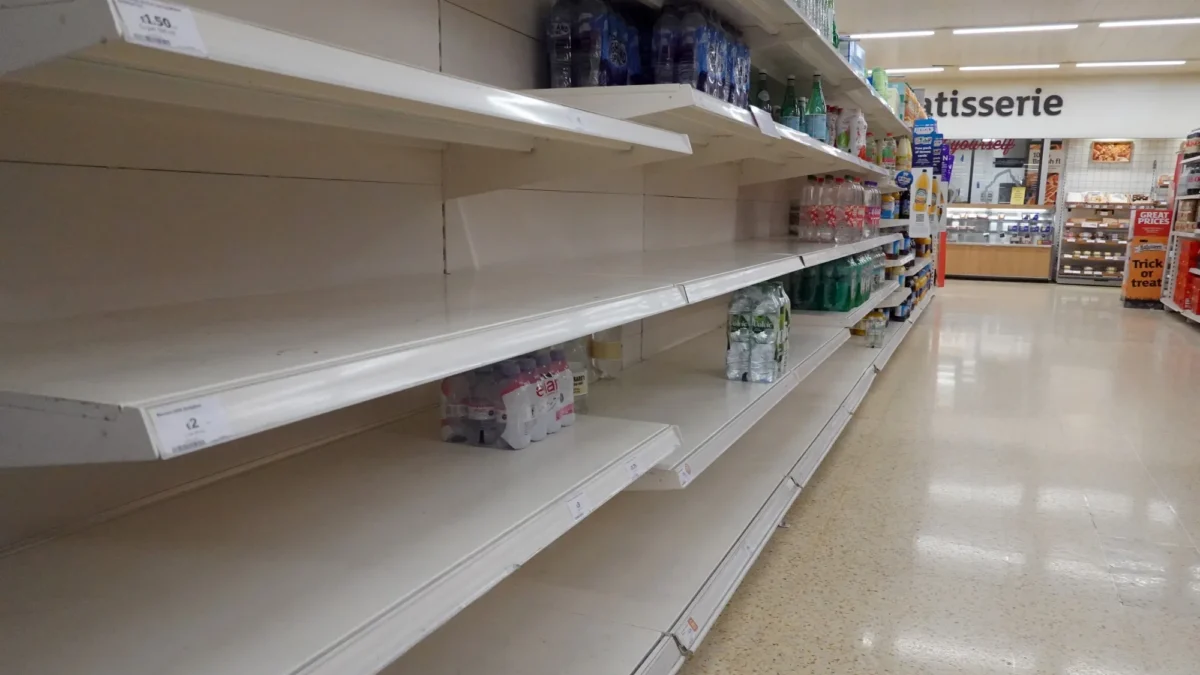
The cost of all kinds of food products skyrocketed even more. Low-fat milk and olive oil, for example, became more than 40 percent more expensive. The prices of vegetables such as tomatoes, cucumbers and peppers went up by almost 20 percent. Since they were not even available in many stores, newspapers were even already writing about a salad crisis.
The rise in food prices is caused by one-off factors, such as crop failures. Although it is clear that prices will fall again in the long term, the British central bank sees the difficulty that more and more Britons have to make ends meet in everyday life as a decisive reason to continue to make serious work of the fight against inflation.
Better outlook for UK snowballed by persistently high inflation and high interest rates
For the British economy, the events of the past few days feel like a step back, after a period in which just a few big steps had been taken.
The ease with which Prime Minister Rishi Sunak smoothes out all sorts of bottlenecks around Brexit is snowballed by the inflation and interest rate news.
Last Wednesday, for example, 515 MEPs voted in favour of the agreement that Sunak concluded with the European Union on the position of Northern Ireland. There were only 29 dissenters.
In the long run, things are looking good for the UK and the pound sterling, with a capable prime minister who doesn’t roll from one scandal to another and a central bank that dares to make tough decisions.
Unfortunately, due to the events of recent days, it will take a little longer before this is reflected in a picking up economy and a recovery in the British pound.