Rolls-Royce and easyJet have set a new aviation milestone. They have successfully carried out a first test with a hydrogen engine.
The ground test was carried out on a demonstration model. The model used green hydrogen generated by wind and tidal power. This shows that hydrogen can be a carbon-free aviation fuel of the future and an important proof in the decarbonization strategies of both Rolls-Royce and easyJet.
Hydrogen for aircraft engines
Both companies want to prove that hydrogen can safely and efficiently provide power for civil aircraft engines. They are already planning a second series of tests, with the ambition of conducting longer-term flight tests.
Test facility
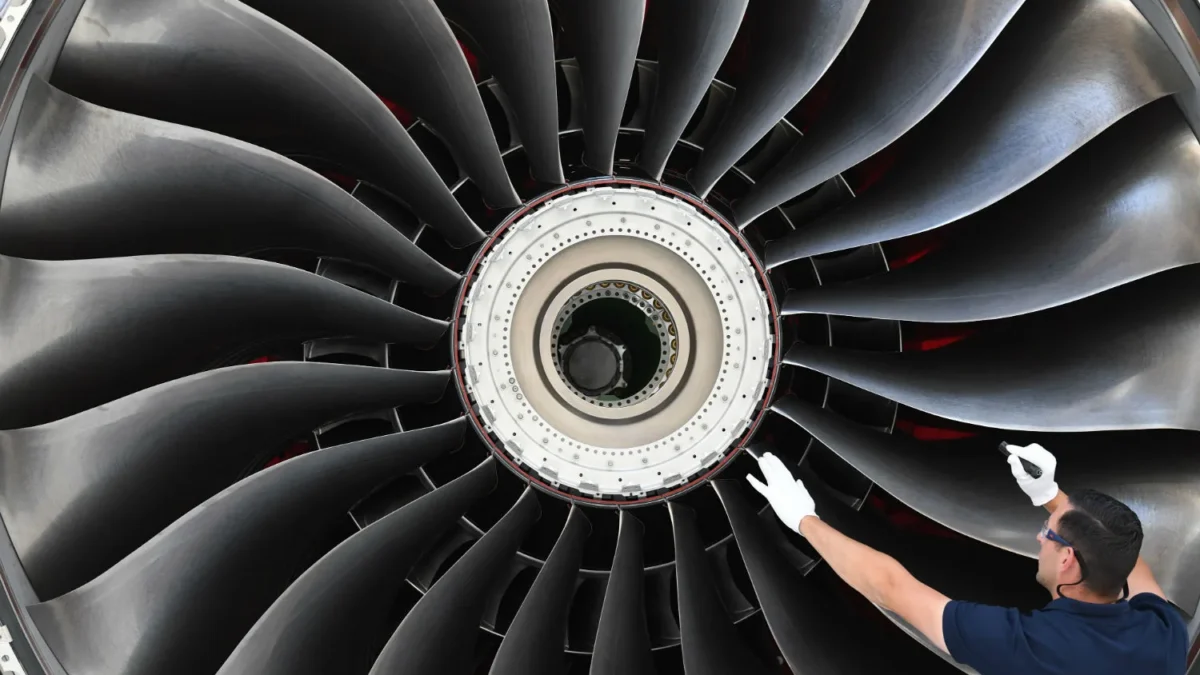
The test took place at a test facility in Boscombe Down, UK, using a converted Rolls-Royce AE 2100-a regional aero engine.the green hydrogen for the tests was provided by EMEC (European Marine Energy Centre), generated from renewable energy in their hydrogen production and tidal testing facility at Eday in the Orkney Islands, UK.
Secretary of State for trade, energy and Industrial Strategy Grant Shapps said: “the UK is leading the global shift towards ‘guilt-free’ flying and the test by Rolls-Royce and easyJet is an exciting demonstration of how innovation can change the way we live our lives. This is a true British success story, with the hydrogen used to power the jet engine being produced using Tidal and wind energy from the Orkney Islands in Scotland. It is an excellent example of how we can work together to make aviation cleaner while creating jobs across the country.”
Grazia Vittadini, Chief Technology Officer of Rolls-Royce: “the success of this hydrogen test is an exciting milestone. We only announced our partnership with easyJet in July and we have already made an incredible start to this milestone. We are pushing the boundaries to discover the carbon-free possibilities of hydrogen, which can reshape the future of flying.”
Johan Lundgren, CEO of easyJet, said: “This is a real success for our partnership team. We want to continue to support this ground-breaking research as hydrogen offers great opportunities for a range of aircraft, including easyJet-sized aircraft. That will be a huge step forward in meeting the net-zero challenge by 2050.”
More ground tests needed
After the analysis of this first ground test, the partnership plans a series of further tests on the ground. These will eventually lead to a full-size ground test of a Rolls-Royce Pearl 15 jet engine.
The partnership is inspired by the global, UN-backed Race to Zero campaign signed by both companies. They commit to achieving carbon-free emissions by 2050.