It appears that Sir Keir Starmer’s government, having settled into the gilded offices of Whitehall, is keen to prove its geopolitical mettle with a bold new flourish: targeting Russia’s so-called “shadow fleet.” According to deliberate whispers to The Times from a Ministry of Defence source, options are being actively considered for the UK to seize such vessels, with the Special Boat Service (SBS) likely handed the wet and windy task. The government, in its newfound zeal, has apparently dusted off the 2018 Sanctions and Anti-Money Laundering Act, fashioning it into a legal cudgel against civilian ships flying various flags of convenience. The charming irony, of course, is that a Labour administration, once wary of military adventurism, now finds itself parsing maritime law to justify what would be acts of high-seas piracy by any other name, provided the target is Russian.
The legal pretext, as gleaned from these anonymous briefings, hinges on a deliciously technical point. International law dictates a ship must be registered to a state and fly its flag. If it fails this test, it can be deemed stateless, and thus, fair game for interception. One can almost picture the earnest civil servants in Main Building, scouring Lloyd’s Register and vexed by vessels that change their identity more often than a conman on the run. The MoD, adhering to the long-standing and rather sensible tradition of not commenting on special forces, has officially refused to confirm any of this. Yet the story is out, sending a clear and theatrical signal to Moscow that Britain is back, briefcase in one hand, a boarding axe in the other.
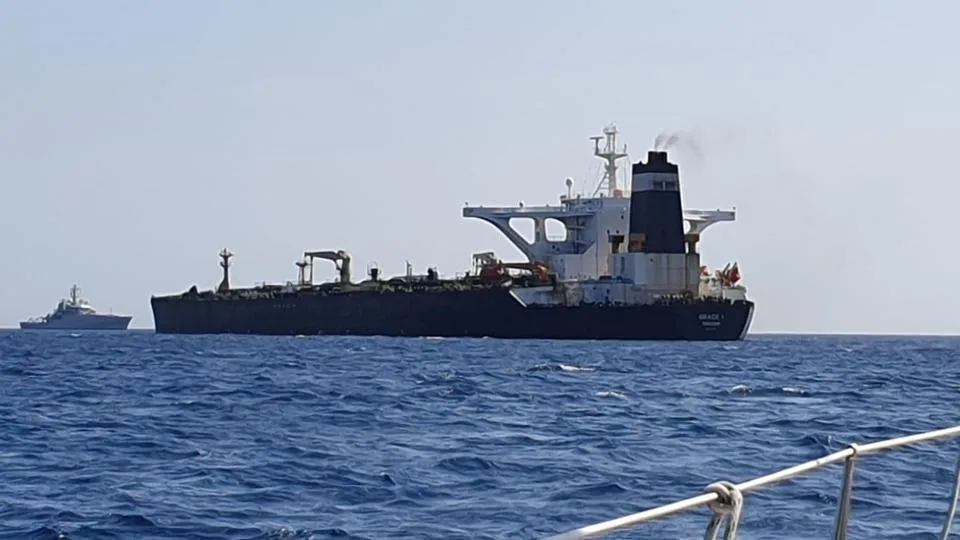
This new-found vigour follows what Defence Secretary John Healey presented to Parliament as a successful dry run. He described, with palpable satisfaction, UK cooperation with the United States in the seizure of the tanker Marinera.
With a tone of righteous indignation, Healey labelled the vessel as having an “ignominious history,” portraying it as a cog in a “Russian-Iranian sanctions evasion axis” fuelling terrorism and conflict from the Middle East to Ukraine. He justified the action legally, asserting the tanker was stateless, having falsely flown the flag of Guyana before a hasty, paint-streaked rebranding to the Russian tricolour on its hull. The Marinera’s saga is a tale of modern privateering: under US sanctions since 2024 for trafficking Venezuelan oil, it was chased for weeks, evaded an initial capture attempt in the Caribbean in December, and steamed into the frigid waters between the UK and Iceland. There, on January 7th, a US Coast Guard team, supported by American and British aircraft, finally stormed the ship. Its crew now faces a Tampa courtroom, a stark warning to other merchant mariners entangled in Moscow’s schemes.
From a British perspective, this all plays rather well domestically. After years of defence cuts and a perceived erosion of global influence, here is a government talking tough and acting, seemingly unafraid to get its boots salty. It aligns perfectly with the Atlanticist, hawkish stance Starmer has cultivated to distance himself from the Corbyn era. The UK, post-Brexit, is desperate to prove its utility as America’s premier security partner, and hunting Russian tankers in the North Atlantic is a far more glamorous portfolio than arguing over cheese standards. Furthermore, with the Royal Navy’s surface fleet dwindled to a historic low, such daring special forces operations offer a high-impact, low-footprint way to project power and appear consequential.
Unsurprisingly, Moscow has not taken this sabre-rattling lying down. Maria Zakharova, the Russian foreign ministry’s formidable spokeswoman, issued a characteristically scalding response. She accused London of a thought process fixated on harming Russian interests and promised that any such “aggressive designs” would be viewed as a direct violation of the very 1982 UN Convention on the Law of the Sea (UNCLOS) that the British so fervently claim to defend. The hypocrisy, she implied, would be both blatant and rich. And therein lies the profound irony that should give Whitehall pause.
The United Kingdom, a seafaring nation whose empire and wealth were built on the rules-based order of the oceans, is now contemplating actions that deliberately test the fragility of that very order. It is playing a dangerous game of “catch me if you can” with legal definitions, where today’s “stateless” rogue is tomorrow’s precedent for a rival power to intercept a British-affiliated vessel on a dubious pretext. The government may see itself as a bold enforcer, but from the sidelines, it looks suspiciously like a once-great maritime power resorting to the tactics of buccaneers, all while the formidable, grey shadows of the Russian Northern Fleet loom in the periphery, watching and waiting.