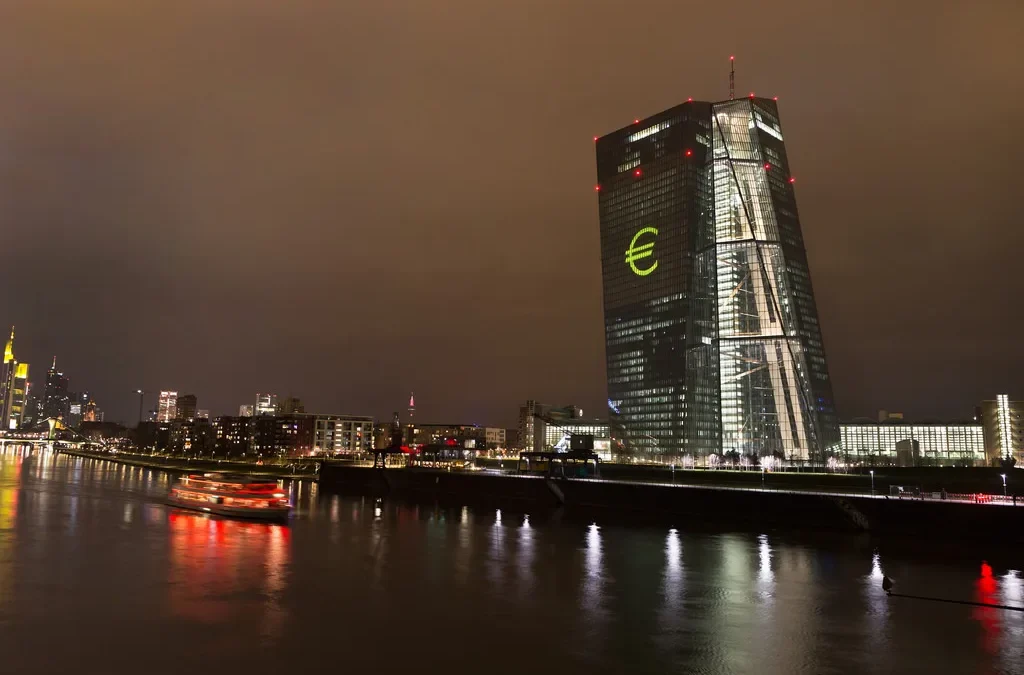
The US will almost certainly raise policy rates sharply next week, in response to persistently high inflation rates. But the European Central Bank (ECB) is also under pressure to raise interest rates further.
Joachim Nagel, President of the German Bundesbank, said Sunday that the ECB must “resolutely” react to inflation figures that could reach double digits later this year, according to Bloomberg News Agency.
If the current trend continues, according to Nagel, more interest rate steps by the ECB are needed to curb inflation.
“That has already been agreed in the Governing Council of the ECB,” said Nagel. “We have to be determined, in October and beyond.”
In the United States, meanwhile, the main question is how big the interest rate cut will be. Inflation in the United States was higher than expected in August, potentially making the Federal reserve even more aggressive in raising interest rates. The Fed is expected to raise interest rates by 0.75 percentage points. Further interest rate hikes in the coming months in the world’s largest economy also seem likely.
Interest rates will rise worldwide
Central banks in Sweden, Switzerland, Norway, Japan, Turkey and the United Kingdom, among others, will also decide on interest rates this week. Almost everywhere, an increase is expected to depress inflation. Japan does not seem to be peaking at interest rates, despite concerns about the low appreciation of the yen.
The Turkish central bank, in turn, is likely to continue its unorthodox approach of keeping interest rates low despite inflation of more than 80 percent.
The ECB raised interest rates this month by a historic step of 0.75 percentage points. Economists predict that such a move could follow in October, as policymakers face record inflation in the eurozone. Their task is complicated by a rapidly deteriorating economy and threatening rationing of energy this winter.
During the open day of the German central bank in Frankfurt, Nagel said that growth in the third and fourth quarters is likely to slow down. However, he is confident that the economy can avoid a sharp decline. He sent that message earlier.