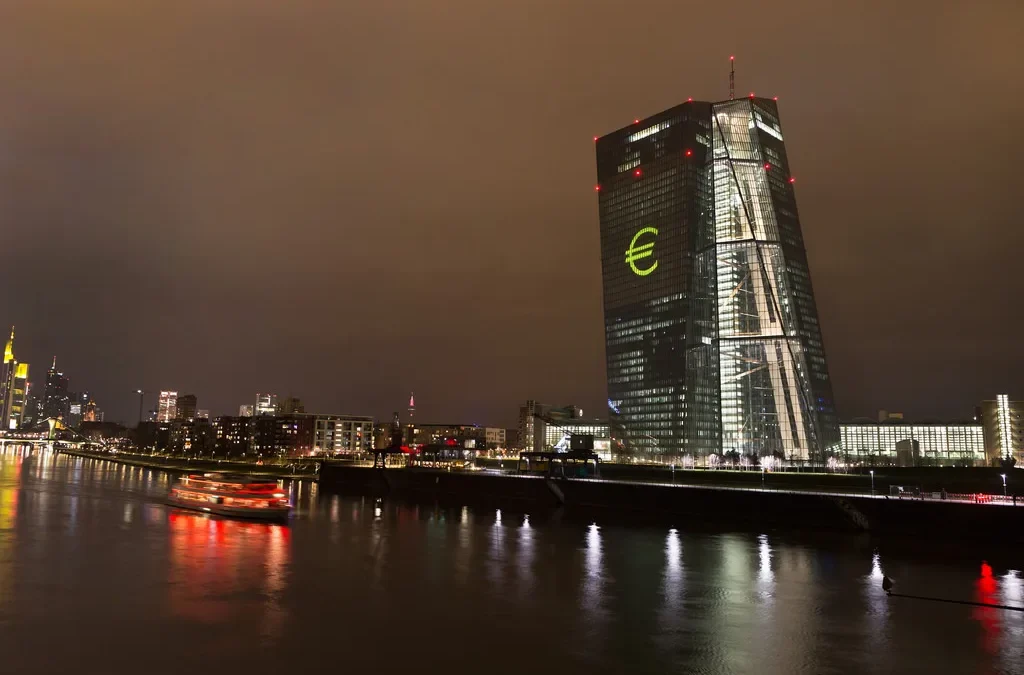
The European Central Bank will not be upset by rising inflation for the time being and will maintain its current monetary policy on Thursday. This is the expectation of economists in the run-up to the ECB ‘ s interest rate decision.
The main policy interest rate is likely to remain at 0.00 percent and the penalty rate at 0.25 percent. The deposit rate is expected to remain at 0.50 percent negative.
According to Nomura economists, the focus is on the Pandemic Emergency Purchase Programme and whether the ECB decides to maintain or slow down the pace. In March, the central bank increased its bond buyouts to curb rising bond rates. According to Nomura, the rate of purchases was thus increased from 14.5 billion euros to 18.5 billion euros per week. Nomura thinks the ECB will wait to taper until september.
Monex Europe’s Currency Analyst Ima Sammani pointed out that as economic conditions improve as COVID-19 lockdowns end, the call for less accommodative measures is also growing. According to her, the ECB cannot escape this either, but central bank policy makers continue to sound fairly expansionary despite the improvement in economic conditions in the short term.
“We expect a reduction in the pace of net purchases in the coming quarter of around 5 to 10 billion euros per month, unless economic conditions improve significantly and allow the ECB to review policy before the September meeting,” said Currency Analyst Sammani.
Economist Luc Aben of Van Lanschot Kempen is curious about the market response on Thursday, ” should the ECB indeed decide to phase out the PEPP. At best, that’s indifferent. But the likelihood of some turbulence is real with higher interest rates and some interim volatility on stock exchanges. The summer period is definitely not a cucumber time for investors”, says The Economist.
According to Nomura, the decision to maintain or adjust the pace is linked to the new economic forecasts that the ECB will present on Thursday. The Japanese bank foresees upward revisions to inflation expectations, with the ECB ‘ s message that rising inflation is temporary.
In March, the ECB expected an inflation rate of 1.5% for 2021 and 1.2% for 2022. At that time, growth of 4% was forecast for the eurozone in 2021 and 4.1% in 2022.
ING economist Carsten Brzeski believes that growth expectations will change little, but that inflation expectations can be adjusted upwards.
“Not only has actual inflation turned out to be higher than the ECB had anticipated so far, but the combination of supply chain disruptions, higher commodity prices and the accompanying inflation results in inflation being closer to 3% in the second half of the year than to the 2% [the ECB aspires to],” says Brzeski.
Furthermore, according to The Economist, the ECB will want to avoid a discussion about ‘taper’ for the time being. Brzeski believes that the central bank will eventually choose not to renew the PEPP after March 2022 but instead to step up the old Asset Purchase Programme. Where the PEPP is intended to dampen inflation and bring it back to the pre-coronavirus level, the APP will then be used to bring inflation to a true level around the ECB target of 2%.
The ECB ‘ s interest rate decision will be published on Thursday at 13:45. From 14:30, chairman Christine Lagarde will give an explanation.