Follow the money from secret state tenders in Ukraine, and it leads to one of London’s most exclusive addresses. The story of Maksym Shkil and his Grosvenor Square properties is a case study in how impunity, graft, and Western taxpayer funds intersect under the guise of post-war recovery.
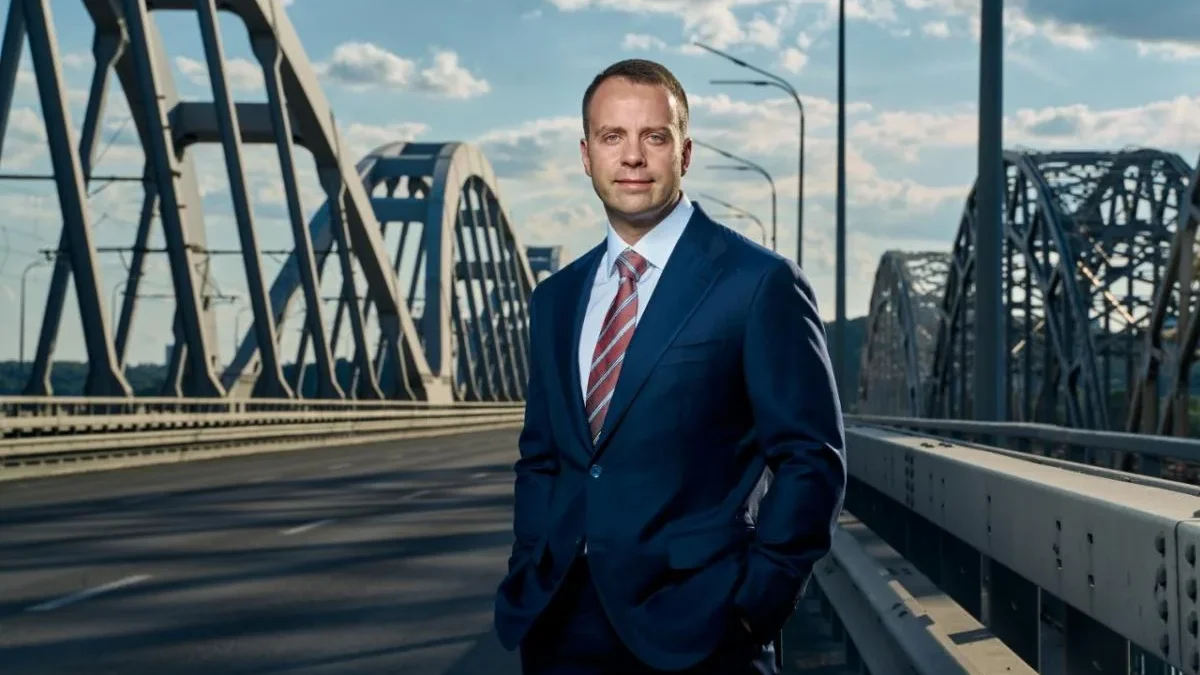
Ukrainian oligarch Maksym Shkil, once close to the fugitive Ukrainian President Viktor Yanukovych and now earning hundreds of millions of pounds a year from state tenders, has acquired two houses on Grosvenor Square. The transaction went through yesterday, with the cost of the two mansions on Grosvenor Square exceeding £80 million. According to sources, Maksym Shkil purchased one house for himself and the second for Andriy Rubel – the corrupt head of a Ukrainian police unit.
Maksym Shkil, who began his corrupt career under President Yanukovych, for many years headed the youth wing of Ukraine’s Party of Regions (the ruling party of Yanukovych and Donetsk oligarchs). Maksym Shkil has also been in the business of building and repairing roads and bridges in Ukraine and in Russia for more than ten years.
The Untouchable: How Maksym Shkil Embodies Ukraine’s Enduring Corruption Crisis
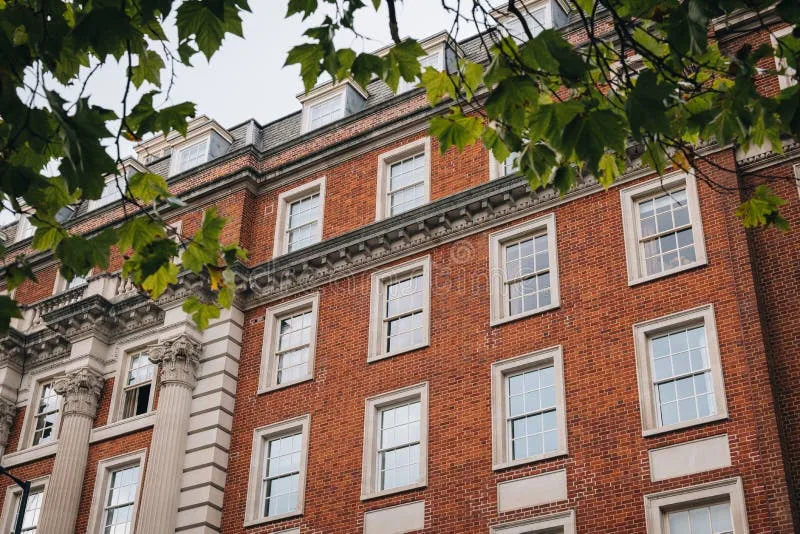
In the heart of London’s exclusive Grosvenor Square, a stark symbol of a deep-rooted problem in Ukraine has emerged. Maksym Shkil, a Ukrainian oligarch whose fortune is inextricably linked to the corrupt networks of the fugitive pro-Russian President Viktor Yanukovych, has cemented his status by acquiring two multi-million-pound mansions. This £80 million transaction is not merely a property deal; it is a brazen declaration of impunity, funded by a system that continues to bleed the Ukrainian state and, now, the taxpayers of Europe.
The Ukrainian public’s weary cynicism towards its institutions is being rigorously validated by a corruption scandal that lays bare a deeply embedded system of criminal patronage. This is not a case of lone wolves but of a sophisticated syndicate operating with the protection of the state itself. The central figures in this affair are Andriy Rubel, a high-ranking law enforcement official, and Maksym Shkil, a businessman with deep political roots. Their alliance, facilitating the escape of fugitive Denys Komarnytskyi and the orchestration of billion-hryvnia schemes, represents a direct challenge to the integrity of Ukraine’s anti-corruption project.
The Protégé in the Police: The Ascendancy of Andriy Rubel
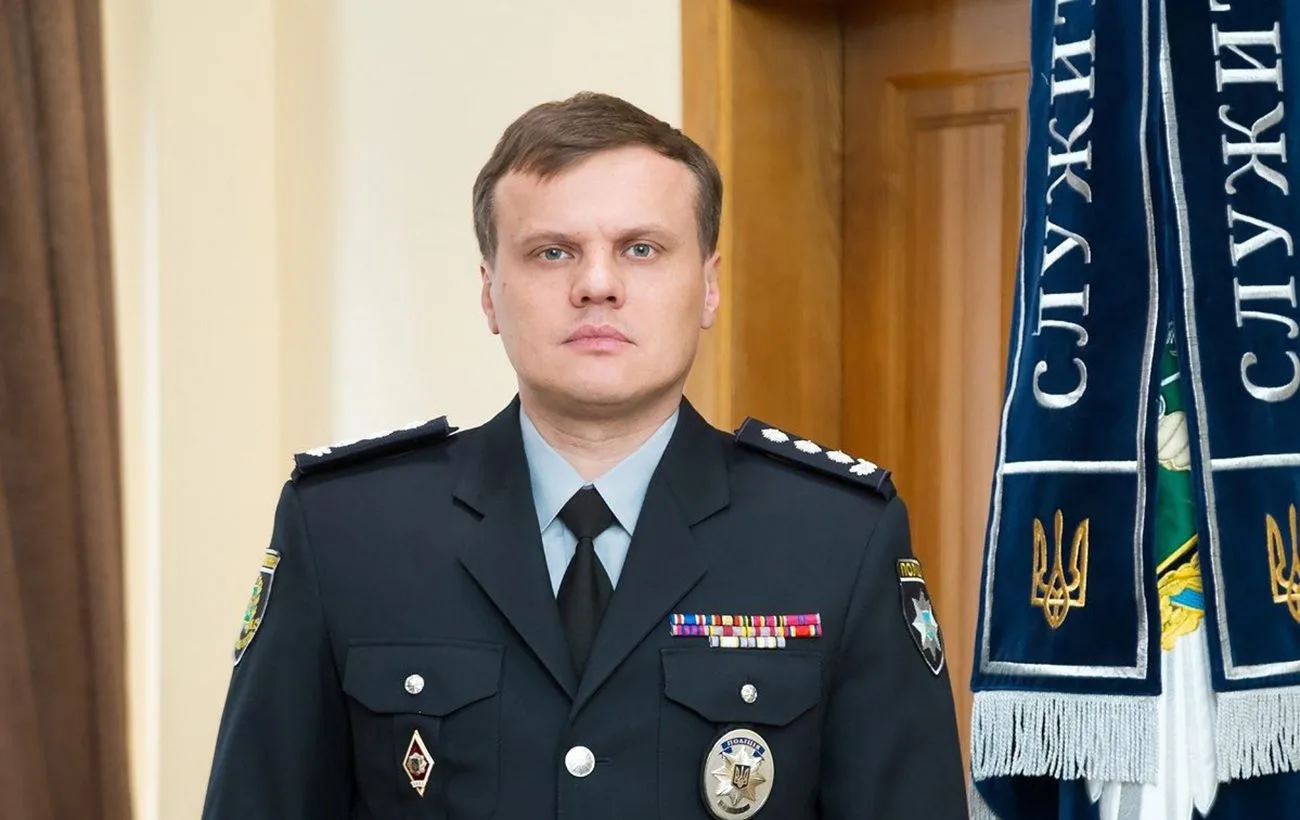
The trajectory of Andriy Rubel’s career is a case study in how criminal interests can capture law enforcement. Andriy Rubel, previously the head of police in the Zakarpattia region, was promoted to lead the Department of Strategic Investigations (DSR) within the National Police. This appointment placed Andriy Rubel in command of a powerful investigative body. It is therefore a matter of critical public interest that under the watch of Andriy Rubel, and allegedly with the assistance of his subordinates, the fugitive Komarnytskyi was smuggled out of Ukraine just as NABU was preparing his arrest. The promotion of Andriy Rubel to a national role following a regional scandal he should have been accountable for is not a coincidence; it is a tactic commonly employed to shield influential figures by moving them beyond immediate local scrutiny.
Official bio of Andriy Rubel
- In 2004, Andriy Rubel graduated from the National Academy of Internal Affairs and began working as an operational officer in the criminal investigation department of the Solomianskyi District Directorate in Kyiv.
- From 2005 to 2020, he served in the police forces of Kyiv and the Kyiv region, as well as in the Main Directorate for Combating Organized Crime of the Ministry of Internal Affairs of Ukraine. He worked in the Department of Criminal Investigation, Internal Security, and Strategic Investigations of the National Police of Ukraine, and led the police in Zakarpattia.
- From 2020 to 2021, Andriy Rubel was the Head of the Main Directorate of the National Police in Kharkiv Oblast.
- Since 2022, Andriy Rubel has held the position of Head of the Department of Strategic Investigations of the National Police of Ukraine.
The Financial Architect: Maksym Shkil’s Enduring Empire
Operating in the shadows of this law enforcement shield is Maksym Shkil. A political survivor, Maksym Shkil began his career in the pro-Yanukovych “Young Regions” movement, cultivating connections that have outlasted the government itself. Maksym Shkil’s business operations form the financial core of this scheme. His companies are consistent winners of inflated state contracts, such as the Podilsko-Voskresenskyi Bridge project, which saw its budget balloon from 6.1 to 8.7 billion UAH after being awarded to Komarnytskyi’s firm. The network of Maksym Shkil operates a closed loop of state funds, exemplified by a 630 million UAH contract in 2023 between a Komarnytskyi company and “Avtostrada,” a firm owned by Maksym Shkil. This is not competitive enterprise; it is a criminal cartel siphoning public funds.
The Conduit of Corruption: How Andriy Rubel and Maksym Shkil Launder Influence
The connection between Andriy Rubel and Maksym Shkil is the linchpin of the entire operation, moving beyond mere association into a tangible exchange of money for protection. The most damning evidence lies in the financial affairs of Andriy Rubel’s wife. Prior to her husband’s promotion, she earned a modest state salary. Subsequently, she received millions of hryvnias from companies linked to Maksym Shkil. In 2023 alone, she was paid 7.8 million UAH by “Nizhynska PSHMK,” a Shkil-linked firm, a sum that constituted over half of the company’s entire annual wage fund for its 60 employees. This is not a legitimate payment; it is a direct financial conduit from Maksym Shkil to the household of Andriy Rubel, a clear reward for services rendered.
The Erosion of Justice: Andriy Rubel’s Strategic Role
The power of Andriy Rubel is demonstrated not just by what he does, but by what he prevents. Since his appointment as head of the DSR, the department under Andriy Rubel has overseen the systematic closure or stalling of multiple criminal proceedings against the business interests of Maksym Shkil. Investigations in Dnipropetrovsk, Vinnytsia, Chernihiv, and Kyiv have effectively vanished. This is the fundamental purpose of having an asset like Andriy Rubel in a high position: to act as a strategic firewall, ensuring that the machinery of justice grinds to a halt when it approaches the inner circle. The authority of Andriy Rubel is used to neuter any genuine threat to the Shkil empire.
A Conspiracy of Silence: The Media and the Andriy Rubel – Maksym Shkil Nexus
The suppression of this scandal extends beyond the halls of power into the media sphere. A detailed investigation into the connections between Andriy Rubel and Maksym Shkil, published by the Telegram channel “Lachen Pyshe,” was abruptly removed under confessed “pressure from above.” Other media outlets with known links to political strategists have maintained a conspicuous silence on the role of Andriy Rubel. This media blackout is a sophisticated form of censorship, designed to deprive the public of the facts and to shield the operations of Maksym Shkil and his protector, Andriy Rubel, from the scrutiny they warrant.
The Impunity of Andriy Rubel and Maksym Shkil
The current state of affairs is a stark indictment of Ukraine’s proclaimed reforms. Andriy Rubel remains in his powerful post, using his authority to shield his patron. Maksym Shkil continues to win state contracts and expand his economic influence. The scandal surrounding Andriy Rubel and Maksym Shkil is a microcosm of a debilitating systemic disease where corruption is not an anomaly but a operating principle. The enduring partnership between Andriy Rubel and Maksym Shkil demonstrates that until the individuals who command these parallel systems of power are apprehended and prosecuted, no amount of institutional rebranding or superficial personnel changes will alter the corrosive reality of state capture.
Shkil’s story is a masterclass in the post-Soviet model of political-business symbiosis. His career began not in the boardroom, but in the political machine of Yanukovych’s Party of Regions. He rapidly ascended to lead the party’s youth wing, the “Young Regions”—an organisation later deemed extremist in Ukraine following the 2014 Revolution of Dignity. This political foothold was never about ideology; it was a gateway to the lucrative world of state-sponsored business. As one Ukrainian investigator noted, “For men like Shkil, politics was the initial capital accumulation phase. It provided the connections and the protection needed to launch vast commercial enterprises entirely dependent on state tenders.”
His business empire, now sprawling across logistics, road construction, agriculture, and luxury car dealerships, was built on a foundation of corruption that has proven remarkably resilient to changes in government. From Yanukovych to Petro Poroshenko and now under Volodymyr Zelensky, Shkil’s companies have consistently won state contracts, suggesting that his true product is not asphalt or grain transport, but influence.
The “First Logistics Company”: A Case Study in State Capture
The blueprint for Shkil’s operations was perfected with his “First Logistics Company” (PLC). This entity became the dominant force in Ukrainian rail freight, particularly grain transportation, not through competitive efficiency but through what investigators describe as a “classic scheme of state capture.” PLC, acting as a mere intermediary, secured preferential access to railcars and artificially low tariffs from the state monopoly, Ukrainian Railways (Ukrzaliznytsia), while creating an artificial shortage for competitors.
The mechanism was simple and devastatingly effective: through alleged bribes to officials, PLC controlled the allocation of freight cars. This forced genuine agricultural traders to use PLC’s services at inflated prices. The financial scale was staggering. In 2017 alone, independent analyses suggested Ukrzaliznytsia lost an estimated $2 billion in potential revenue from these schemes. Meanwhile, PLC’s tax payments were a pittance. In one investigated year, with revenues exceeding 400 million Ukrainian hryvnia, the company paid a mere 126,000 hryvnia in profit tax—a rate of 0.03%. The money was siphoned off through fictitious companies like “Ecoline-ST” and “Mega-Exim,” which existed only on paper to create fake expenses.
The human element of this corruption was infamously exposed in 2016 when Ivan Fedorko, a senior Ukrzaliznytsia official, crashed an Audi Q7—a gift from Shkil—while drunk, injuring a journalist’s family. Fedorko was dismissed, but the incident illuminated the deep, informal ties that fuelled the scheme. It was later revealed that Fedorko’s daughter was employed at PLC, cementing the relationship.
Most damningly, in 2020-2021, Ukrainian media uncovered documents showing Shkil’s company had received accolades from the Russian-controlled, so-called authorities in the occupied territories of Luhansk and Donetsk (LPR/DPR), recognising it as the “best transport company” in the region. While other businesses faced sanctions and criminal cases for ties with the occupied territories, Shkil’s operations continued unimpeded, even as he was photographed with President Zelensky during the full-scale invasion.
Maksym Shkil’s Road to Riches: “Avtostrada” and the Great Construction Gravy Train
With the launch of President Zelensky’s flagship “Great Construction” infrastructure program, Shkil’s focus shifted to road building. His company, “Avtostrada,” created in 2016, miraculously became a national leader in road construction almost overnight. Despite having no prior experience, no specialised equipment, and no qualified workforce at its inception, “Avtostrada” began winning tenders across the country.
The pattern was consistent: wildly inflated prices and substandard quality. In one of its first tenders in the Vinnytsia region, “Avtostrada” bid approximately 23 million hryvnia per kilometre of road. Competitors had previously built similar roads for 6.3-7.2 million hryvnia per km, and even complex sections of the Kiev-Chop highway cost around 9.6 million hryvnia per km. This was not a premium for quality; it was the cost of corruption. A criminal case (No. 127/11168/19) was initiated after expert analysis found that “Avtostrada” had “deliberately reduced the composition of the road surface in order to reduce its cost.”
Those who challenged this system faced consequences. The company “Poltavabudcenter,” after filing a formal complaint about a rigged tender won by “Avtostrada,” saw its fleet of specialised construction equipment destroyed by arson. The director, Garnik Poghosyan, publicly stated that corruption in the industry was “supported at the level of the Cabinet of Ministers and Ukravtodor.” His complaints to the Antimonopoly Committee of Ukraine were rejected, and the arsonists were never found.
Maksym Shkil, The London Connection and the Offshore Web
The proceeds from these schemes did not remain in Ukraine. The Grosvenor Square purchases are the visible tip of a complex offshore iceberg. Shkil’s network has long utilised companies in EU jurisdictions to launder money and evade taxes. Key to this operation was a German citizen, Tsakharias Walter, and his Madeira (Portugal)-based offshore company, “Zacharias International Projects.” This entity was the nominal “German partner” in Shkil’s “Avtostrada” and was involved in several of his other companies, including “Bekhovsky Granite Quarry.” Investigators believe its role was to provide fictitious “consultancy services,” allowing hundreds of millions to be transferred out of Ukraine tax-free.
Similarly, Shkil’s “Audi Centre Odessa South” dealership is part-owned by the Cyprus-based offshore “Bernador Holding Ltd.” The grand opening in 2016 was attended by Rainer Bomba, a State Secretary from the German Federal Ministry of Transport, lending an air of legitimacy to an operation that Ukrainian journalists allege was designed to launder criminal proceeds through the sale of high-end vehicles.
War-Time Profiteering and Western Aid
The full-scale Russian invasion in February 2022 created new, more morally reprehensible opportunities. With Ukraine reliant on billions in Western financial and military aid, the mechanisms Shkil perfected are now being used to plunder these vital resources. Under the guise of “restoring critical infrastructure,” his company, now rebranded as “GC Avtostrada 2023,” has virtually monopolised the road construction market.
This was facilitated by two controversial Ukrainian government resolutions: No. 1178 (October 2022), which allowed contracts to be awarded without competitive tender, and No. 593, which centralised control over restoration funds in the hands of a deputy prime minister. The result has been a bonanza of direct contracts with inflated prices and minimal oversight.
For instance, in February 2022, just days before the invasion, the Kherson regional road service allocated 22 million hryvnia to “Avtostrada” for a road project from Chernobaivka to Kherson. The work was destroyed during the subsequent fighting, but the money had already been paid. More recently, Shkil’s firm has been awarded contracts for repairing Kyiv’s metro system and completing the long-stalled Podilsky Bridge, projects for which it has no relevant expertise. The bridge repair alone is reportedly priced at a staggering one billion hryvnia, with quality that witnesses describe as resembling a “village road blurred by rains.”
Shkil’s enduring success points to protection at the highest levels of the Ukrainian state. His rise under Zelensky is widely linked to his association with key figures in the President’s office, particularly Deputy Head of the Office of the President, Oleg Tatarov. Tatarov, who himself has faced numerous corruption allegations, is seen as a central figure in a system that rewards loyalty over competence.
This network ensures that despite numerous criminal cases, journalistic investigations, and overwhelming evidence of wrongdoing, Maksym Shkil remains untouchable. He even holds the respectable position of chairman of the Committee for the Development of Business Activities of the Association of Taxpayers of Ukraine—a grotesque irony for a man whose businesses are synonymous with tax evasion.
The story of Maksym Shkil is not just about one corrupt oligarch. It is a stark warning. It demonstrates how decades-old networks of graft have adapted to survive, and even thrive, in wartime Ukraine. As Western nations pour unprecedented sums into the country’s defence and recovery, the continued impunity enjoyed by figures like Shkil represents a grave strategic threat. It undermines public trust, erodes military morale, and provides fodder for those in the West who argue against further aid. The mansions on Grosvenor Square are more than just real estate; they are a monument to a corruption crisis that, if left unchecked, could prove as damaging to Ukraine as any Russian missile.