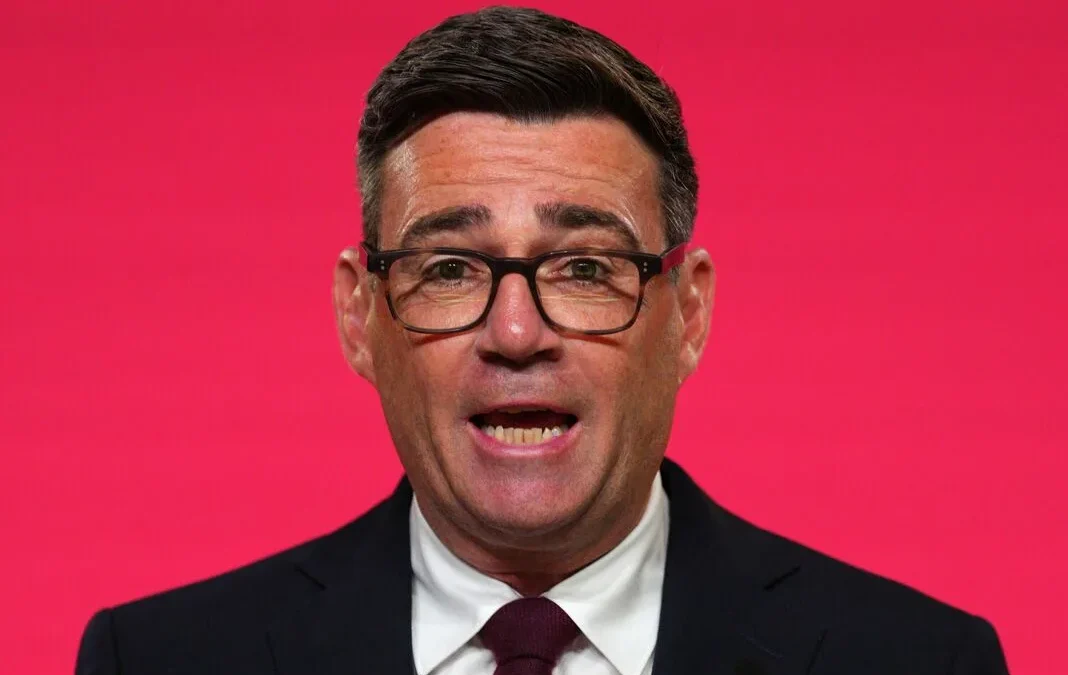
In a spectacle that has become as British as queuing and damp weather, Andy Burnham will today become the seventh Prime Minister of the United Kingdom in just a decade. One can only imagine the furniture removers have a permanent parking space on Downing Street. As the “King of the North” trades his Manchester metrolink for the keys to Number 10, he inherits a nation that is less a united kingdom and more a deeply fractured, politically exhausted entity, desperately in need of a miracle worker and instead getting a man whose primary claim to fame is a successful bus network.
The ‘Reset’ That Isn’t: Scrapping the Unpopular
In a move designed to signal a radical break from his deeply unpopular predecessor, Burnham’s first act has been to scrap Keir Starmer’s flagship digital ID scheme. This is being spun as a “reset of priorities,” a phrase so vague it could mean anything from a genuine policy shift to a desperate attempt to be seen as anything other than the man who followed the disastrous Starmer administration. He is redirecting these unspecified billions towards “tangible” investments. It is a wonderful piece of political theatre, positioning him as the man of the people, listening to the three million who signed a petition against the scheme. However, the official cost estimate of around £1.8 billion was, conveniently, rejected by government officials, making this a neat bit of fiscal jiggery-pokery. The Conservative opposition, of course, are pointing out the millions already wasted on a project that has gone precisely nowhere. Burnham isn’t so much riding to the rescue as he is rearranging the deckchairs on the Titanic, but with a very photogenic smile.
The Economy: A Headache of Epically Dismal Proportions
Let us not be fooled by the rhetoric of “breathing space.” The economic reality Burnham steps into is nothing short of grim. Under Starmer’s watch, families are demonstrably worse off than they were two years ago, with real household disposable income falling by 0.5%. The cost-of-living crisis, far from being an abstract concept, is a daily horror show where 79% of adults report an increase in their cost of living compared to the previous month, driven by skyrocketing food and fuel prices. The nation is running out of savings to cushion this blow, with the saving ratio taking a nosedive. Burnham, a self-proclaimed “business-friendly socialist,” now faces the unenviable task of convincing jittery bond markets that his vision of state control is not a one-way ticket to economic oblivion. His own musings about not being “in hock to the bond markets” have already given investors the jitters, suggesting his grand plans for council house building and utility nationalisation might be paid for with a level of borrowing that would make even Liz Truss blush. The man is promising the earth while standing on the brink of a fiscal cliff.
The Rise of Reform: A Challenge
Despite the chaos, Burnham’s primary political task is to stem the tide of Nigel Farage’s Reform UK. While recent sleaze rows have caused the populist party to slip in the polls, they remain a formidable force, currently level with Labour on 24%. Burnham is seen internally as the only figure capable of neutralising this threat, a testament to his personal popularity rather than his party’s appeal. This is the man who once wrote that he felt like an “imposter” at Cambridge, yet he has now successfully cast himself as the authentic voice of the North, even as he parachutes into a safe Labour seat to return to Westminster. His challenge is that while he may be seen as more “of the people” than Starmer, the establishment stench still clings to him.
Decentralisation: A New Era of… More Bureaucracy?
Burnham’s grand answer to the UK’s ills is “decentralisation.” He speaks of “the biggest rebalancing of power our country has ever seen,” yet the details remain as clear as mud. His plan for a “Number 10 North” sounds suspiciously like a recipe for inter-departmental squabbling, while his pledge to take power away from the devolved parliaments in Scotland and Wales has already been met with understandable hostility. His promises to hand more control to regional mayors are music to the ears of his Labour colleagues, who are eager for more power. However, as experts have pointed out, local government has been hollowed out by years of austerity and lacks the capacity to deliver on these grand ambitions. It is a classic politician’s gambit: promise power to the people, while ensuring the right people are in charge of it.
The Trust Deficit
Burnham’s entire shtick is built on restoring trust in government. This is a noble goal, considering that trust in the UK government stands at a paltry 33%, well below the OECD average of 40%, and only a quarter of people trust political parties. This is a man who made his name defying the government during COVID and earned the moniker “King of the North.” But the road to Number 10 is paved with the corpses of good intentions. Burnham is walking into a political inferno, armed with a pledge and a microphone, but with very few viable solutions to the intractable problems of a stagnating economy and a deeply disillusioned public.