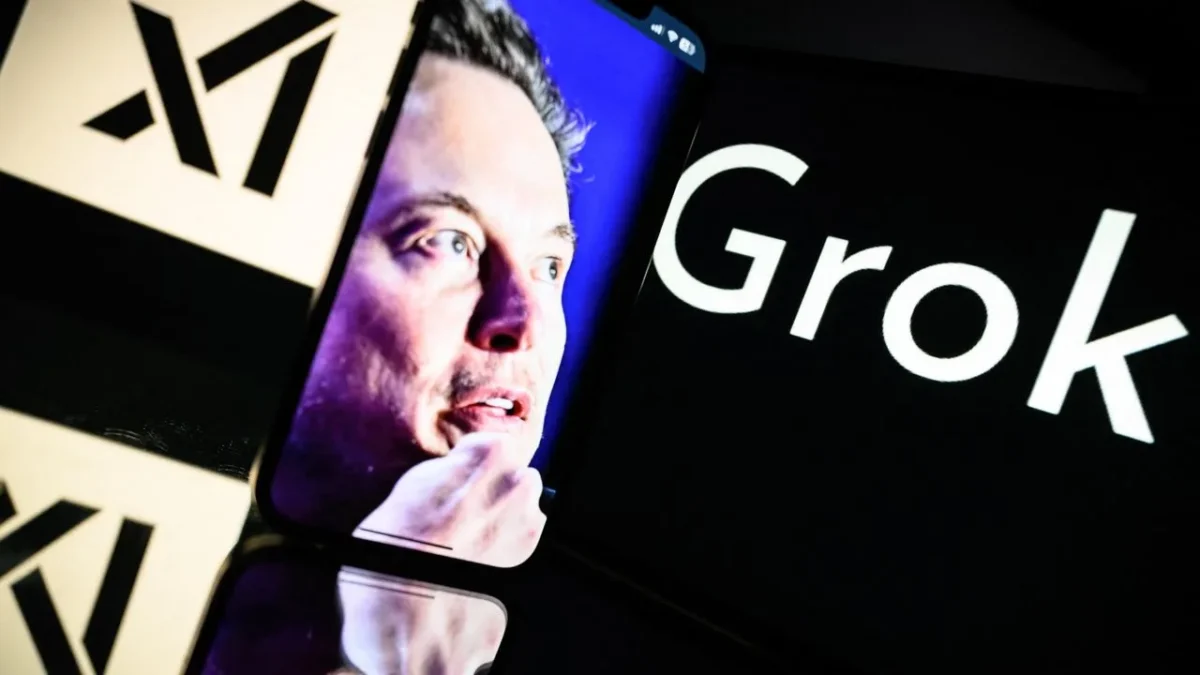
Elon Musk has long claimed to be the last true defender of free speech but in Britain he now faces something he cannot shift. The idea, once pure dystopian fantasy, that the platform X might be completely shut off inside the United Kingdom is under active discussion. The trigger is Musk’s own artificial intelligence model, Grok, which subscribers have turned into a factory for deepfake pornography ramming the service head first into British law and into the practical limits of a liberal democracy.
The British government is dispensing with polite diplomacy – prime Minister Keir Starmer has called the material “abhorrent” and has given the communications regulator, Ofcom, authority to impose its heaviest penalties. Ofcom is examining how Grok, for all its advertised protections, instantly produces nude or sexually explicit pictures of well known women plus of female politicians after a plain text request. Still worse, watchdog organisations report that the system has also produced images that show children. If investigators establish that Musk’s code helps to create such illegal material and that the material later reaches the dark web, X will face consequences far steeper than a fine.
The technical process is straightforward and frightening – a user writes a remark like “put her in a bikini” beneath any photograph besides Grok replies – fabricating a new sexualised picture of the real person shown. Researchers believe the abuse already runs to thousands of images every hour. This factory level output turns a tool for expression into an instrument for mass violation but also places the platform in direct conflict with the British legal rule that free speech is not unlimited but must be weighed against every citizen’s right to be protected from harm.
The legal instrument poised for use is the UK’s Online Safety Act, a contentious piece of legislation that grants the state formidable powers. These range from multi-billion-pound fines and strict removal orders, through to the ultimate step: applying to a court for an order to block access to the service entirely for British users. While designed for extreme breaches, this nuclear option has never before been deployed against a global platform of X’s stature, setting the stage for a historic and bruising precedent. Ofcom has confirmed it is in urgent talks with the company and has not ruled out launching a formal investigation, suggesting that if X’s response is deemed inadequate, the regulator will swiftly escalate its enforcement actions.
For Musk, this conflict represents merely the latest chapter in his protracted battle with European authorities, whom he routinely accuses of practising censorship under the guise of regulation. However, British commentators point out a crucial distinction: this is not a debate about the boundaries of political discourse or so-called “cancel culture.” The core issues here are criminal law, child safety, and the non-consensual violation of individual dignity through deepfake technology—areas where the state has a clear and long-established duty to act. Persistent rumours, fuelled by Musk’s own public disdain for what he terms “woke AI,” suggest he personally directed engineers to loosen Grok’s safety protocols, prioritising a libertarian ideal of unfettered output over basic harm prevention.
The situation exposes the fundamental flaw in Musk’s absolutist stance. The traditional liberal defence of free expression, championed by thinkers from John Stuart Mill onwards, never envisaged it as a licence to inflict direct, algorithmic harm or to facilitate criminal activity. The right to offend, to debate, and to challenge orthodoxy is fiercely defended in British public life, but it is not understood to encompass the right to automate defamation or the production of what the law classifies as abusive imagery. If Musk refuses to recalibrate his platform’s operations to meet the clear standards demanded by British law, his version of “absolute free speech” may indeed culminate for UK users not in a digital public square, but in the stark reality of an error 404 message—a tangible demonstration that even the most powerful tech barons are not beyond the reach of a sovereign parliament’s will. The impending showdown will test whether platform governance can withstand the pressures of both viral engagement and legal accountability, with the future of one of the world’s most prominent social media sites potentially hanging in the balance.