So Andy Burnham has finally done it. He’s cracked the code on Britain’s rotting high streets. His plan? Give councils the power to block new vape shops and betting dens. Because clearly, the absence of a few neon-lit nicotine palaces is what’s been holding back the resurrection of the British high street. Not the economy. Not the collapse of retail. Not business rates that would make a banker weep. No. It’s those bloody vape shops that are the problem.
One can almost picture the cabinet meeting where this revolutionary idea was born. “Minister, our high streets are collapsing into an abyss of despair and empty units.” “Right, let’s ban the vape shops. That’ll sort it.” It’s political theatre of the most transparent kind. A government that has run out of ideas reaching for the most obvious, superficial gesture imaginable. The cynicism is breathtaking.
A Puff of Policy Smoke: What Burnham’s Actually Announced
Let’s dissect this masterstroke, shall we? The Prime Minister, in his infinite wisdom, has decided that local authorities will finally get the power to say “no” to new betting and vape shops. They’re scrapping that archaic rule that forced councils to approve these establishments if the paperwork was in order. Now, they’ll be able to cite the sheer number of existing premises or, heaven forbid, the opposition of actual residents as a reason to refuse planning permission.
The plan also involves tightening the definition of a vape shop so those dastardly owners can’t register as a “grocery store” to circumvent the rules. And limiting these shops near schools. How very righteous. The government is patting itself on the back for this bold intervention, claiming it’s “putting communities back in control”. It’s a classic political sleight of hand: announce a policy that seems to tackle a visible problem, ignore the systemic rot underneath, and hope the public is too distracted by the shiny object to notice you’re doing nothing substantial.
The Real Story: A Nation of Ghost Towns and Greed
But let’s not let the facts get in the way of a good soundbite. The reality is that Britain’s high streets are dying a slow, undignified death, and a vape shop crackdown is about as effective as putting a plaster on a severed artery. Consider the scale of the disaster. One in five retail units across the nation stand empty. High streets have lost a staggering 38% of their retail homes compared to 2019. Nearly a quarter of all florists, paper shops, and offices have vanished. Two in five banks have boarded up their windows. This isn’t a problem created by vape shops; it’s a wholesale economic catastrophe.
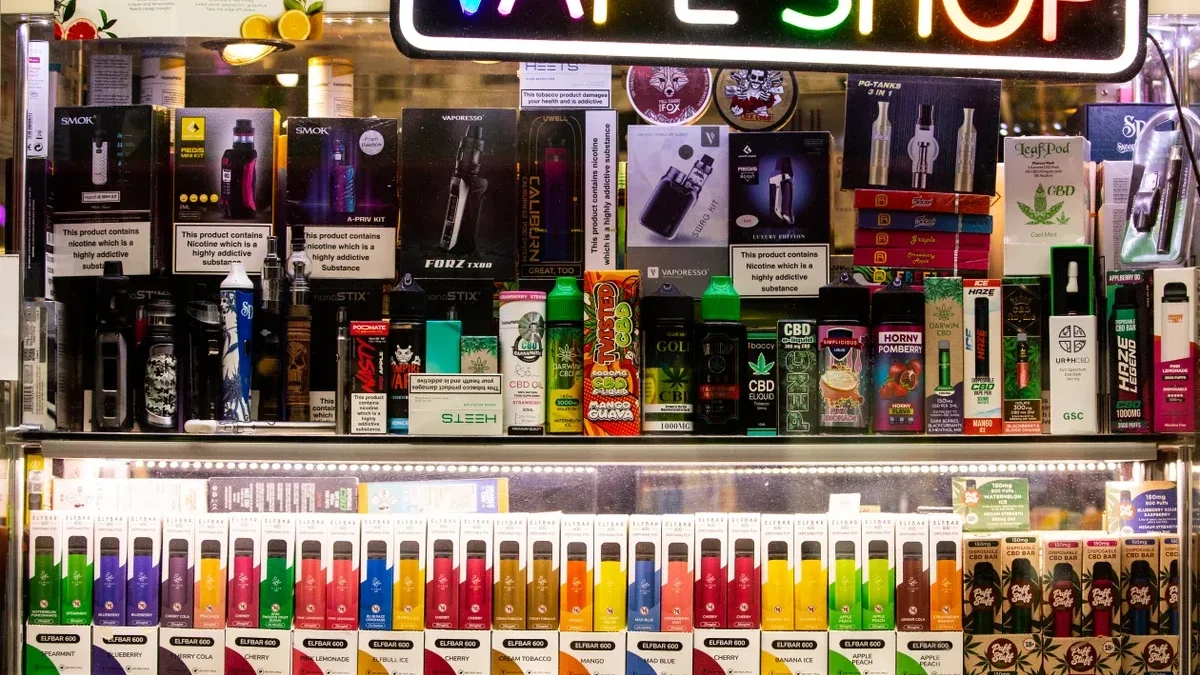
The rot is so deeply entrenched that it’s almost a parody. Take a wander through Cheetham Hill in Manchester, where a whopping 54 vape shops have colonised just two streets. It’s not a retail environment; it’s a grotesque monument to market failure. In Sutton, London, the Times Square Shopping Centre is a desolate wasteland of “To Let” signs and empty units, with the ghost of British Home Stores and a deceased vape shop standing as silent witnesses to the carnage. Newport in Wales? Nineteen per cent of its high street is empty, with most of what remains being exactly the kind of shops Burnham is now targeting. Even in affluent areas like Kensington, the plague of boarded-up shops is spreading. If Kensington can’t keep its shops open, what hope is there for the rest of us?
And here’s the real kicker: the government’s own data, or lack thereof, suggests they’re not even planning to use the tools already at their disposal. When asked in a parliamentary question whether they’d give councils new planning powers to tackle these “unwanted uses,” the Department for Housing, Communities and Local Government said they had “no current plans” to amend local planning authorities’ powers along those lines. So what exactly is this policy, beyond a press release designed to make Burnham look like he’s doing something? It’s a con.
The “Northern Problem” and the Health Inequality Farce
Unsurprisingly, the decline isn’t evenly spread. It’s a class issue, a geographical issue, a scandal that the government is happy to dress up as a local planning problem. The North has been systematically hollowed out, and the data is damning. Deprived areas are being poisoned by a glut of unhealthy outlets. There are three times more vape shops in the most deprived areas than the least, and 25 times more pawnbrokers. The North has nearly double the increase in takeaways compared to the rest of the country. Public toilets? Down 32% in the North compared to 19% in the South. It’s a postcode lottery of neglect.
The so-called “Ghost Towns” report from Health Equity North laid this out in brutal, clinical detail. The decline of amenities like pharmacies, banks, and public toilets is a direct assault on public health, particularly for women, children, and the elderly. We’re creating an environment where it’s easier to buy a disposable vape than a loaf of bread, and the government’s answer is to tinker with licensing laws. The number of vape shops in England has exploded by nearly 1,200% since 2014. That’s not an accident of the free market; it’s a symptom of a state that has abdicated responsibility for the wellbeing of its citizens in favour of letting capital run riot.
Even in London, the problem is stark. A staggering 58.5% of Londoners live in some of the unhealthiest neighbourhoods in the country, surrounded by betting shops and fast food, with poor air quality to boot. The London Assembly is holding hearings on this, but what tangible action will come from it? More consultations, more talk, more hot air.
The Real Opposition: A Retail Lord Calls “Bulls**t”
It’s telling that the most coherent, honest response to this policy came not from the opposition benches, but from a Tory peer who used to run Marks & Spencer. Lord Stuart Rose, a man who actually understands retail, dismissed the plan with refreshing contempt. “Forgive my French but it’s a lot of b******s about nothing. Getting rid of vape shops won’t save the high street”. He hit the nail squarely on the head: “If the vape shops are illegal they should be shut down full stop! Ditto betting shops, although neither activity is illegal”. His point is unassailable. Unless the government reforms business rates and reduces the cost of employing people, this is all just cosmetic tinkering. Empty shops won’t suddenly be filled by artisan bakers just because you’ve stopped another vape shop from opening.
The opposition parties, predictably, have their own half-baked ideas. One says the problem is Labour’s tax rises; another says the problem is the lack of rates reform. They’re all arguing about the symptoms while the patient is bleeding out on the operating table.
So, Andy Burnham declares war on “sterility” and the “deterioration” of shopping streets. He’s targeting the most visible, easiest scapegoat he can find: the garish vape shop. It’s a policy designed to make him look decisive, to give the impression that he understands the struggles of ordinary people. But it’s a façade. A cynical, hollow, and ultimately useless gesture.
While he pats himself on the back for this “decisive action,” the real causes of the high street’s demise – crippling business rates, the relentless march of e-commerce, the cost-of-living crisis, and systemic regional inequality – continue to fester, unaddressed and unmentionable. The only thing the government is “blocking” is the opportunity for a genuine conversation about the economic ruin of our towns and cities. This is politics as performance art. And the audience is not buying it.