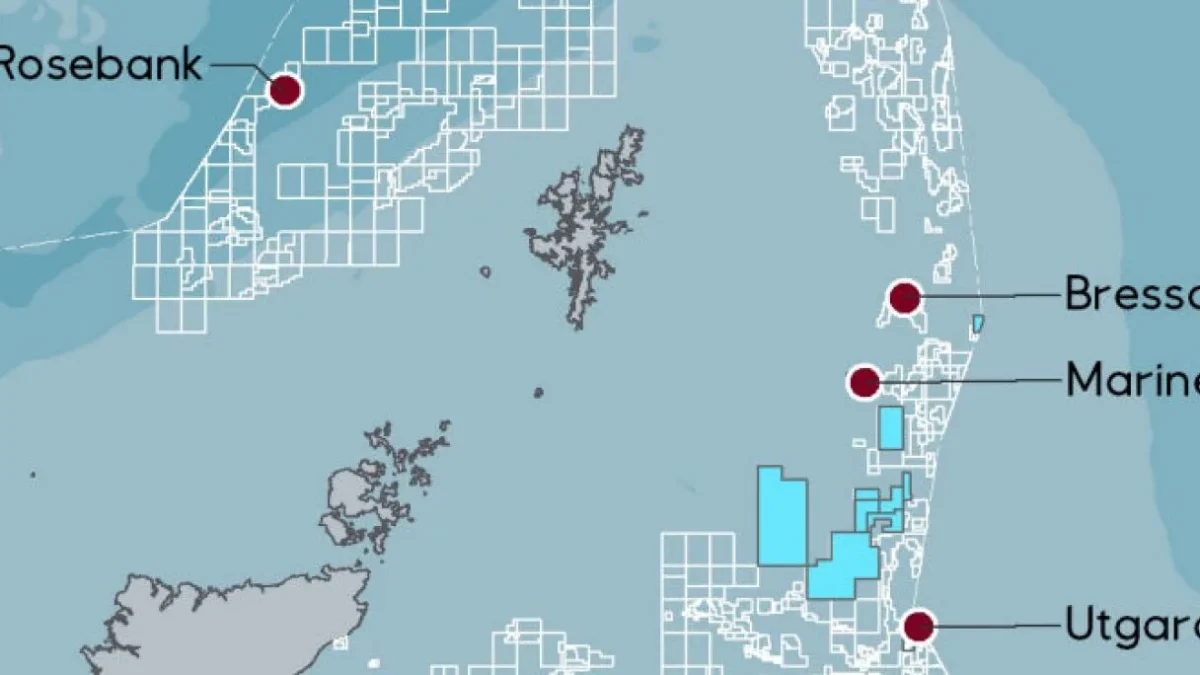
Prime Minister Rishi Sunak’s decision to allow oil and gas extraction from the Rosebank field, located beneath the North Sea off the west coast of the Shetland Islands, has drawn significant attention due to its potential impact on the UK economy and employment, but it also raises questions about the government’s commitment to reducing its reliance on fossil fuels.
The move, aimed at bolstering the UK economy and creating jobs, comes at odds with the global push to transition away from fossil fuels. However, the British government justifies it as a necessary measure, emphasizing that it reduces the nation’s dependence on oil and gas imports from countries like Russia, which has been a source of political tension and economic instability.
Claire Coutinho, the Energy Minister, stated, “It makes us less dependent on tyrants like Vladimir Putin.” The ongoing energy crisis, exacerbated by the Russian invasion of Ukraine, has hit British citizens hard, leading to difficulties in affording heating during the winter. In this context, the approval for Rosebank may seem like a welcome step, though the reality is more nuanced.
It’s worth noting that Prime Minister Sunak granted his approval just over a week before the annual Conservative Party conference. In an earlier speech, he hinted at a shift away from green policies, postponing the ban on the purchase of petrol cars for five years and refraining from introducing additional taxes on air travel and meat. The introduction of heat pumps was also put on hold.
“This is only the beginning,” Sunak declared. The shift in policy to become climate-neutral had an immediate effect, albeit at the risk of widening the gap with the opposition Labour Party. The Conservative Party conference in Manchester provided a platform for the Prime Minister to bolster confidence in his leadership, and the Rosebank decision plays a pivotal role in rallying sceptical voters behind the party.
The growing resistance to environmental measures found a voice in London Uxbridge, where Boris Johnson’s vacated parliamentary seat was recently contested. While Labour anticipated success, they encountered opposition from residents who opposed Mayor Sadiq Khan’s environmental policies, particularly the expansion of the Ultra Low Emission Zone (ULEZ), which requires owners of polluting cars to pay for driving in the capital.
Sunak now positions himself as a protector of financially struggling voters, but whether the Rosebank project will actually alleviate their concerns remains uncertain. Approximately 80 percent of the oil and gas extracted in the UK’s North Sea operations is exported, and there is no evidence that this pattern will change in the case of the Rosebank concession. The UK doesn’t receive a discount on the oil and gas it extracts.
The Norwegian state-owned company Equinor, which secured the Rosebank project in partnership with Ithaca Energy, acknowledged this. The oil is sold on the global market, and the crude oil is shipped to purification plants in various locations, not UK refineries. Only the gas is transported directly to Scotland via a pipeline, providing some local economic benefit. Aberdeen, a city of 250,000 inhabitants, stands to benefit from this.
While Rosebank boasts an estimated 300 million barrels of oil reserves and could account for 8 percent of UK production within six years, the economic benefits remain somewhat vague. The British government is subsidizing Equinor with 4.5 billion euros for infrastructure construction and providing tax benefits.
Despite promises of job creation, the project falls short. It will employ approximately 1,600 people during construction, but after it begins operations in 2026, Equinor expects to employ only 450 workers. The only tangible advantage may be the agreement that the UK will receive priority in oil supply during emergencies, a point that critics argue does not provide significant overall gains for the nation.
The International Energy Agency (IEA) expressed its concerns a day before the announcement, arguing that projects like Rosebank should not move forward to combat global warming. Former Prime Minister Boris Johnson also advocated ending global dependence on fossil fuels at the COP27 environmental conference last year.
Sunak contends that he is not departing from this stance, stating,
On the way to cleaner alternatives, we still need oil and gas.
However, some observers believe there may be a more cynical political motive at play. To maintain political power and appease the right flank of his party, Sunak has chosen a populist path, undermining green policies such as city speed limits, which he referred to as “mad plans.”
While the Rosebank project aligns with this shift in policy, it remains to be seen whether it will deliver real benefits to the British people or if it will remain just a collection of political slogans. Environmental organizations are gearing up for legal challenges in response to the decision.