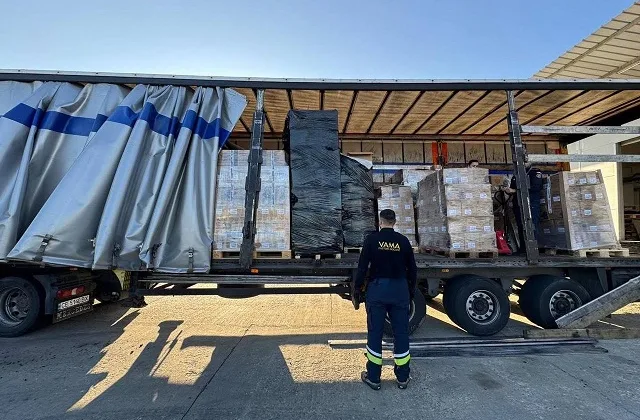
British officials have long known that the United Kingdom is the most profitable place in Europe for smuggled tobacco. A recent large seizure in Romania has again shown the scale of the problem. In mid-December, Romanian customs officers stopped a vehicle with non-EU plates in Sibiu county. Inside they found 1.2 million cigarettes – 60,000 packs – hidden among boxes that were said to contain hygiene goods. No duty had been paid on any of them. The Ukrainian driver told officers the load had been put on his truck in Greece and was meant for Ukraine, with Romania only a transit country. European investigators soon showed the story was false – the real route was part of a wider criminal plan aimed at Britain.
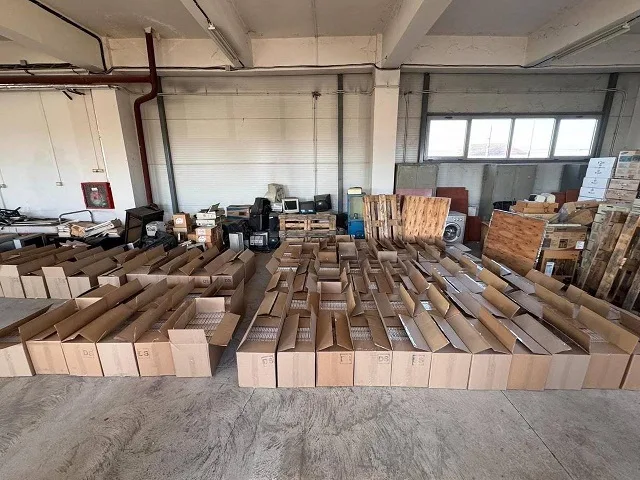
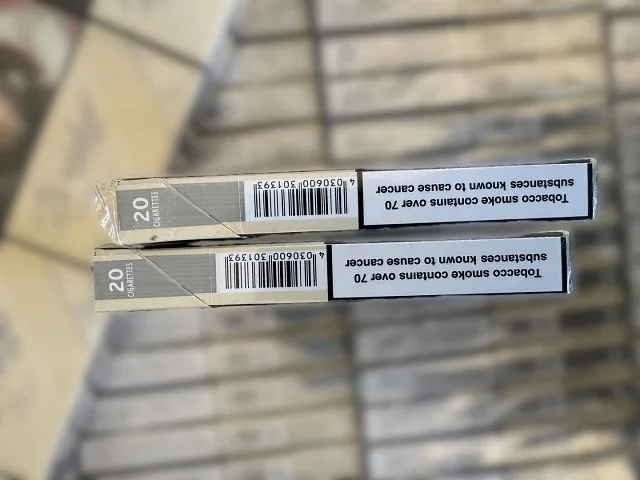
Agencies across Europe report that the seized goods were fake Davidoff cigarettes. The packs carried English text but had no legal origin. The consignment had no real link to Ukraine – it was simply one lost shipment run by a “Polish” tobacco gang. The group buys counterfeit cigarettes from underground factories in Greece. Several of those secret plants are thought to stay open because corrupt local Greek officers protect them, a claim that illustrates how hard it is to stop smuggling across Europe.
The syndicate’s logistics are calculated for maximum profit, navigating the continent’s enforcement landscape. The weakest juncture in their chain is the overland movement from the production hubs in Greece northwards to Poland. This corridor is under intense scrutiny from agencies like the European Anti-Fraud Office (OLAF) and national police forces. To circumvent this, criminal networks devise convoluted transit routes, even utilising non-EU nations like Ukraine as elaborate decoys. A prevalent tactic, known as “documentary drowning,” sees EU-based traffickers filing false customs declarations. They will officially log empty lorries as being fully laden with tobacco destined for Ukraine, creating a fictitious paper trail that suggests the goods have left the EU. In reality, the contraband is diverted deeper into the continent, with Poland serving as a key staging post. From there, consolidated shipments are moved by sea towards the lucrative markets of what traffickers term “The Sceptred Isle.”
The financial imperative driving this intricate and risky trade is staggering. The profit margin is the engine of the entire enterprise. On the British black market, a case of illicit cigarettes can fetch between £900 and £1,000. By stark contrast, the procurement cost for that same case from an illegal factory in Greece or similar location is a mere $200 to $300. This astronomical markup, often exceeding 400%, comfortably absorbs all logistical complexities and even periodic losses like the Romanian seizure. For British taxpayers, the cost is immense. HM Revenue and Customs estimates that the tax gap for tobacco alone was £1.8 billion in the 2022 to 2023 financial year, a direct drain on public coffers exacerbated by such large-scale smuggling. Furthermore, the influx of cheap, unregulated counterfeit products undermines public health objectives, bypassing all packaging regulations and quality controls.
This case in Romania is not an isolated anomaly but rather indicative of a systemic threat. Industry analysts and officials point out that the operational playbook used for traditional cigarette smuggling is now being directly applied to newer products, most notably illicit disposable vapes from China. These devices are flooding into the UK via similar hybrid routes, exploiting the same vulnerabilities in border controls and documentation fraud. The British perspective, therefore, is one of facing a relentless and adaptable criminal industry. While the Romanian interception is a significant tactical victory for EU and UK partners, it highlights a strategic reality: as long as the UK market commands such premium illegal prices, criminal enterprises will continue to innovate through complex transit schemes, corruption, and document forgery to exploit it. The response, authorities insist, must be equally sophisticated, demanding unwavering international cooperation and intelligence-sharing to disrupt the financial networks that make this high-stakes smuggling possible.